An editorial assessment of documented capabilities and ownership trade-offs. This is not a hands-on test result or a measurement of reliability.
Task capability 30%8.8
Continuously refreshed wide roller and carpet shield offer a distinct wet-cleaning architecture.
Navigation & control 20%8.1
App-controlled mixed-floor strategies and edge adaptation provide useful control, subject to route fit.
Ownership & upkeep 20%7.7
Automatic roller care helps, but scraper, shield and water paths add service points.
Setup & usability 15%7.4
Wet-system care and rug-shield validation require more commissioning than a basic pad robot.
Documentation & support clarity 15%8.3
Official material clearly identifies roller width, lift, shield and station temperatures.
Compare scores within the same product category. Small decimal differences should not override your needs or the evidence limits.
How the Standpoint Score works
We score five aspects of the documented product on a 0–10 scale, then calculate a weighted total:
- Task capability30% of the total
- Navigation & control20% of the total
- Ownership & upkeep20% of the total
- Setup & usability15% of the total
- Documentation & support clarity15% of the total
This product’s 8.2/10 is a provisional research assessment. It does not claim measured performance, tested reliability or a verified customer satisfaction rate. Compare it with products in the same category, and read each criterion’s reasoning above.
Read the full rubric and score bands ↗The ownership case.
The roller is a substantive design change, but its water path and carpet shield deserve as much attention as the impressive width and suction figures.
Reasons to consider it
- Mop refreshes while cleaning
- Wide roller and extending edge action
- Shield designed to separate wet roller from carpets
Go in knowing
- Roller drainage creates additional care points
- Wide cleaning contact still needs corner positioning
- Lift and shield must be tested on actual rugs
The specification sheet.
Published specifications from the linked sources. Configurations and availability can differ by country.
- Mop
- SpiraFlow self-cleaning roller
- Roller width
- 270 mm
- Advertised suction
- 20,000 Pa
- Carpet handling
- Roller lift up to 15 mm and roller shield
- Dock care
- Up to 75°C wash; 55°C warm-air drying
Flow describes a different kind of mop
Curv 2 Flow should not be understood merely as a more powerful Curv. Its SpiraFlow roller is a different wet-cleaning architecture from the paired rotating pads on many Qrevo models. The roller is refreshed while the robot works, aiming to remove dirt from the cleaning surface rather than carrying it until the next dock visit. That is a persuasive idea for kitchens where crumbs and sticky marks occur together. It also creates a more involved water-and-residue path inside the robot. A buyer should consider both sides: the potential benefit of a cleaner contact surface and the need to keep the roller, scraper and drainage system working properly.
Width helps coverage but does not defeat geometry
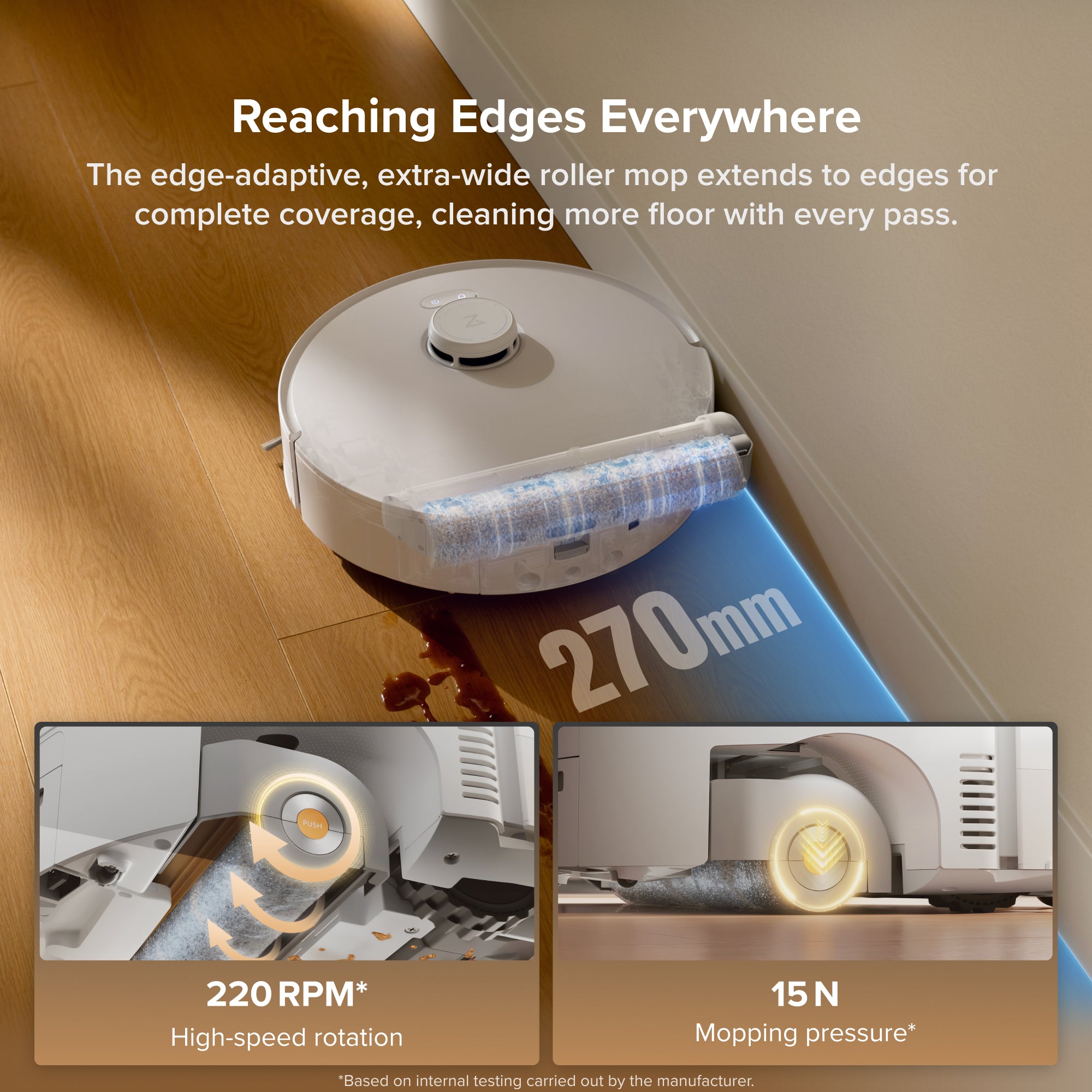
Roborock specifies a 270 mm roller, which provides a broad contact patch. A wide roller may reduce the number of passes required across open flooring, but a round robot still has to turn around chair legs and align itself with edges. The edge-adaptive mechanism is therefore as interesting as the roller's width. We would inspect cleaning beside a cabinet, around a table foot and along a narrow hallway rather than assume the entire reachable width is scrubbed equally. A room-area figure does not reveal whether the last strip near a wall was reached. Product photography illustrates the mechanism; it does not substitute for that inspection.
Continuous refresh has an ownership consequence
A self-cleaning roller can reduce the time dirty textile stays in contact with the floor, but removed grime has to go somewhere. The machine's dirty-water path and the dock need to handle it. This makes residue inspection particularly important after food spills or hair-heavy cleaning. Follow the manual's limits on liquid and debris collection; a robot with a wet roller is not automatically approved as a general spill extractor. We would want to compare the roller's condition after a greasy kitchen task with a normal dust-cleaning run. The useful result is less streaking and less manual rinsing, not simply a more complicated internal diagram.
A shield is a stronger idea than lift alone
The manufacturer describes a roller that lifts up to 15 mm and a protective shield for carpet handling. Separating a damp roller from fibres addresses a real weakness of mixed-floor robots. However, it still needs testing on the actual rug, including the entry edge where the robot changes state. Thick or irregular pile, loose fringe and a folded runner can create conditions unlike a flat demonstration sample. Watch both entry and exit after the roller is fully wet. If a delicate rug remains at risk, use the appropriate vacuum-only or avoidance strategy rather than relying on the existence of a shield to settle the question.
Vacuuming and dock heat remain separate claims
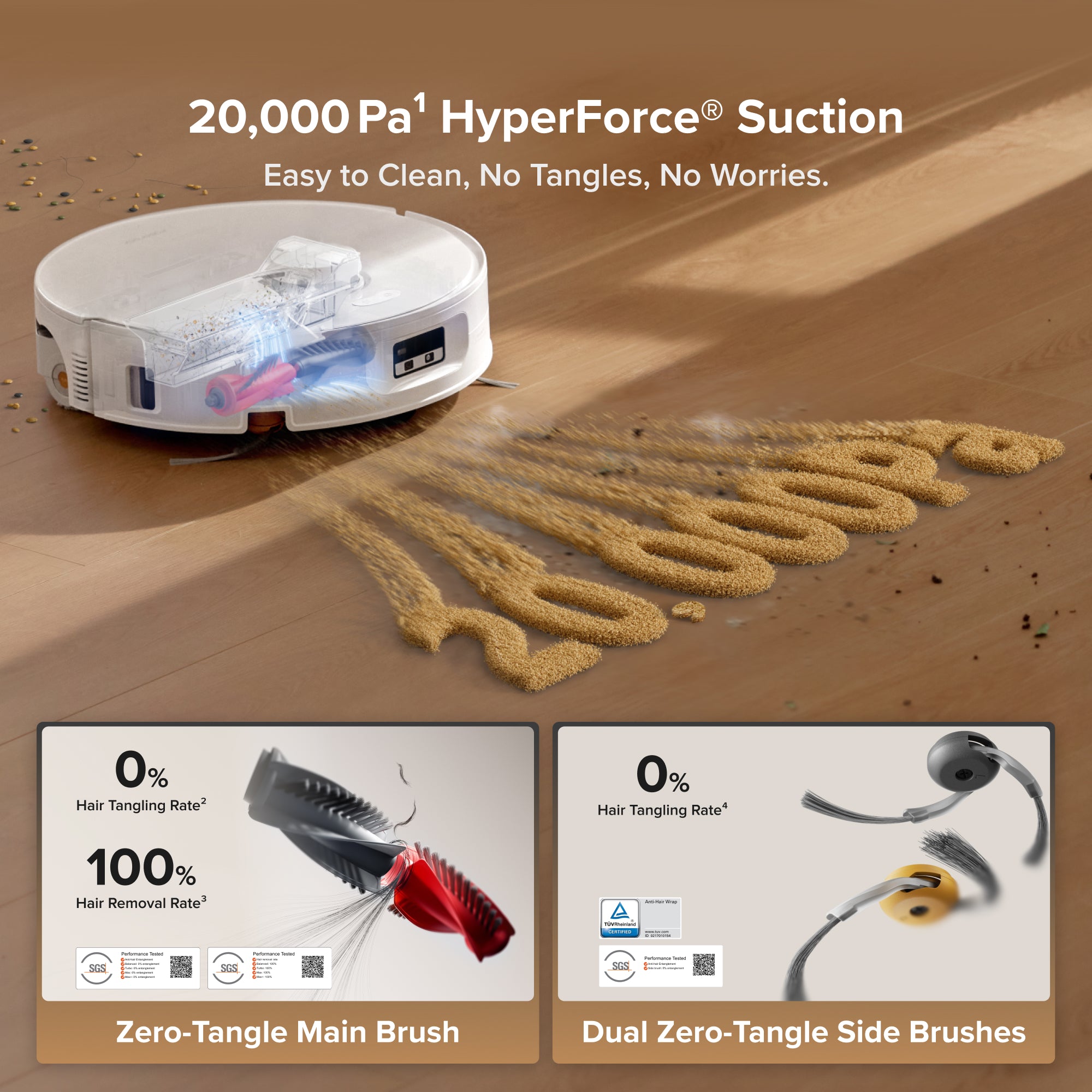
The advertised 20,000 Pa suction figure describes the vacuum system, while hot washing and warm-air drying describe dock maintenance. Neither number demonstrates one-pass removal of every stain or deep carpet debris. The DuoDivide main brush and anti-tangle side brushes deserve the same practical inspection as on other hair-focused models. Check what remains under the furniture and in grout after a run, then inspect the intake and collection container. Dock heat may help maintain the roller, but it does not turn the machine into a floor steriliser. The full cleaning cycle includes drying and servicing, so it also has to fit the household's noise and energy routine.
The most useful alternatives
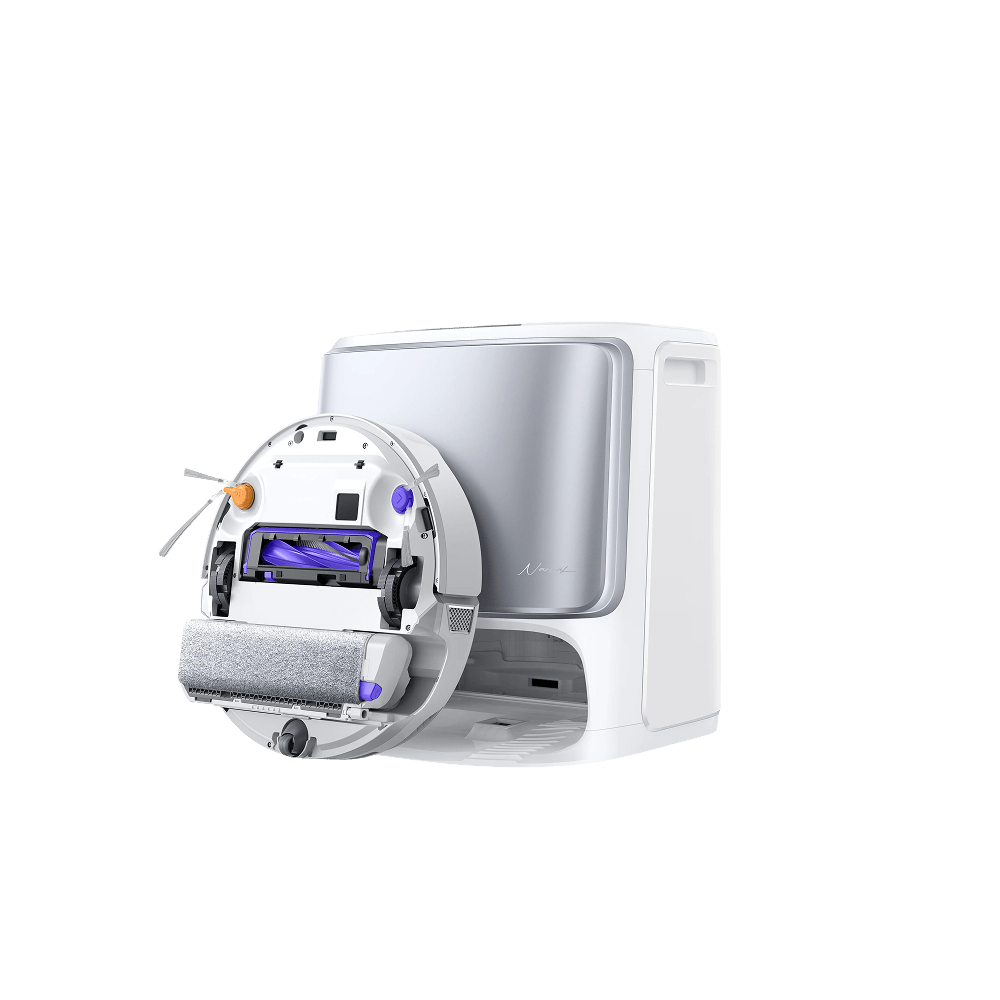
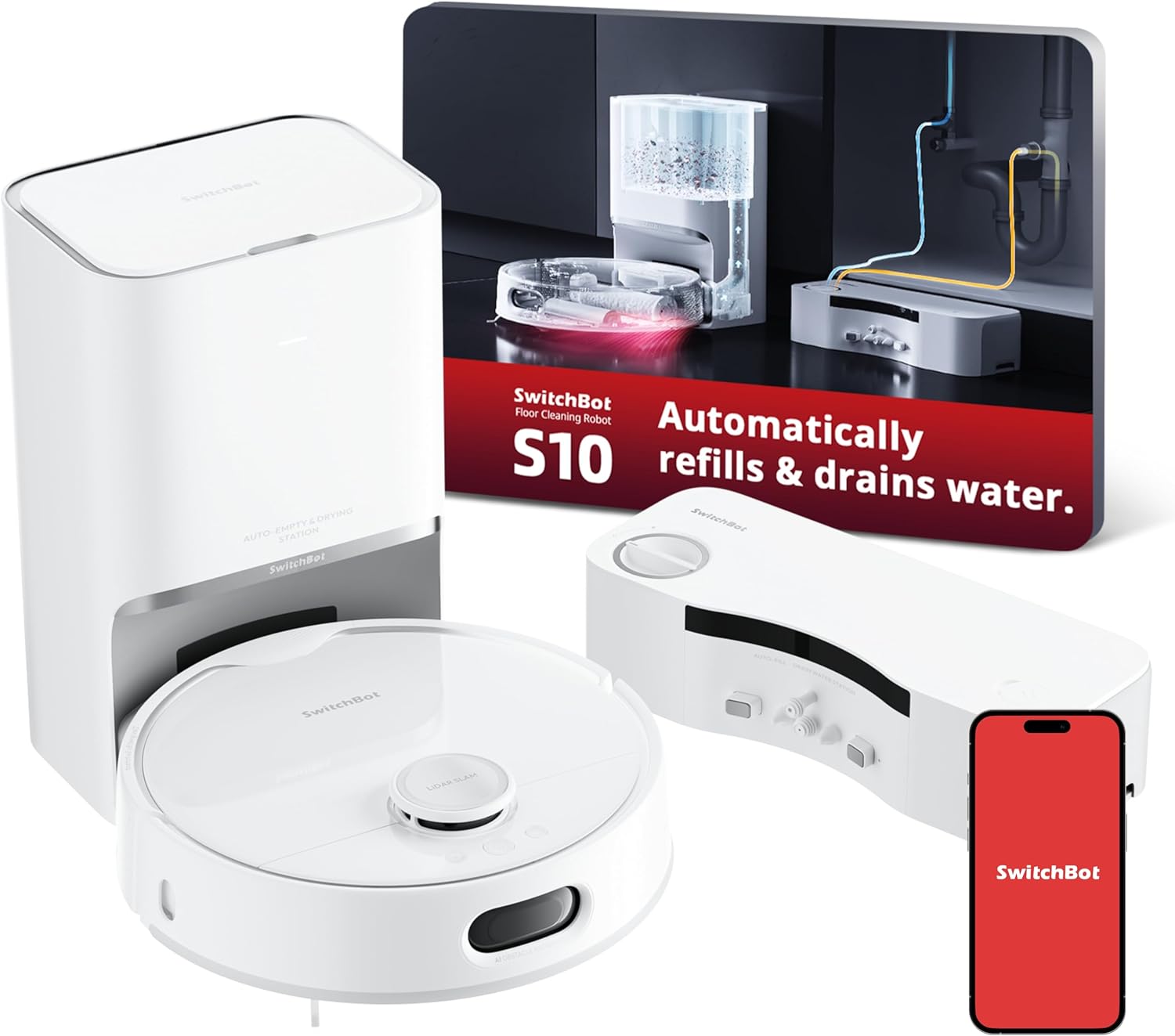
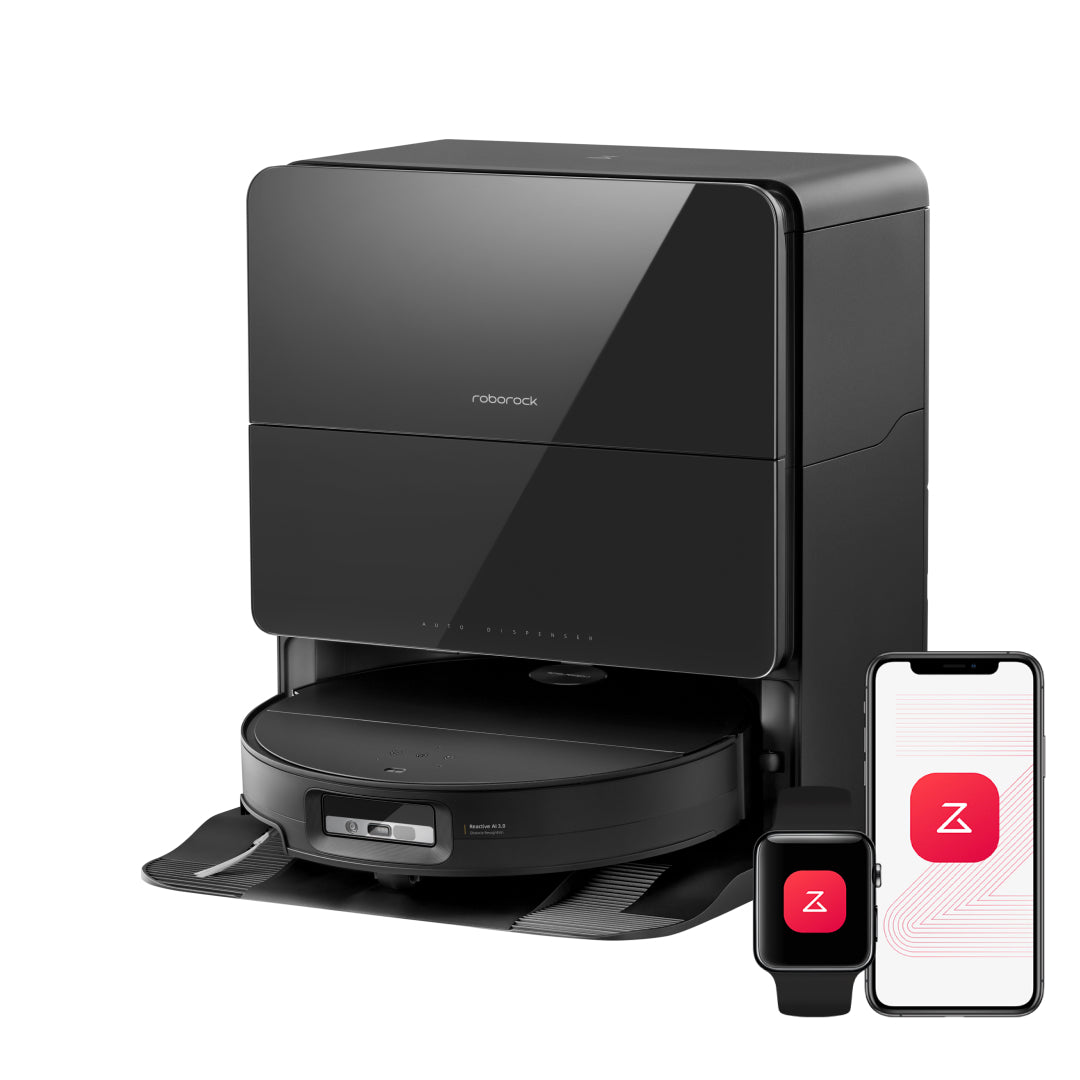
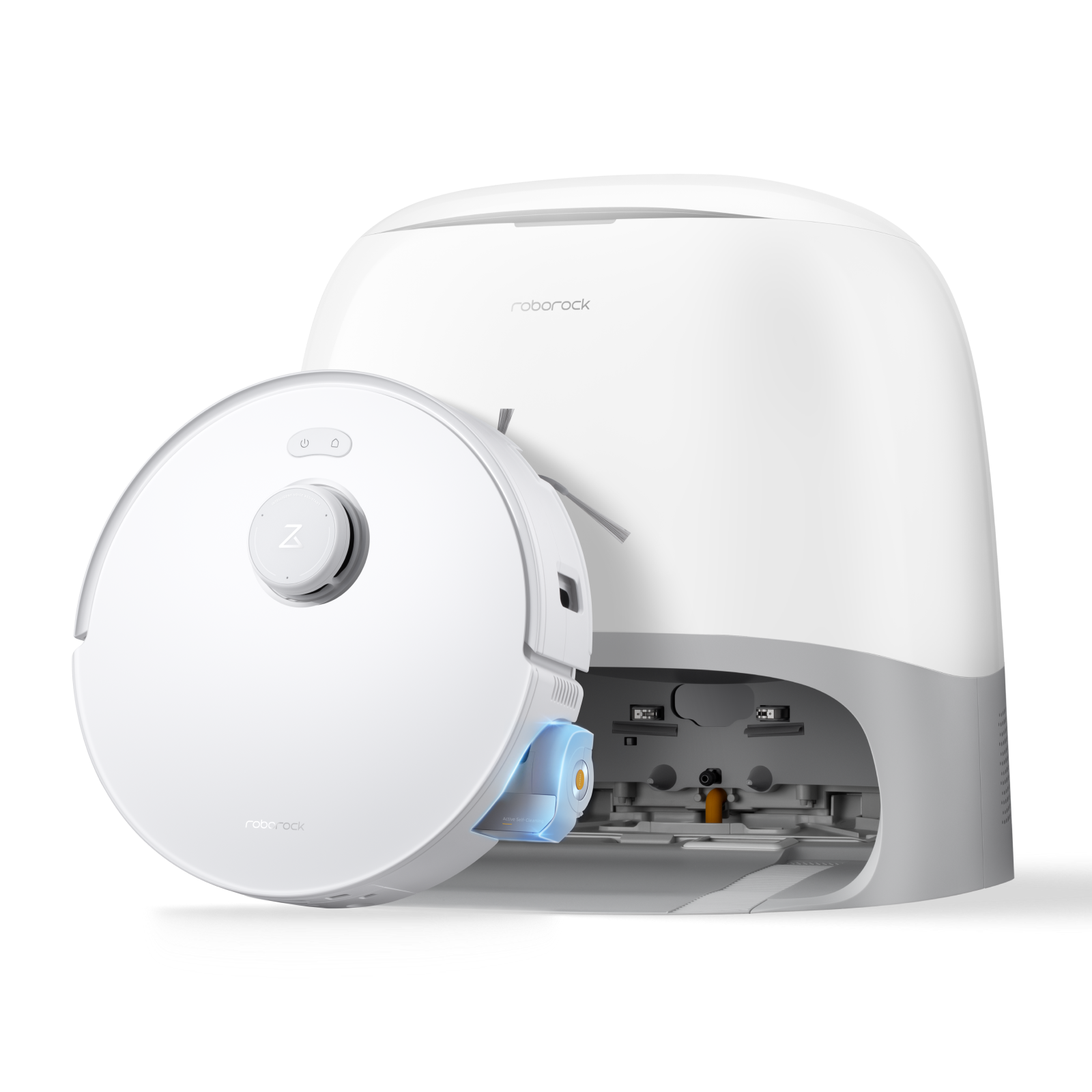
Compare Curv 2 Flow with Narwal Flow and SwitchBot S10 for different approaches to continuously refreshed wet cleaning. Compare it with the original Curv if conventional rotating pads are sufficient and you prefer their maintenance arrangement. We have not conducted a side-by-side stain or cross-contamination test, so the architecture earns interest rather than a performance crown. A proper long-term review should measure residual dirt, streaking, water use, roller-cleaning time and reliability of the carpet shield. For a home dominated by washable hard flooring, those questions could make this a more meaningful upgrade than another increase in suction on an otherwise familiar machine.
Maintaining a refreshed roller system
A roller that washes itself continuously should be evaluated through the entire residue path. After an ordinary kitchen task, inspect the roller surface, accessible scraper area and dirty-water collection components as the manual permits. Note where hair and small food particles remain. This is more informative than looking only at a clean-looking stretch of roller immediately after a dock wash. Avoid introducing sticky substances or liquids outside the approved use just to stress the mechanism. The meaningful test is whether normal household soil is removed from the floor and whether the resulting internal cleanup is convenient. If the robot saves a manual mop pass but requires equally lengthy cleaning of a clogged wet path, its architectural advantage has not translated into the expected ownership benefit.
The roller shield deserves its own first-week check. Select the appropriate carpet routine, begin with the roller genuinely wet and observe entry onto each rug in the house. Inspect the fibres near both the entry and exit points afterwards. A mechanism can function correctly while a particular thick or curled edge still makes the transition unsuitable. Use exclusions or a separate vacuum route where needed, especially for valuable textiles. Also watch for small mats that shift under the broad cleaning contact. The owner should not need to leave every rug permanently rolled up to use an expensive combined cleaner. Record which surfaces work reliably and save those decisions in the map so another household member does not unknowingly start an unsuitable all-floor wet task.
Consumables are especially model-specific here. Curv 2 Flow's roller and related service parts should not be confused with the circular pads used by Curv or CurvX. Verify local supply before purchase and ask how a damaged scraper, shield or roller assembly is replaced. For Canadian ownership, confirm regional service rather than relying on a US product page. The wider connected feature set also needs a restrained setup: establish cleaning zones and stop controls before adding optional voice or camera functions. Compare the total system against Narwal Flow and S10 using the same criteria—dry residue, water handling, internal cleanup and route reliability. Those observations reveal whether continuous refresh is useful in this home. A wide roller and high wash temperature are understandable engineering features, but they are inputs to the result rather than a result in themselves.
Sources & further reading.
These are the sources behind this research review. Manufacturer claims are not independent performance measurements. Community accounts, when cited, describe individual experiences.
Documentation reviewed: 9 October 2026. Product software and regional bundles can change. Corrections and editorial disclosures.