An editorial assessment of documented capabilities and ownership trade-offs. This is not a hands-on test result or a measurement of reliability.
Task capability 30%6.8
Compact access and dry collection are useful, while wipe-based wet cleaning is limited.
Navigation & control 20%7.8
LDS and PSD sensing support narrow-space routes, with hub-dependent Matter integration.
Ownership & upkeep 20%7.8
Auto-emptying and anti-tangle brush help, while small consumables remain model-specific.
Setup & usability 15%8.0
Small robot simplifies access but published station clearance and hub requirements need planning.
Documentation & support clarity 15%8.4
Official dimensions, station clearance and Matter dependency provide unusually concrete setup guidance.
Compare scores within the same product category. Small decimal differences should not override your needs or the evidence limits.
How the Standpoint Score works
We score five aspects of the documented product on a 0–10 scale, then calculate a weighted total:
- Task capability30% of the total
- Navigation & control20% of the total
- Ownership & upkeep20% of the total
- Setup & usability15% of the total
- Documentation & support clarity15% of the total
This product’s 7.6/10 is a provisional research assessment. It does not claim measured performance, tested reliability or a verified customer satisfaction rate. Compare it with products in the same category, and read each criterion’s reasoning above.
Read the full rubric and score bands ↗The ownership case.
Its small body gives it a clear purpose; choose it for access and routine vacuuming, with modest expectations for the wipe-based wet-cleaning feature.
Reasons to consider it
- Small diameter can reach narrow furniture gaps
- Auto-empty station reduces bin handling
- Anti-tangle brush and multi-floor map support
Go in knowing
- Small does not mean the dock needs no clearance
- Wet wiping is a limited owner-managed task
- Matter adds a hub requirement
The specification sheet.
Published specifications from the linked sources. Configurations and availability can differ by country.
- Body dimensions
- 248 × 248 × 92 mm
- Approximate robot weight
- 2.3 kg
- Dust station
- 4 L advertised capacity
- Navigation
- LDS laser and PSD sensors
- Matter integration
- SwitchBot Hub 2 required per cited listing
Small diameter is a real capability
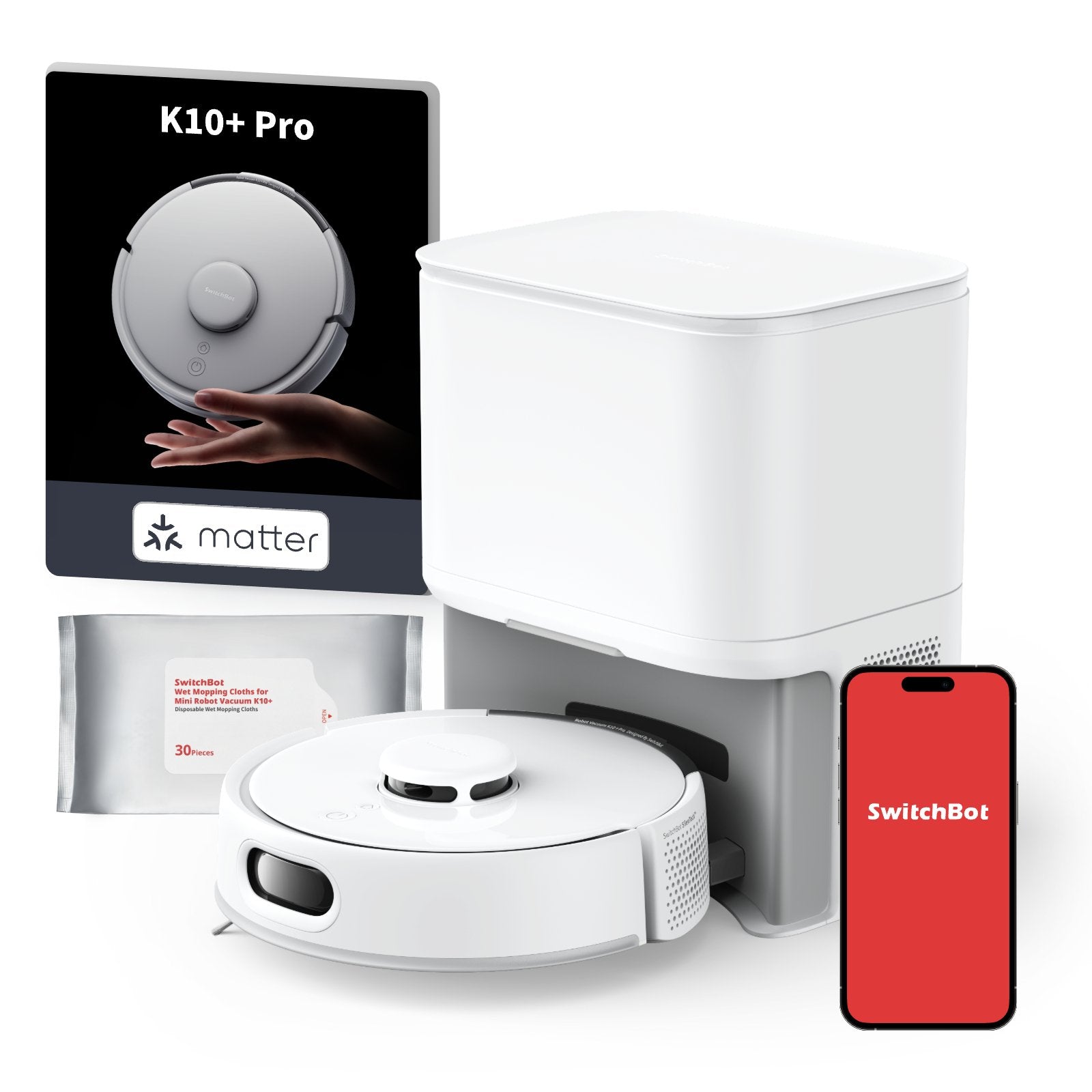
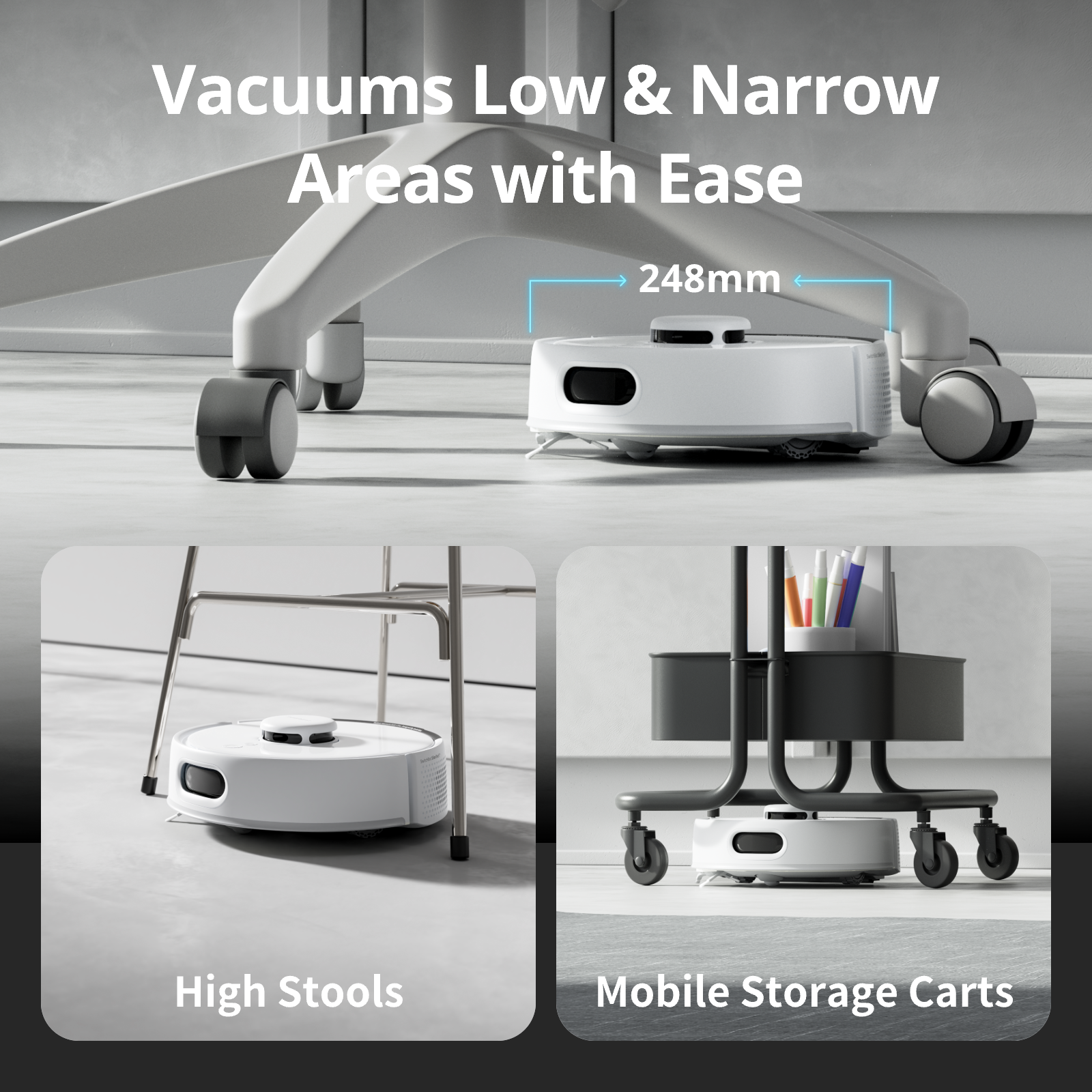
K10+ Pro's 248 mm width is its most meaningful feature. A narrower robot may pass between furniture legs that block the usual roughly dinner-plate-sized machine, allowing it to clean more of a compact room without rearrangement. This is especially relevant around a crowded dining set or in an apartment where furniture fills much of the floor. Measure those gaps before buying. A smaller body can gain access, but it still needs turning room and enough height beneath braces. The correct comparison is the amount of useful floor it can reach, not simply whether a larger competitor has a stronger-looking suction specification.
The small robot still needs a proper dock location
The cited product page recommends substantial clearance around the station: one metre on each side and one and a half metres in front. That guidance is an important counterweight to the miniature-robot story. A compact shell does not guarantee reliable docking in a crowded alcove. Check the actual manual and available space before selecting a permanent location. The station also needs room for bag access and a clear power-cord route. A small apartment may benefit from the robot's size while still finding the recommended docking area difficult. Solve that placement issue before assuming the product is automatically suited to every tight home.
Dry pickup and hair care remain ordinary obligations
The K10+ Pro includes an anti-tangle brush and an auto-empty station with a listed 4 L capacity. Those features can reduce routine attention, but a small cleaner still needs its intake, roller ends and wheels inspected. A bag-capacity figure does not establish how long a shedding household can go between changes. Nor does a quiet-mode claim describe the sound of every emptying event. Check pickup on the actual rug and hard flooring, including fine debris near furniture. The product's small size should not excuse poor cleaning, but it may justify a different trade-off if the alternative cannot reach that floor at all.
Treat wet wiping as a narrow task
The small robot's mopping arrangement should be understood as an owner-managed wiping feature, not a full scrub-and-wash station system. It is most sensible for a selected patch of suitable hard flooring with clean, correctly fitted materials and aftercare afterwards. Do not expect the dust dock to wash a dirty wipe or replenish a sophisticated wet system. A household buying primarily to eliminate daily kitchen mopping should compare a different class of machine. K10+ Pro's strongest role is reaching and vacuuming awkward places. The wet feature can be a useful addition if its limitations and consumable requirements match the owner's expectations.
Smart-home integration adds a specific dependency
The official listing states that Matter integration requires SwitchBot Hub 2. That is a concrete additional component to include if Apple Home or another compatible platform is part of the reason for buying. App and voice capabilities should be checked for the current setup rather than assumed from a logo. Compare K10+ Pro with Narwal Freo X Plus for a different compact-docking approach, or with a full-size vacuum if narrow access is not actually a problem. We have not measured pickup or noise. Its documented case is clear: a small physical cleaning footprint paired with automatic dry collection, for owners who value access over an elaborate wet-care feature list.
Small-room access with realistic station space
Use K10+ Pro's narrow body to answer a specific layout question. Measure between the dining-chair legs, beneath the desk and around the furniture that a standard robot cannot negotiate, then observe repeated entry and exit with everything in its normal position. The smaller diameter can be valuable, but a narrow opening followed by no turning room may still be unusable. Inspect the floor behind each obstacle rather than relying only on the route map. Separately check the manufacturer's substantial station-clearance guidance against the actual apartment. A small robot and a compact-looking station do not guarantee reliable docking in a crowded nook. Solve the station approach before concluding that the machine is suited to the smallest available corner.
The dry collection system should be monitored after early pet-hair or lint-heavy runs. Inspect the brush, intake and onboard bin after the station empties it, and replace the bag according to condition rather than an idealised interval. The cited 4 L station capacity does not predict a particular household's calendar. A compact cleaning head also makes genuine compatible consumables important; do not assume a larger SwitchBot or generic robot brush is an acceptable substitute. The wet-wipe feature should remain a selected owner-managed task with correct preparation and disposal or cleaning. If regular active mopping is the main need, acknowledge that limitation before the novelty of the small robot overshadows the intended chore. Its strongest benefit is reaching dry debris in crowded spaces.
Include Hub 2 in the total cost if Matter integration is part of the plan, because the cited listing makes that dependency explicit. Verify the current integration's actual commands rather than assuming it exposes every app function. Begin with a useful map and schedule, then add voice or household automations. Review sharing permissions and reset instructions for a future change of owner. Canadian shoppers should confirm local service and the exact K10+ Pro part supply, particularly when comparing with a differently named K10 bundle. Listen to the auto-empty burst in the intended room as well as the quiet operating mode. A small apartment places every sound closer to occupants. The right outcome is a robot that reaches more useful floor and can complete its full cycle at a tolerable time, not simply the smallest machine in a photograph.
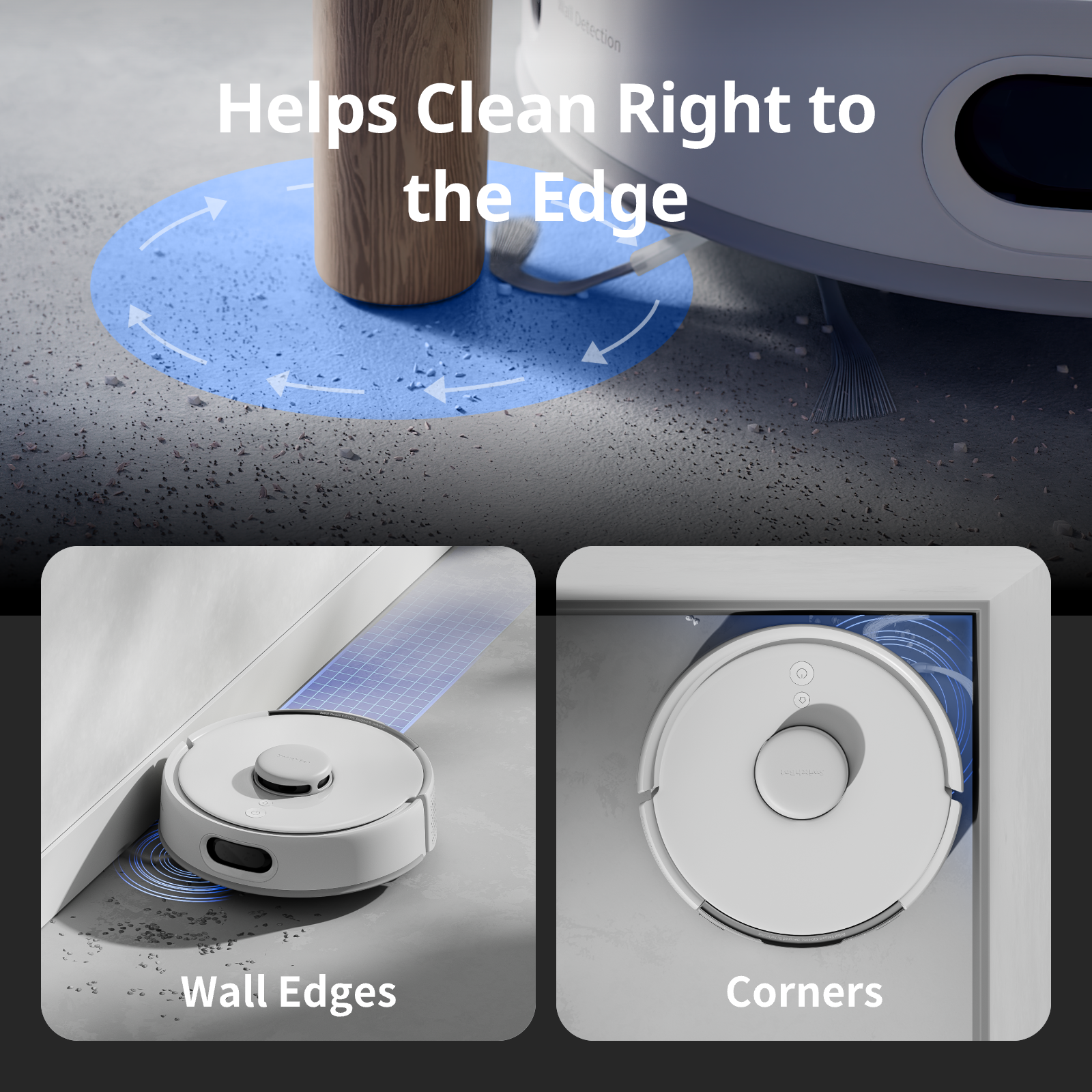
Narrow-space pickup should include inspection behind furniture legs, where a small robot may gain access but still leave debris in a tight turn. Compare that result with the ordinary open floor. The advantage of the compact body is additional useful cleaning area, so it deserves a coverage check rather than being accepted as a visual novelty.
Sources & further reading.
These are the sources behind this research review. Manufacturer claims are not independent performance measurements. Community accounts, when cited, describe individual experiences.
Documentation reviewed: 9 October 2026. Product software and regional bundles can change. Corrections and editorial disclosures.