An editorial assessment of documented capabilities and ownership trade-offs. This is not a hands-on test result or a measurement of reliability.
Task capability 30%6.8
Focused dry pickup with dual rollers and a large bin serves a narrower cleaning brief.
Navigation & control 20%7.5
LiDAR maps and room routines support useful coverage, without advanced small-object assumptions.
Ownership & upkeep 20%8.0
Automatic dust transfer and no wet-care system simplify the recurring workload.
Setup & usability 15%8.7
A vacuum-first setup is straightforward once dock placement and Wi-Fi are addressed.
Documentation & support clarity 15%8.3
Official listing clearly specifies bin, rollers, connectivity and supported control options.
Compare scores within the same product category. Small decimal differences should not override your needs or the evidence limits.
How the Standpoint Score works
We score five aspects of the documented product on a 0–10 scale, then calculate a weighted total:
- Task capability30% of the total
- Navigation & control20% of the total
- Ownership & upkeep20% of the total
- Setup & usability15% of the total
- Documentation & support clarity15% of the total
This product’s 7.7/10 is a provisional research assessment. It does not claim measured performance, tested reliability or a verified customer satisfaction rate. Compare it with products in the same category, and read each criterion’s reasoning above.
Read the full rubric and score bands ↗The ownership case.
The focused dry-cleaning brief is its strength; choose it for dependable coverage and bag handling rather than expecting a multifunction wash system.
Reasons to consider it
- Large onboard dustbin for the category
- Dual-roller pickup system
- Automatic dust emptying and room mapping
Go in knowing
- Does not replace a full wet-cleaning system
- Small clutter still needs preparation
- Long hair can require roller-end inspection
The specification sheet.
Published specifications from the linked sources. Configurations and availability can differ by country.
- Advertised suction
- 5,500 Pa
- Onboard bin
- 770 mL
- Brush
- DuoRoller
- Navigation
- PreciSense LiDAR
- Connectivity
- 2.4 GHz Wi-Fi
A focused robot can be the right robot
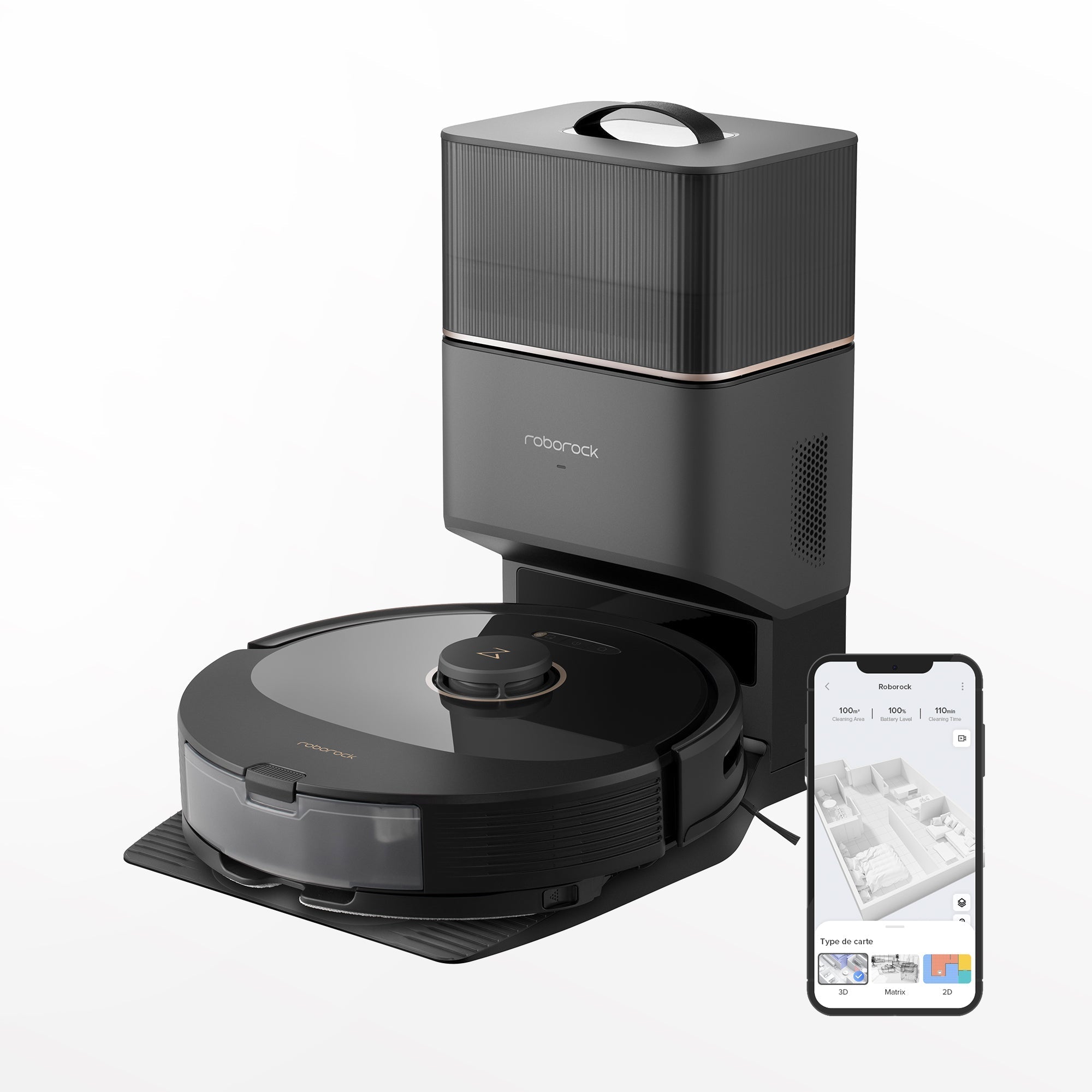
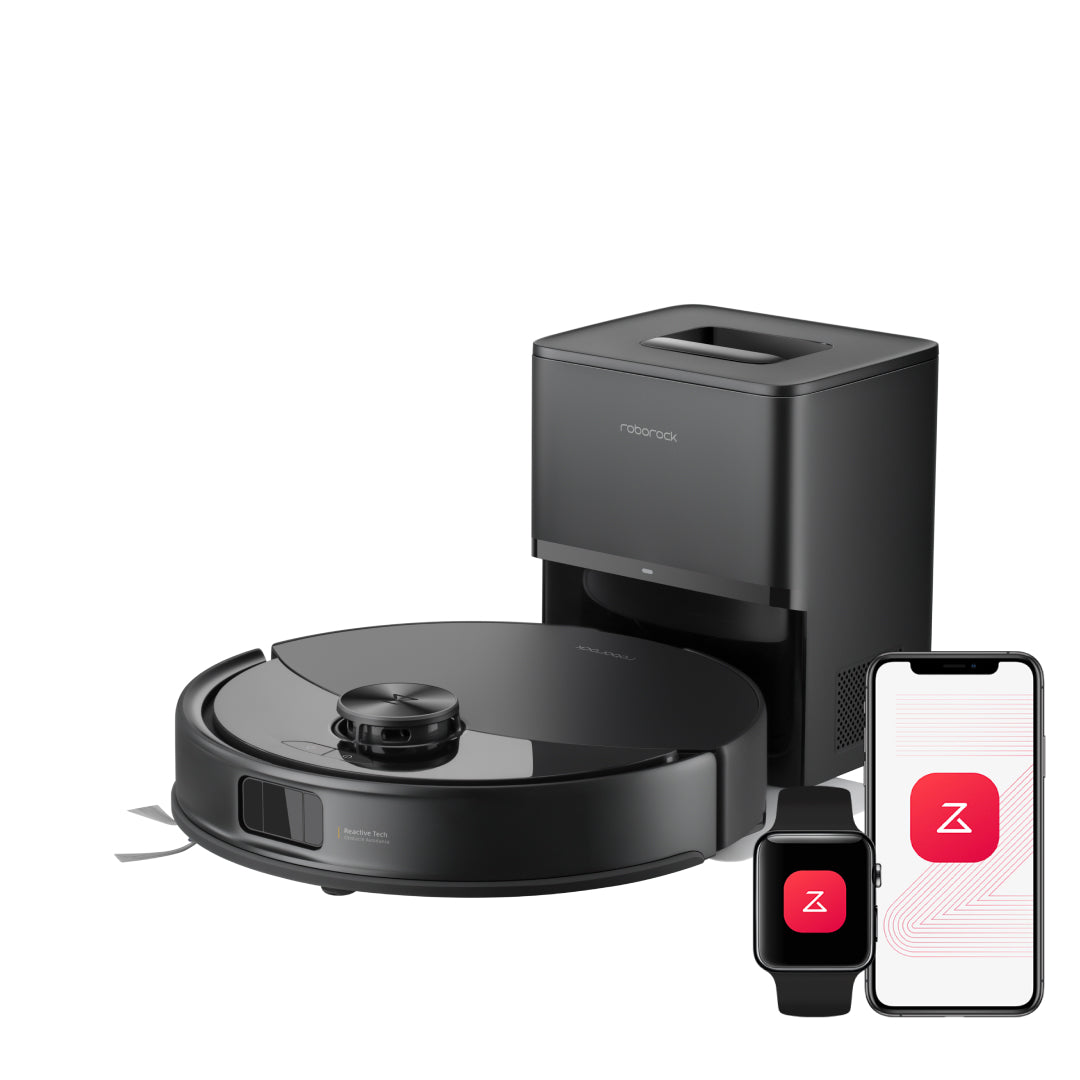
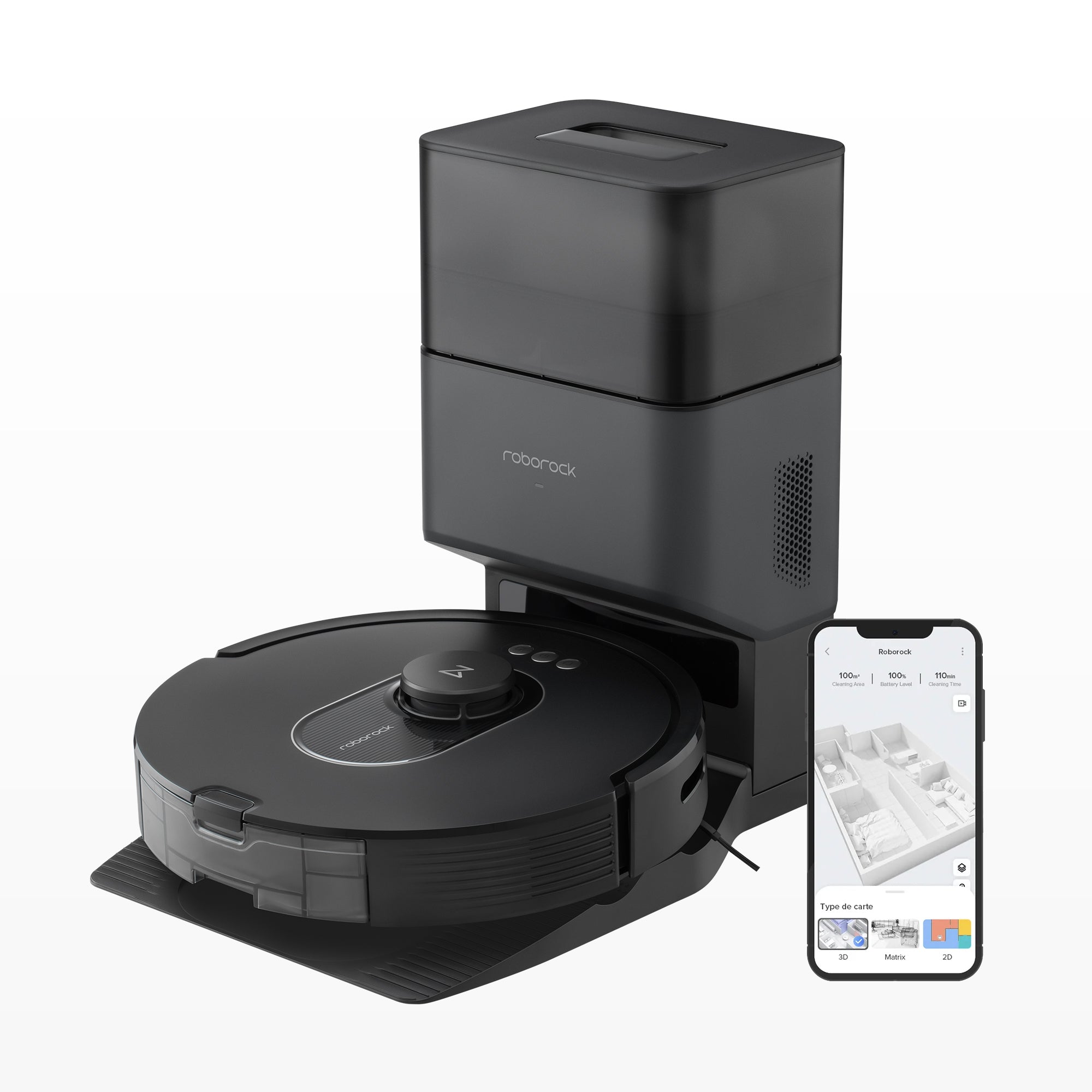
Q5 Max+ is worth considering precisely because its job is relatively clear: collect dry debris on a mapped floor and transfer it to an auto-empty dock. A household with mostly carpet, or one that already prefers manual hard-floor washing, need not pay for tanks, pad washing and a complex wet station. The large advertised onboard bin is useful context for that brief. It gives the robot more collecting space, although capacity alone does not determine how well a hair-heavy load empties. The buying question is whether it can maintain the floor between thorough manual cleans without requiring frequent rescues or brush attention.
DuoRoller should be judged on the carpet
The dual-roller system is a more concrete feature to investigate than a simple comparison of peak suction figures. The rollers interact with the surface and feed debris into the airflow path. On carpet, a useful trial should include embedded hair and fine dirt rather than only obvious crumbs scattered on top. On hard flooring, look for debris scattered outward by the side brush and inspect seams. We have not measured the Q5 Max+'s extraction performance, so we cannot translate its 5,500 Pa claim into a ranking. What we can say is that the design prioritises routine dry pickup, and that the cleaning head deserves scrutiny under the household's actual conditions.
The bin is large, but the transfer path still matters
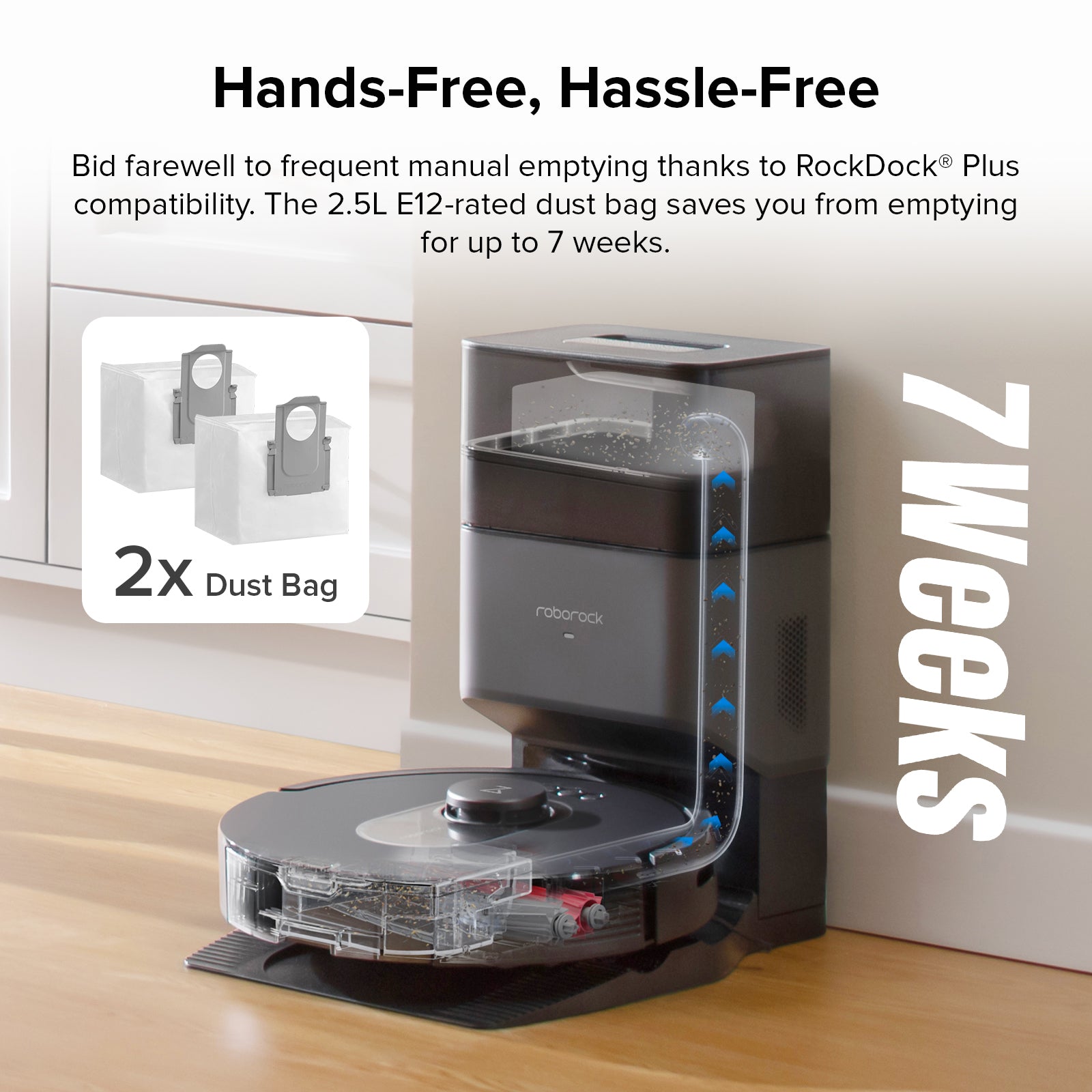
A 770 mL onboard bin may help between dock visits, particularly with bulky light debris. It does not mean the robot should be run until the container is tightly packed. Hair can bridge an opening, and a fine-dust-loaded filter can restrict airflow before the bin appears full. Watch the first few auto-empty events and inspect the container afterwards. If material remains, troubleshoot the bag, opening and brush area according to the instructions rather than repeatedly forcing extra emptying cycles. The useful ownership result is a reliably emptied bin with limited dust exposure, not simply a large capacity figure printed in the specifications.
Mapping is the route to useful daily coverage
PreciSense LiDAR supports room maps, and the app offers custom routines, exclusions and multiple-floor mapping. That makes the robot more useful when a family wants selected rooms cleaned at selected times. Multi-level mapping still requires the owner to move a floor-bound robot between levels; it does not automate stairs. A large mapped area also means little if doors routinely close or lightweight runners block the route. Use a realistic first-week schedule and inspect the cleaning history alongside the floor. A repeatable kitchen-and-hallway run can be a worthwhile outcome even when one awkward room remains better suited to manual vacuuming.
Understand what the simplicity saves
Without a full wet-care station, there are no routine wastewater-tank chores in this setup. The owner instead concentrates on dust bags, filters, rollers and the floor itself. That can be a favourable exchange in a carpet-heavy home, especially where a water station would occupy an inconvenient amount of space. It also means this purchase should not be justified as a complete replacement for every floor-cleaning task. Keep the appropriate manual tool for stairs, upholstery, corners and periodic deeper carpet work. A robot earns value through frequent maintenance cleaning, not by making every other cleaner in the house redundant.
The alternative depends on the missing chore
Q8 Max+ adds a different mix of obstacle sensing and basic wet-cleaning capability, while Q10 S5+ offers sonic mopping in an auto-empty package. If those functions would rarely be used, Q5 Max+'s focused brief remains attractive. If mopping is the chore you most want to stop doing, it is the wrong place to save. We would want a hands-on assessment of carpet pickup, hair wrap, bag transfer and intervention frequency before making a stronger recommendation. The documented design is sensible for routine dry cleaning. The right buyer is someone who can clearly state that vacuuming, rather than automated washing, is the task this machine needs to take over.
Keeping a vacuum-first machine useful
The Q5 Max+ benefits from a commissioning test built around debris and coverage, rather than a catalogue of app features. Run the busiest carpeted room and inspect the fibres in good light, then clean a hard-floor area containing the ordinary crumbs from a meal. Check the onboard bin after the station empties it. These observations reveal pickup, scattering and transfer as separate outcomes. A large bin is helpful, but it can conceal a partly blocked opening if the owner never looks inside. Establish the baseline while the machine is new and clean. If performance changes later, compare the brush, filter and route with that baseline before deciding the motor is inadequate or replacing the whole appliance.
Dual rollers mean there are two sets of ends and contact surfaces to keep in working order. Confirm replacement compatibility for Q5 Max+ specifically, especially when a seller groups several Q5 and Q7 products in one listing. Long hair can remain a maintenance task even when ordinary fur is collected well. A household that has pets should inspect the small wheels as well as the obvious brush assembly. The absence of a wet-care station simplifies this routine: bags, filter, rollers, intake and docking path are the main recurring concerns. Keep the suitable manual vacuum or tool for stairs and upholstery rather than expecting a floor robot to cover those tasks. The value comes from frequent maintenance cleaning across reachable floors, which can reduce the build-up between more thorough manual sessions.
Q5 Max+'s US listing specifies 2.4 GHz Wi-Fi, so network compatibility should be checked before pairing. Multi-floor maps can organise separate levels, but somebody still carries the robot between them, and the charging arrangement needs to make sense on each visit. Do not place it near an unprotected drop merely because it has floor sensors. For a Canadian purchase, establish the warranty region and where bags and roller pairs can be sourced. If comparing it with a more elaborate vacuum-and-mop unit, remove unused wet features from the value calculation. A dry-only household should judge completed vacuum tasks, intervention frequency and long-term parts support. The simpler machine can be the more rational choice when it is easier to maintain and does the actual job without adding a water system that would rarely be used.
For a multi-level household, decide which floor receives the dock and how the robot is carried safely to the other level. The large onboard bin can be useful away from the collecting station, but someone still needs to return the machine to its usual service point and inspect the load afterwards.
Sources & further reading.
These are the sources behind this research review. Manufacturer claims are not independent performance measurements. Community accounts, when cited, describe individual experiences.
Documentation reviewed: 9 October 2026. Product software and regional bundles can change. Corrections and editorial disclosures.