An editorial assessment of documented capabilities and ownership trade-offs. This is not a hands-on test result or a measurement of reliability.
Task capability 30%7.1
Dual-roller vacuuming and basic wet wiping provide useful but limited task breadth.
Navigation & control 20%7.8
Reactive Tech supplements LiDAR mapping for more informed obstacle handling.
Ownership & upkeep 20%7.6
Dry collection is automated; wet preparation and cloth care remain manual.
Setup & usability 15%8.3
Dust-dock installation is simpler than a full water station, with clear owner involvement.
Documentation & support clarity 15%8.0
Manufacturer material identifies the core system without establishing measured cleaning outcomes.
Compare scores within the same product category. Small decimal differences should not override your needs or the evidence limits.
How the Standpoint Score works
We score five aspects of the documented product on a 0–10 scale, then calculate a weighted total:
- Task capability30% of the total
- Navigation & control20% of the total
- Ownership & upkeep20% of the total
- Setup & usability15% of the total
- Documentation & support clarity15% of the total
This product’s 7.7/10 is a provisional research assessment. It does not claim measured performance, tested reliability or a verified customer satisfaction rate. Compare it with products in the same category, and read each criterion’s reasoning above.
Read the full rubric and score bands ↗The ownership case.
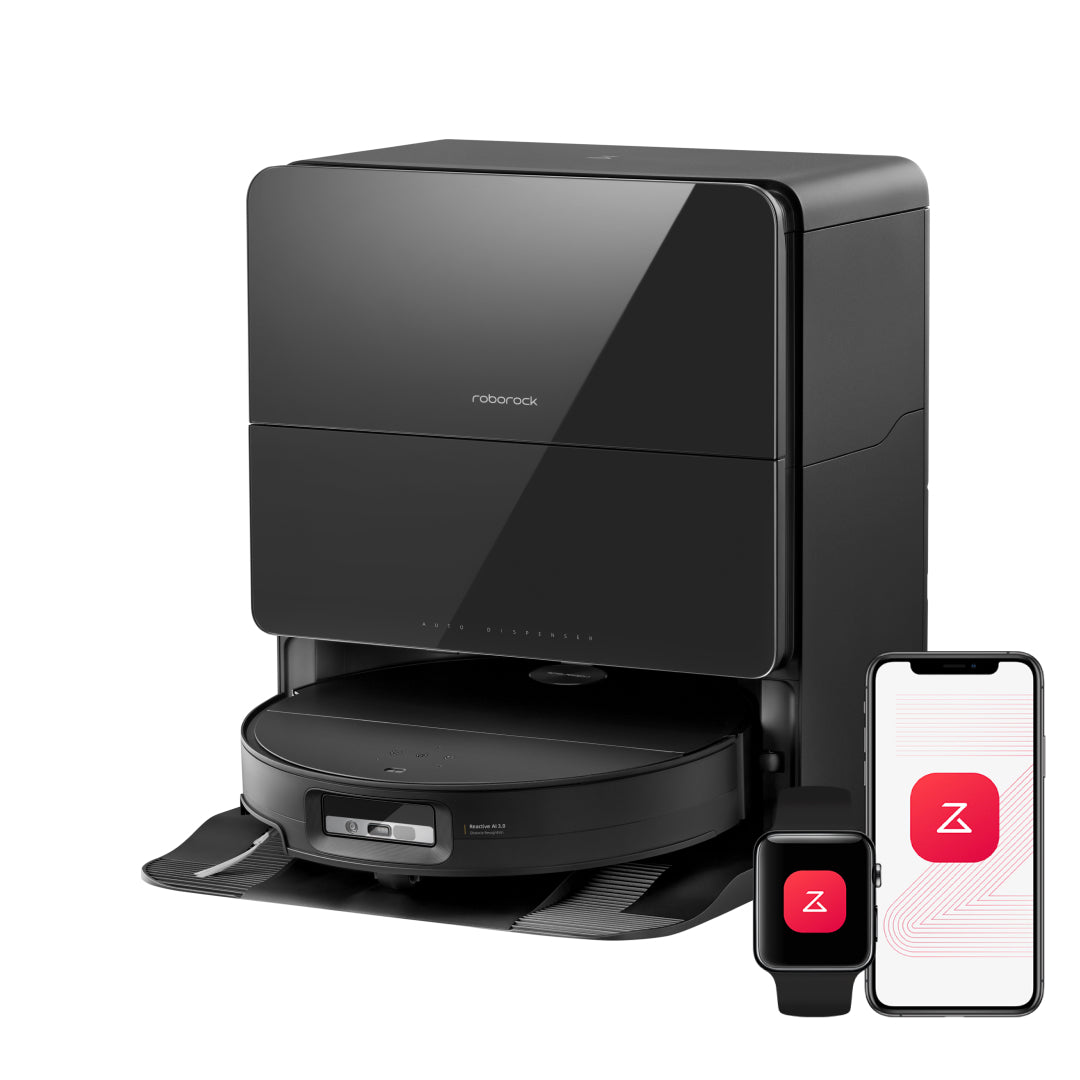
A reasonable vacuum-first design when its local price and support are favourable; do not confuse basic mopping with the wash-and-dry autonomy of Qrevo.
Reasons to consider it
- Dual rollers for routine pickup
- Obstacle sensing beyond a map alone
- Dust-empty dock reduces bin handling
Go in knowing
- Basic mop requires manual care
- No automatic pad-washing station
- Real clutter and hair loads need a trial
The specification sheet.
Published specifications from the linked sources. Configurations and availability can differ by country.
- Advertised suction
- 5,500 Pa
- Brush
- DuoRoller
- Obstacle sensing
- Reactive Tech
- Navigation
- LiDAR mapping
- Dock
- Automatic dust emptying
The Q8 brief is primarily dry cleaning
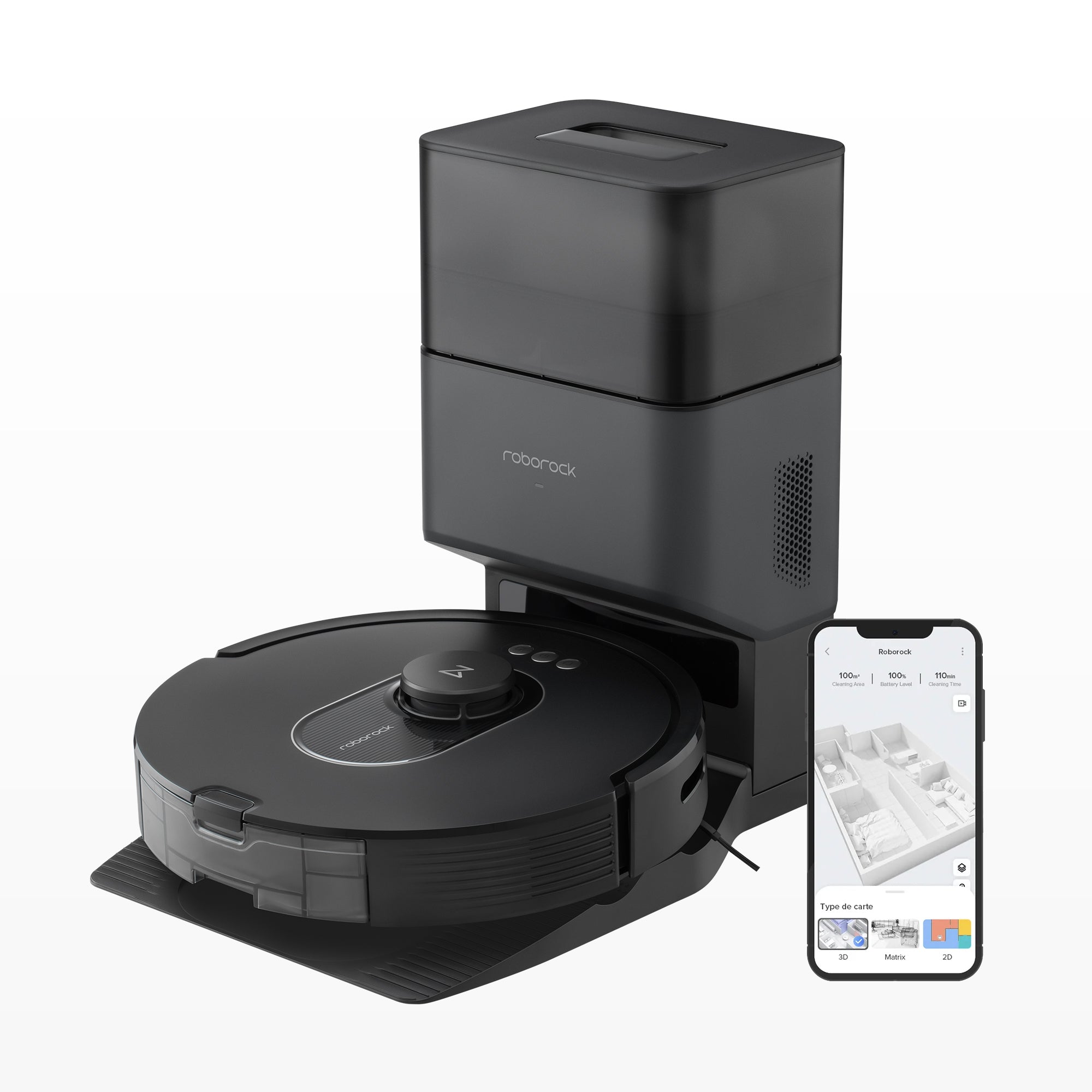
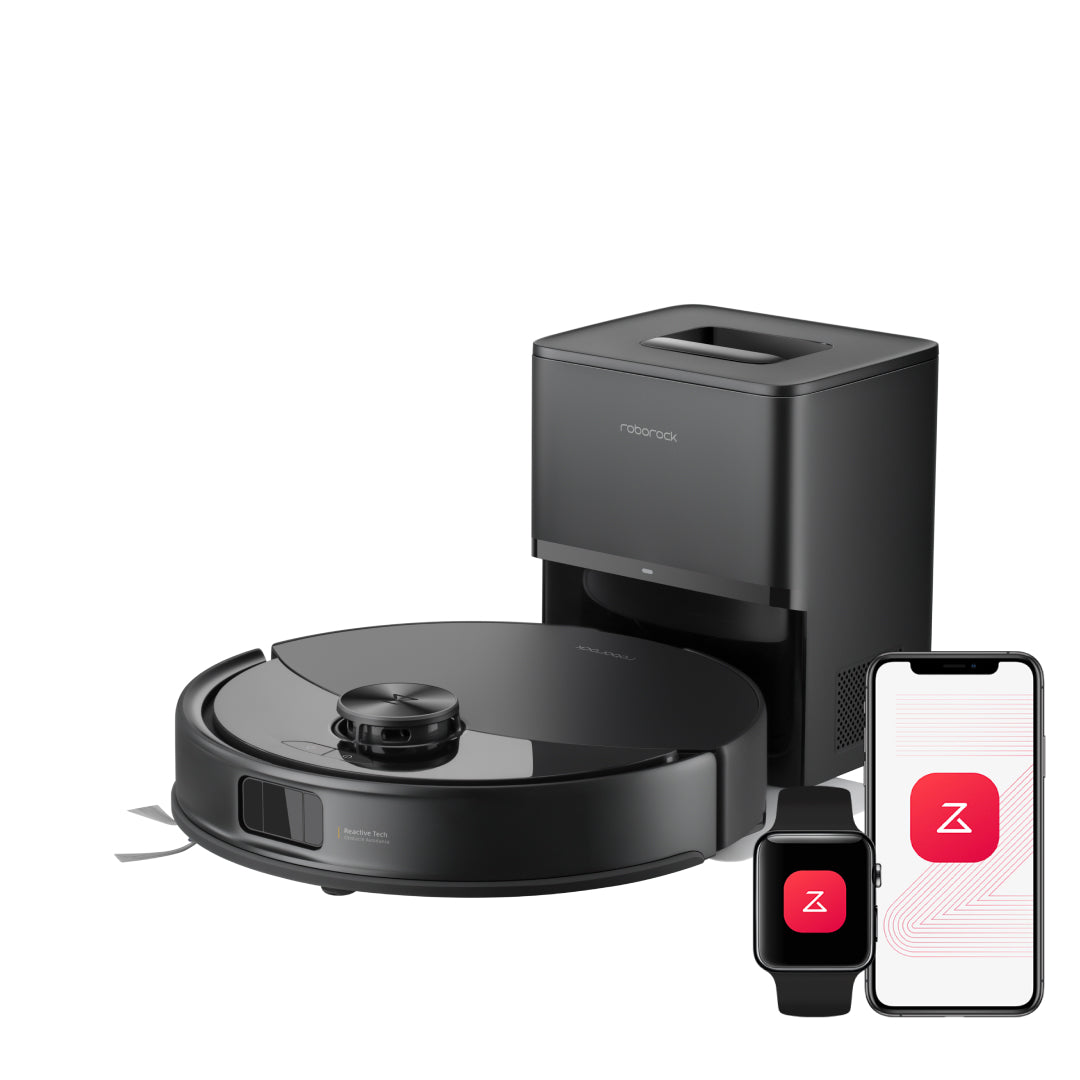
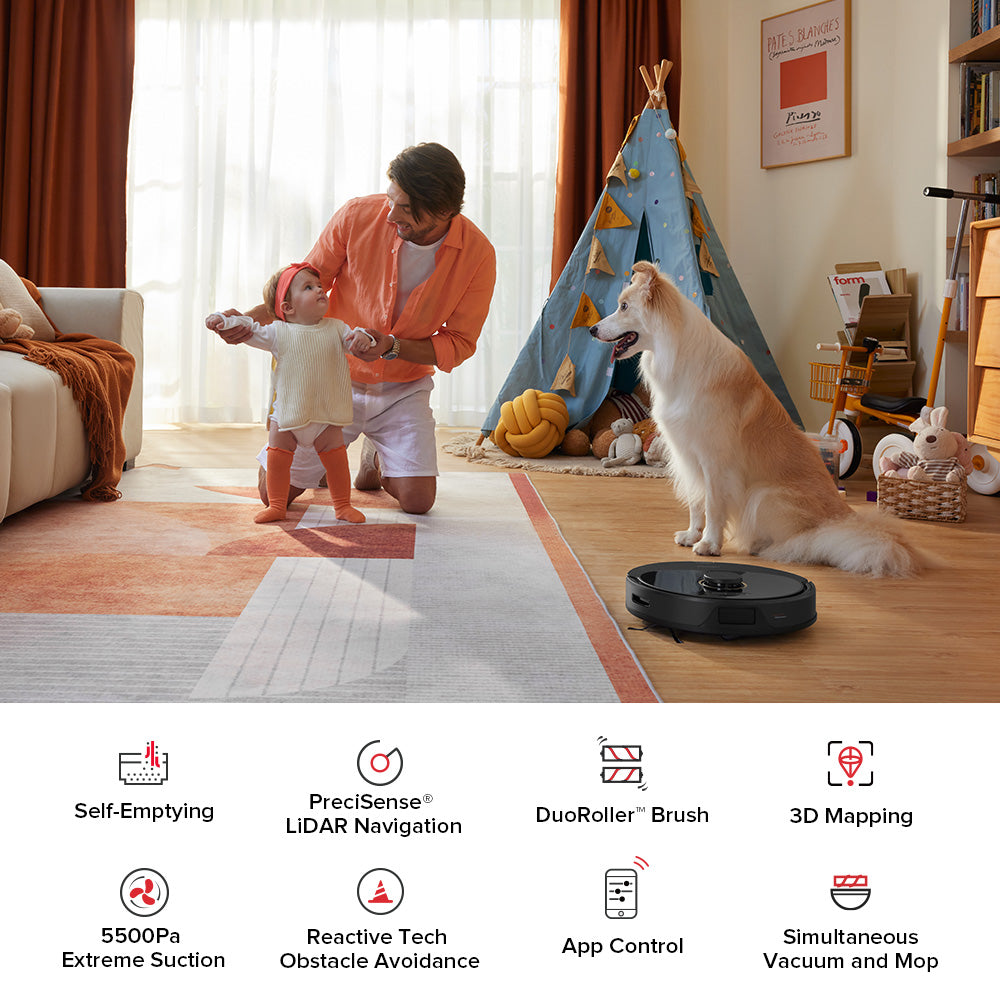
Q8 Max+ brings together dual rollers, systematic navigation, obstacle sensing and a dock that removes collected dust. Its wet-cleaning component should be understood as an additional maintenance option rather than the reason to equate it with a washing-station robot. This distinction matters because product pages often place vacuum-and-mop machines together even when ownership is very different. A buyer who wants regular dry cleaning and occasional damp wiping may find the balance sensible. A buyer expecting the robot to scrub, wash its pads and head out again repeatedly should look at a Qrevo-style system and account for the larger station.
Brush contact is more informative than the headline number
Roborock's 5,500 Pa specification is useful for identifying the advertised configuration, but it does not predict pickup across every surface. The DuoRoller pair, brush contact, airflow and route all affect the result. For a household with pets, inspect both long strands and fine undercoat. One can wrap while the other accumulates in the intake or filter. On hard floors, examine whether small granules are scattered away from the cleaning head. We have not performed extraction tests, so the Q8 Max+ earns consideration for its design rather than a numerical cleaning score. The return period is the right time to verify its actual debris workload.
Obstacle sensing helps, but preparation remains useful
Reactive Tech gives Q8 Max+ a way to respond to objects beyond following a saved map. The presence of that system should reduce neither caution around cables nor the need to define safe zones. A thin lead, a soft sock and a chair leg present very different sensing and entanglement problems. Start with harmless representative objects and remove anything that would cause damage or an unpleasant cleanup. Check that an avoided item does not leave an unnecessarily large uncleaned patch around it. The goal is a productive route that covers the room reliably, not simply a robot that never touches furniture because it stays far away from everything.
Basic mopping works best with a narrow assignment
The most realistic wet task is a selected area of suitable hard flooring after loose debris has been removed. Fit a clean cloth, follow the water-system instructions and plan to wash it afterwards. Without an automated mop-washing station, a heavily soiled pad remains the owner's responsibility during and after the run. That makes a short kitchen or hallway task more sensible than assuming an entire dirty level can be wiped equally well with one preparation. Do not read vacuum-and-mop wording as permission to collect arbitrary wet messes. Floor-safe cleaning chemistry and care for the surface remain necessary even when the robot makes the movement automatic.
Automatic dust emptying is the real convenience feature
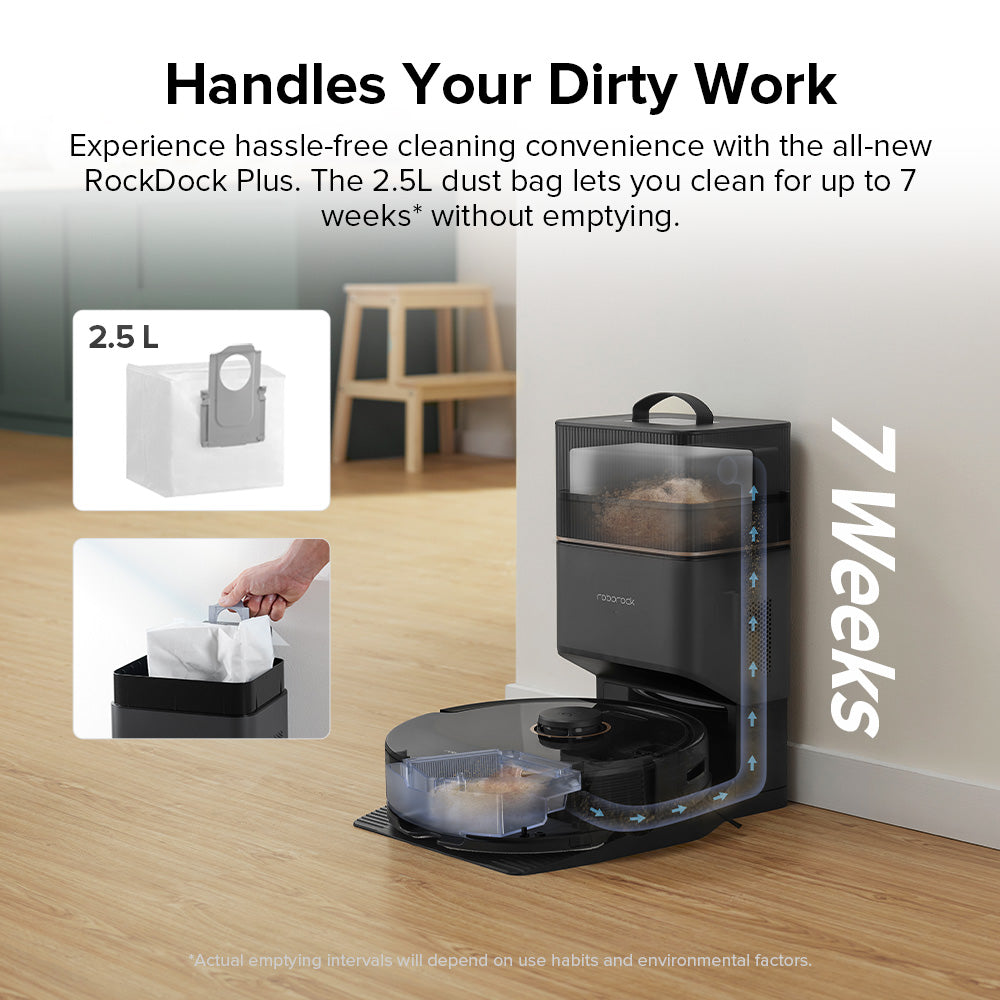
The Plus dock changes how often the owner handles the robot's small collecting bin. That can be a useful reduction in routine work, especially in a busy household, provided the transfer path remains clear and the bag is replaced when needed. Check after the first hair-heavy runs rather than accepting a long advertised emptying interval as a fixed schedule. The dock also creates a short, conspicuous noise event that may be more noticeable than ordinary vacuuming. Position it with a clear approach and schedule it away from calls or bedtime. A compact ownership setup still needs access for bag changes and occasional cleaning behind the machine.
Pick it for the task it actually automates
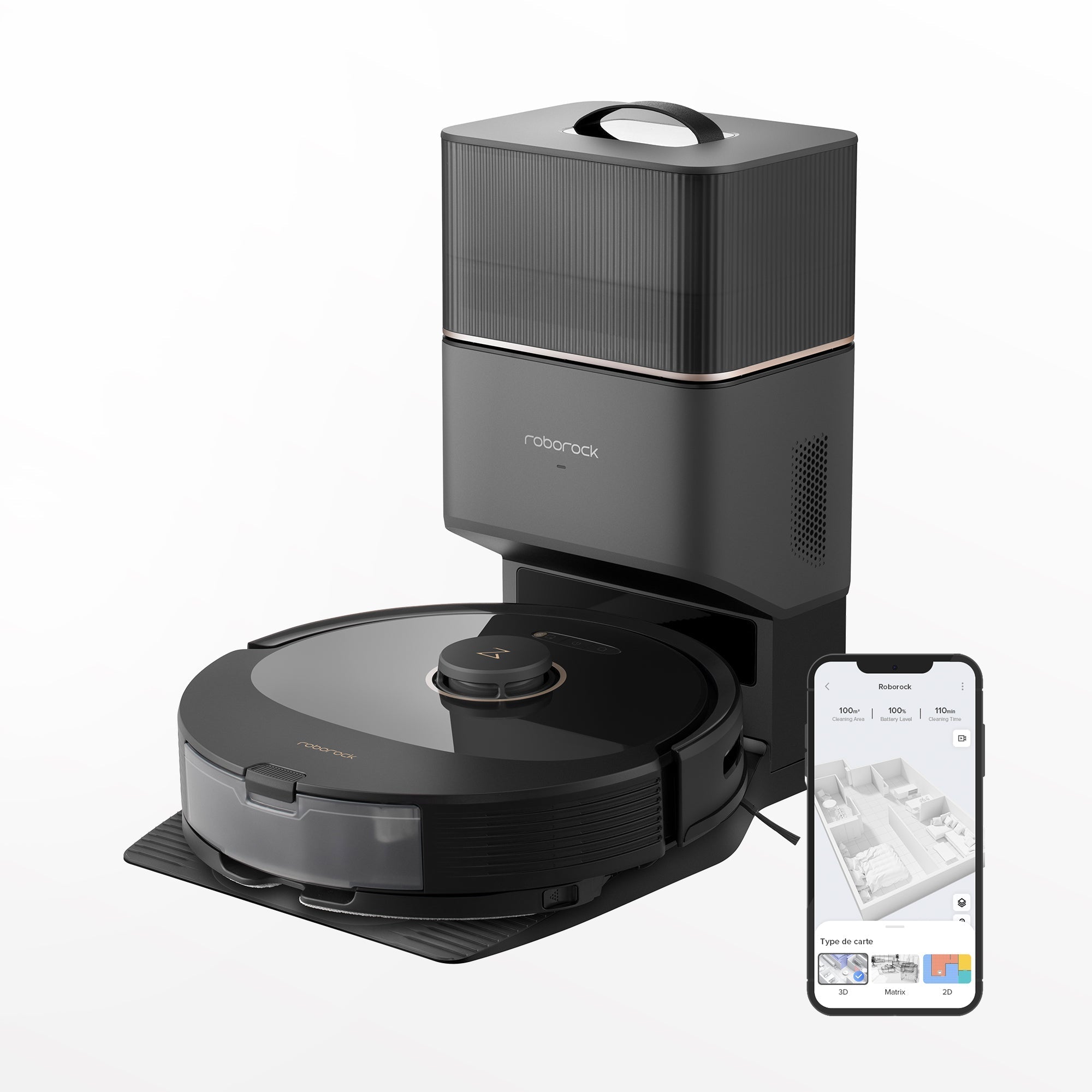
Q5 Max+ is the direct comparison for a more focused dry-cleaning purchase, while Q10 S5+ adds an active sonic mop to an auto-empty arrangement. A Qrevo model is the more relevant alternative if automated pad care is essential. We would want repeated observations of debris removal, obstacle handling and dock transfer before assigning a stronger verdict to Q8 Max+. Its appeal is a practical vacuum-first balance. The limitation is that a basic wet-cleaning attachment can sound more transformative in a feature list than it feels when the owner still has to prepare and wash it after each use.
Separating the dry and wet jobs
Create two Q8 Max+ routines instead of treating vacuum-and-mop as one indivisible feature. The daily task can collect dry debris from the appropriate rooms and return for dust emptying. A separate wet task can cover selected suitable flooring with a clean pad that the owner washes afterwards. This makes the remaining work visible and avoids sending an already dirty cloth through the rest of the home merely because a combined schedule is convenient. Keep the mop materials stored so they can dry properly between uses, and follow the instructions for the water system. If that preparation feels too involved for the desired frequency, recognise it during the return period. The correct upgrade is a washing-station workflow, not simply a stronger suction setting on the same basic wet arrangement.
Reactive Tech should be tested around the furniture and harmless objects that actually affect the route. Watch both avoidance and the cleaning gap left around an object. A successful detour can still leave an unacceptable patch beneath a desk where crumbs collect. Resolve recurring problems with cable management, a sensible boundary or a minor layout change rather than allowing daily rescue notifications to become normal. The auto-empty station needs a stable clear approach, and its transfer sound may be more intrusive than the vacuum's ordinary running mode. Listen during a complete cycle with doors in normal positions. A dock installed beside a desk can change the ownership experience much more than a small difference in a published motor figure.
For consumables, identify the exact DuoRoller pair, filter and bag compatibility before ordering a bulk kit. Check the brush ends after long-hair pickup and the transfer opening after a bulky load. Do not assume the station's bag interval is independent of household size or pets. The app introduces room maps and usage records, so review permissions and household sharing even if remote video is not part of the model's appeal. Canadian buyers should verify the service region and return shipping arrangements for the specific seller. Compare Q8 Max+ with Q5 Max+ on the obstacle and wet features you will use, and with Q10 S5+ on whether active sonic mopping is worth its manual care. The best choice is the routine you will keep using, supported by parts you can obtain without uncertainty.
A useful comparison task is the narrow dry strip beside a rug, where scattered crumbs, a raised edge and a change of surface coincide. Observe whether Q8 follows the boundary productively and collects the debris without repeatedly disturbing the rug. That practical transition says more about this configuration than a clean-room demonstration.
Sources & further reading.
These are the sources behind this research review. Manufacturer claims are not independent performance measurements. Community accounts, when cited, describe individual experiences.
Documentation reviewed: 9 October 2026. Product software and regional bundles can change. Corrections and editorial disclosures.