An editorial assessment of documented capabilities and ownership trade-offs. This is not a hands-on test result or a measurement of reliability.
Task capability 30%7.3
Quarter-acre capacity fits a defined residential role.
Navigation & control 20%8.0
LiDAR and vision directly address difficult satellite installations.
Ownership & upkeep 20%6.8
Sensor care and local parts support remain material questions.
Setup & usability 15%8.0
No separate RTK base can simplify a shaded-yard setup.
Documentation & support clarity 15%6.9
Core claims are clear, but broad avoidance promises lack independent verification.
Compare scores within the same product category. Small decimal differences should not override your needs or the evidence limits.
How the Standpoint Score works
We score five aspects of the documented product on a 0–10 scale, then calculate a weighted total:
- Task capability30% of the total
- Navigation & control20% of the total
- Ownership & upkeep20% of the total
- Setup & usability15% of the total
- Documentation & support clarity15% of the total
This product’s 7.4/10 is a provisional research assessment. It does not claim measured performance, tested reliability or a verified customer satisfaction rate. Compare it with products in the same category, and read each criterion’s reasoning above.
Read the full rubric and score bands ↗The ownership case.
S4 has a clear purpose: bring LiDAR-led navigation to a quarter-acre-class lawn. It deserves consideration for tree cover and constrained installations, but boundary stability and obstacle recovery need stronger evidence than broad claims about sensing power.
Reasons to consider it
- Local LiDAR navigation
- No separate RTK base installation
- Quarter-acre focus
Go in knowing
- 42% slope claim differs from AWD models
- Dynamic avoidance remains untested
- App updates do not guarantee future features
The specification sheet.
Published specifications from the linked sources. Configurations and availability can differ by country.
- Rated area
- 0.25 acre
- Navigation
- 3D LiDAR with AllSense vision
- Slope claim
- 42% / 22°
- Boundary setup
- Virtual, no RTK base required
- Software updates
- Over the air advertised
The case begins under the trees
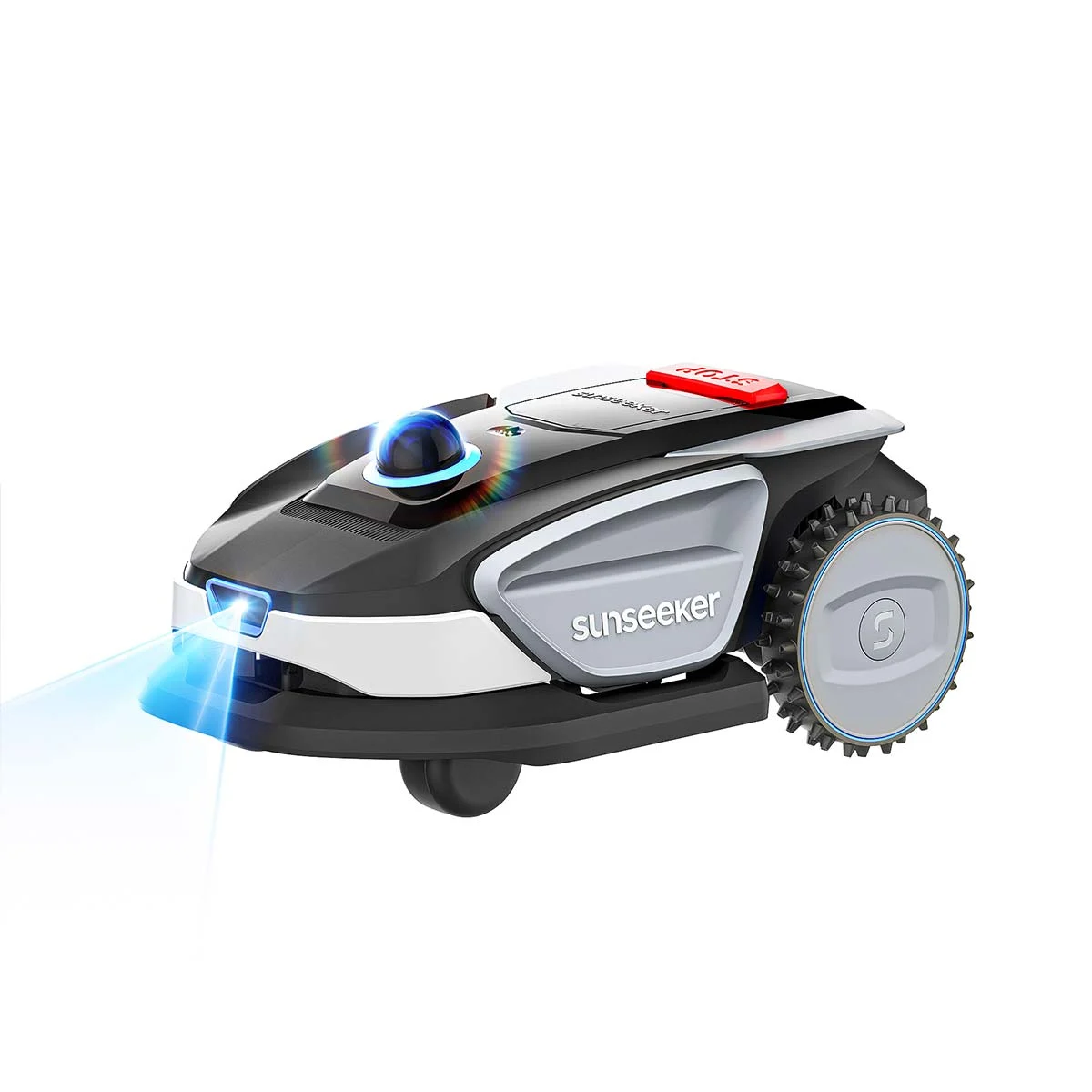
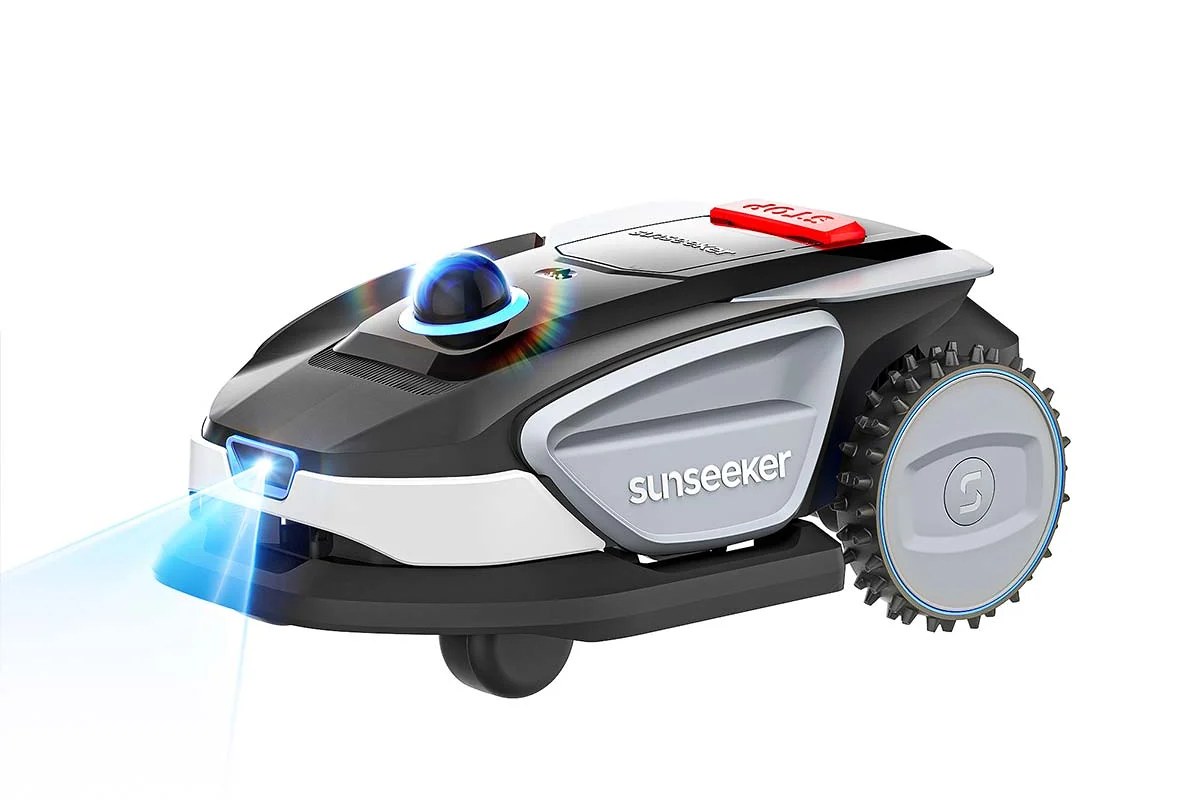
S4 is Sunseeker's local-sensing alternative for a quarter-acre-class lawn. The manufacturer describes 3D LiDAR combined with AllSense vision and no need for a separate RTK base. This can be particularly appealing where a mature canopy or nearby buildings make satellite installation awkward. The right reason to choose it is a property constraint, rather than the idea that LiDAR automatically makes every mower better.
The published 42% slope figure also defines a different terrain role from the AWD X7. A shaded lawn is not necessarily steep, and a steep lawn is not necessarily difficult for satellites. Keep those two problems separate when comparing models. We would map where reception, visibility, traction and physical access are each likely to be difficult, then choose the system that addresses the actual combination.
Map quality must survive normal gardening
The page emphasises quick mapping through the app. A short setup can be convenient, but the more revealing question is how much correction is required after the first week. We would inspect the boundary near beds, unpaved edges and narrow connectors, then observe whether moving furniture or seasonal foliage causes new errors. A local-sensing mower still needs a stable enough environment to understand where it is.
S4's obstacle claims include moving objects. We have not verified those claims, and they should not be interpreted as permission to mow among pets or children. The useful controlled evaluation would use safe inert objects and record avoidance clearance, missed grass and task resumption. Excessively cautious avoidance can leave work behind; overly close approaches can create another problem. A good review needs both sides of that trade.
A sensible quarter-acre purchase needs spare time
A quarter-acre rating does not specify how many hours the machine will need on a fragmented property. Plan room for interruptions and evaluate the complete schedule. A mower can be technically capable of covering a lawn while leaving little flexibility for a weekend gathering or poor weather. We would compare completed area and intervention frequency over several different days before deciding whether S4 has comfortable capacity.
Over-the-air updates are useful, but future improvements should not be included in the purchase value unless they are already delivered. Confirm the current app functions and the regional support route, particularly in Canada. Against V3, S4's appeal is a more structured mapping system for complex or shaded layouts. Against X7, it is a simpler local-sensing installation when AWD is unnecessary. Its strongest case will come from dependable boundaries and docking in the exact locations that trouble another mower, not from a processor specification.
A practical acceptance test before relying on it
For S4, arrange a repeatable route under representative tree cover and along the least distinctive lawn edge. Observe it at different normal daylight times, then make one ordinary furniture change and check whether remapping is required. The purpose is to verify the installation advantage the product is sold to provide. We would separately measure obstacle clearance and the grass left around a fixed safe object. That prevents obstacle detection from receiving automatic credit when it simply transfers too much work to manual trimming. Finally, confirm a return-to-dock routine from the shaded area, because stable outbound navigation alone is not a complete autonomous mowing result.
Setup, maintenance and the ownership decision
S4's local-sensing proposition should shape the installation, not merely the sales comparison. Place the dock where its approach is clear and the surroundings are reasonably stable. A tall hedge that changes with pruning or furniture moved every weekend can make a convenient-looking location less useful over time. Verify returns from the deepest shaded area and the least distinctive open section. With no RTK base to mount, the owner has fewer external components to place, but still needs to understand how the map is created, checked and corrected. Keep early boundaries conservative until several ordinary tasks have completed.
The quarter-acre rating should be converted into a schedule with spare time. Do not assume a smaller area is easy if it contains many narrow connectors or isolated pockets. We would measure completed tasks and the travel needed between them, then set working windows around household use. The 42% slope claim also should be treated separately from the product's strength under trees. A canopy problem and a traction problem are not the same. If the lawn combines severe terrain with shade, a demonstration needs to show both; a LiDAR label alone cannot settle the drive requirement.
LiDAR and camera upkeep is part of maintaining navigation. Inspect and clean the sensing surfaces as directed before concluding that an error requires remapping. Likewise, keep wheels and the cutting assembly clear of accumulated material. A processing specification such as 10 TOPS gives no answer about how easily the owner reaches these areas or how frequently grass sticks beneath the body. Time routine cleaning and a blade change during evaluation. An inexpensive robot can still be costly in owner attention if ordinary maintenance is awkward or replacement consumables are hard to identify.
The source promotes dynamic obstacle avoidance, but we have not verified a response to moving people or animals. Keep them outside the work area and use controlled inert objects when checking clearance and residual grass. Review app permissions, user access and the notification process before leaving the mower to a regular schedule. Software updates may improve behaviour, but the purchase should be based on current delivered functions. After a major update or map edit, observe the difficult sections again. This is a practical way to manage changing software without either assuming every change is flawless or treating updates as inherently problematic.
For a US purchase, ask the seller to explain local repair logistics and replacement battery availability. For Canada, first establish a supported purchasing route rather than infer it from the cited US shop. Compare S4 with V3 on boundary clarity and map complexity, and with X7 on actual terrain needs. The best S4 case is a lawn where local sensing removes a genuine installation obstacle and the simpler drive is sufficient. A clear support agreement and a dependable charging route will contribute more to that outcome than broad claims that the mower handles every environment.
Seasonal storage and return to work
S4's spring restart should revisit the shaded places that motivated the LiDAR purchase. Pruning, new foliage and moved furniture may change the surroundings used during mapping. Clean the sensing surfaces under the approved procedure, inspect cutting parts and follow the correct battery-storage guidance. Observe a complete return from the least distinctive section before restoring regular schedules. The local-sensing installation has fewer external positioning components, but its advantage should be confirmed after ordinary seasonal changes rather than assumed permanent from the first successful map.
Sources & further reading.
These are the sources behind this research review. Manufacturer claims are not independent performance measurements. Community accounts, when cited, describe individual experiences.
Documentation reviewed: 9 October 2026. Product software and regional bundles can change. Corrections and editorial disclosures.