An editorial assessment of documented capabilities and ownership trade-offs. This is not a hands-on test result or a measurement of reliability.
Task capability 30%8.5
AWD and standard/high-cut variants address a broad range of lawns.
Navigation & control 20%8.4
Rich sensing concept, with navigation differences between variants.
Ownership & upkeep 20%7.1
Several sensors and version-specific parts increase maintenance and support complexity.
Setup & usability 15%7.5
Local sensing can ease setup, but exact model selection matters.
Documentation & support clarity 15%6.5
Variant footnotes and future software timing complicate the family claims.
Compare scores within the same product category. Small decimal differences should not override your needs or the evidence limits.
How the Standpoint Score works
We score five aspects of the documented product on a 0–10 scale, then calculate a weighted total:
- Task capability30% of the total
- Navigation & control20% of the total
- Ownership & upkeep20% of the total
- Setup & usability15% of the total
- Documentation & support clarity15% of the total
This product’s 7.8/10 is a provisional research assessment. It does not claim measured performance, tested reliability or a verified customer satisfaction rate. Compare it with products in the same category, and read each criterion’s reasoning above.
Read the full rubric and score bands ↗The ownership case.
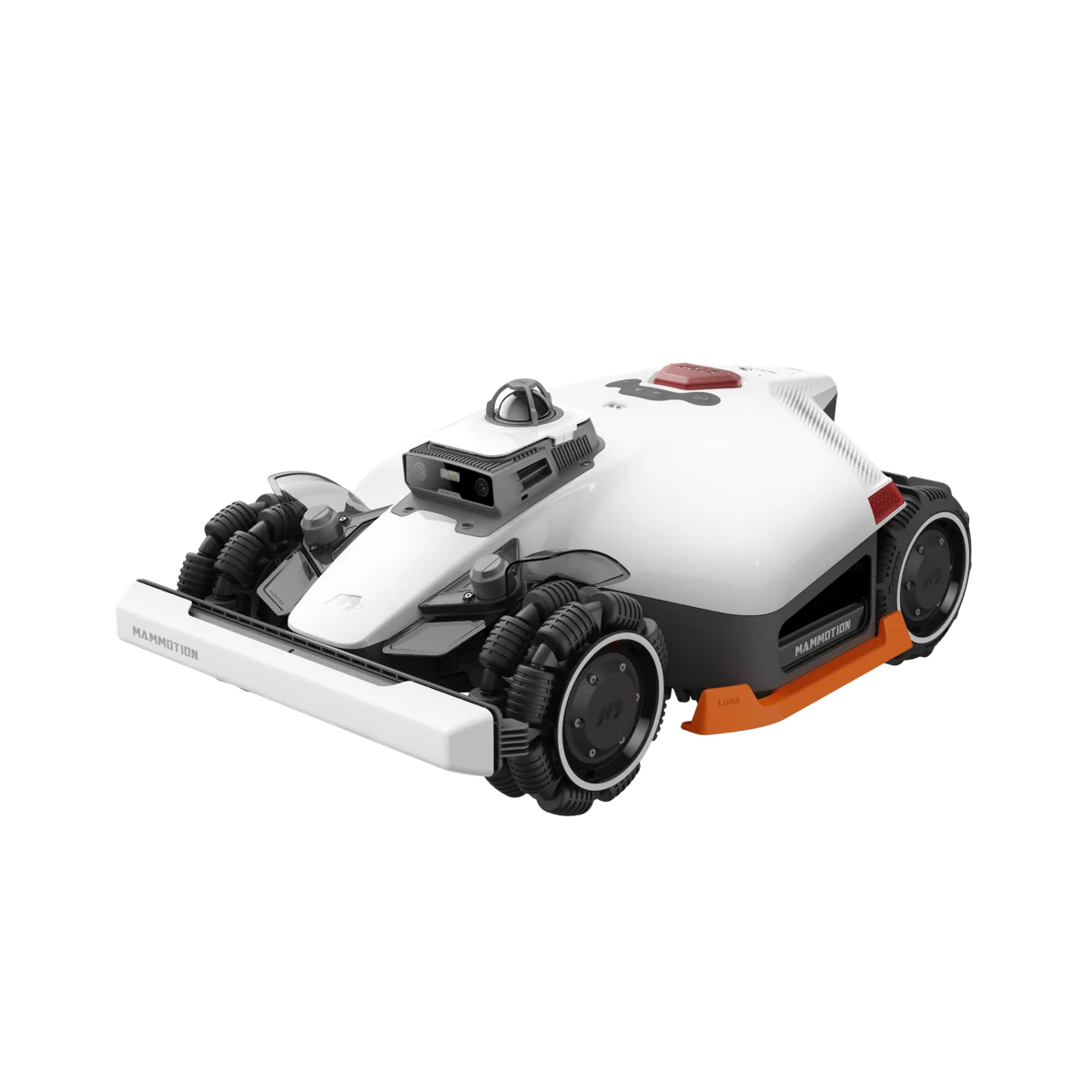
LUBA 3 AWD is a compelling multi-sensor concept with meaningful version differences. The entry 1500 should not be described as having every Tri-Fusion feature advertised for the family, and future software promises should stay outside the purchase calculation.
Reasons to consider it
- Multiple sensing methods across the range
- Separate high-cut variants
- AWD terrain proposition
Go in knowing
- 1500 navigation differs from other versions
- Some software features are roadmap items
- No hands-on traction or reliability result
The specification sheet.
Published specifications from the linked sources. Configurations and availability can differ by country.
- Drive
- All-wheel drive
- Navigation
- LiDAR and vision; NetRTK depends on version
- US variants shown
- 1500, 3000 and 5000; standard and H versions
- High-cut range advertised
- 2.2–4.0 in
- Standard range advertised
- 1.0–2.7 in
- Water resistance
- IPX6
The family name hides a navigation distinction
LUBA 3 AWD is not one universal specification. Mammotion's page promotes a Tri-Fusion combination of LiDAR, vision and NetRTK, then footnotes the 1500 as a LiDAR-and-vision model. That makes version selection unusually important. A buyer should identify which positioning systems are actually present in the cart before comparing the price with another mower. The smallest version is not automatically a less expensive route to every flagship feature.
The same care applies to cutting height. Standard and H variants serve different lawn preferences, with published ranges of 1.0–2.7 and 2.2–4.0 inches. For North American owners maintaining taller grass, this distinction may be more consequential than a processing specification. Changing an app setting cannot necessarily turn the standard hardware into the high-cut version, so obtain the right machine at purchase.
Sensor redundancy needs a practical purpose
Combining local sensing with satellite correction is attractive because a property can contain several difficult environments: open grass, tree cover, narrow passages and areas near a house. The useful test is whether the mower transitions between them without requiring attention. Merely counting sensors does not prove that recovery is smooth. We would deliberately evaluate the route from an open section into the least distinctive shaded section and back to the dock.
AWD gives this LUBA a terrain-oriented identity, but wheel grip and navigation remain separate questions. A machine can retain position while spinning on soft turf, or climb confidently while needing a map correction. The review should measure both. We would also watch tight turns beside beds and the areas repeatedly crossed during charging, because regular robotic traffic can expose weaknesses that a single demonstration pass misses.
Separate delivered software from the roadmap
The source page describes partial remapping and cloud map storage, while also labelling straight-line boundary adjustment as a late-2026 feature. Some other software text carries rollout timing. We would not treat those promises as already verified on a delivered machine. Save a copy of the feature list at purchase and ask support which firmware enables each function you need. The current app experience matters more than a future diagram.
Live yard viewing and remote connectivity introduce useful convenience and additional account responsibilities. Establish included service periods and what remains available afterward. The most persuasive reason to choose LUBA 3 over a simpler mini or YUKA is a lawn that uses its terrain and navigation capability. On a small flat rectangle, the extra systems may add cost without saving proportionate time. A long-term verdict awaits cut consistency, intervention logs and service experience from the exact version.
A practical acceptance test before relying on it
An effective LUBA 3 comparison begins by recording the exact model and firmware, then identifying whether that unit uses NetRTK in addition to local sensing. Test the same transition between open and shaded ground several times and note any pauses or boundary deviations. This keeps the review tied to the delivered variant rather than the family headline. We would also save the map before making a small boundary correction and check the recovery path offered by the current app. That is more useful than assuming a promised future editing tool will solve a present problem. The strongest acceptance result would combine consistent coverage with an understandable way to correct mistakes.
Setup, maintenance and the ownership decision
LUBA 3 ownership begins with a specification record. Photograph the model label, save the order's capacity and height variant, and note whether the delivered unit uses NetRTK. The 1500's footnoted LiDAR-and-vision arrangement should not be obscured by the broader Tri-Fusion advertising. This matters during troubleshooting: a network-correction question is different from a local-sensing problem. Record the firmware alongside any report of a mapping error. With several variants and advertised software rollouts, a precise description gives support something more useful than saying that a LUBA 3 is not behaving as expected.
The map tools should reduce the cost of small garden changes. Learn the current process for correcting a single boundary and restoring an earlier useful configuration before making extensive edits. The page advertises cloud map storage, but that convenience also makes account access important. Keep recovery details secure and establish how family users receive permission. We would not assume late-2026 editing promises are present until the delivered app demonstrates them. A mower bought to handle a difficult landscape needs dependable existing controls; a roadmap is insufficient when a newly planted bed must be protected today.
Multiple sensors create several surfaces and components to inspect. Follow the manual for cleaning the LiDAR window, cameras and body, rather than treating IPX6 as permission for aggressive washing. On an AWD mower, wheel debris and material caught near the cutting system can affect both traction and finish. Check the correct blades and fasteners after contact with rough ground. Sensor cleaning and underside maintenance should be timed during an evaluation because a very capable navigation system can still demand regular attention on a dusty or sticky lawn. The practical maintenance burden cannot be read from the sensor specification alone.
Remote live viewing should be set up deliberately. Consider whether the household actually wants camera access, who can use it and whether the view includes neighbouring areas. Confirm the service periods for remote connectivity and distinguish them from any positioning service offer. We have not audited the product's data handling. Before allowing routine work, test local stopping, notifications and the response to an ordinary blocked route. Object recognition claims should not be converted into permission to mow around people or pets; the working area still needs the separation required by the instructions.
The ownership comparison should include the exact battery, wheel and disc replacement route. Mammotion's similarly named generations make vague accessory listings risky. Ask the local seller how repairs are handled and where the mower must be shipped, particularly for a Canadian purchase sourced from US advertising. A full-size LUBA is easiest to justify when its sensors, drive and area capacity all address actual needs. If the property is uncomplicated, money spent on a clear repair arrangement and adequate scheduling margin may be more valuable than paying for the most elaborate family specification.
Seasonal storage and return to work
Before storing LUBA 3, record the exact firmware and map configuration and follow the battery guidance for the delivered variant. When bringing it back, verify current app functions rather than assuming a promised roadmap feature has appeared. Inspect LiDAR and camera surfaces and recheck boundaries altered by seasonal growth or landscaping. If a remote-service offer changes during storage, distinguish its effect on monitoring from any positioning requirement. This keeps spring troubleshooting tied to the actual unit and its current services.
Sources & further reading.
These are the sources behind this research review. Manufacturer claims are not independent performance measurements. Community accounts, when cited, describe individual experiences.
Documentation reviewed: 9 October 2026. Product software and regional bundles can change. Corrections and editorial disclosures.