An editorial assessment of documented capabilities and ownership trade-offs. This is not a hands-on test result or a measurement of reliability.
Features & capability 30%8.0
Full-frame stills, stabilization and two-card recording cover a broad range of work.
Compatibility & connectivity 20%8.4
E-mount lenses and useful physical connections expand the system.
Ownership & upkeep 20%7.4
Common battery family and retained support help, while age and unequal slots add checks.
Setup & everyday use 15%7.6
Custom controls suit experienced users; older screen and menu behaviour need a trial.
Documentation & support clarity 15%8.8
Detailed specifications and a 2026 firmware listing remain available.
Compare scores within the same product category. Small decimal differences should not override your needs or the evidence limits.
How the Standpoint Score works
We score five aspects of the documented product on a 0–10 scale, then calculate a weighted total:
- Features & capability30% of the total
- Compatibility & connectivity20% of the total
- Ownership & upkeep20% of the total
- Setup & everyday use15% of the total
- Documentation & support clarity15% of the total
This product’s 8.0/10 is a provisional research assessment. It does not claim measured performance, tested reliability or a verified customer satisfaction rate. Compare it with products in the same category, and read each criterion’s reasoning above.
Read the full rubric and score bands ↗The ownership case.
A practical stills-first entry into full-frame E mount if the used body is sound and the lens budget survives. Its 8-bit video workflow and tilt-only screen require realistic expectations.
Reasons to consider it
- Full-frame sensor and in-body stabilization suit varied stills work
- Two slots allow several recording and backup arrangements
- E-mount lens choice supports compact or specialist kits
Go in knowing
- Second slot is limited to UHS-I operation
- Screen does not face forward for self-filming
- 8-bit video output limits the case for demanding grading workflows
The specification sheet.
Published specifications from the linked sources. Configurations and availability can differ by country.
- Sensor
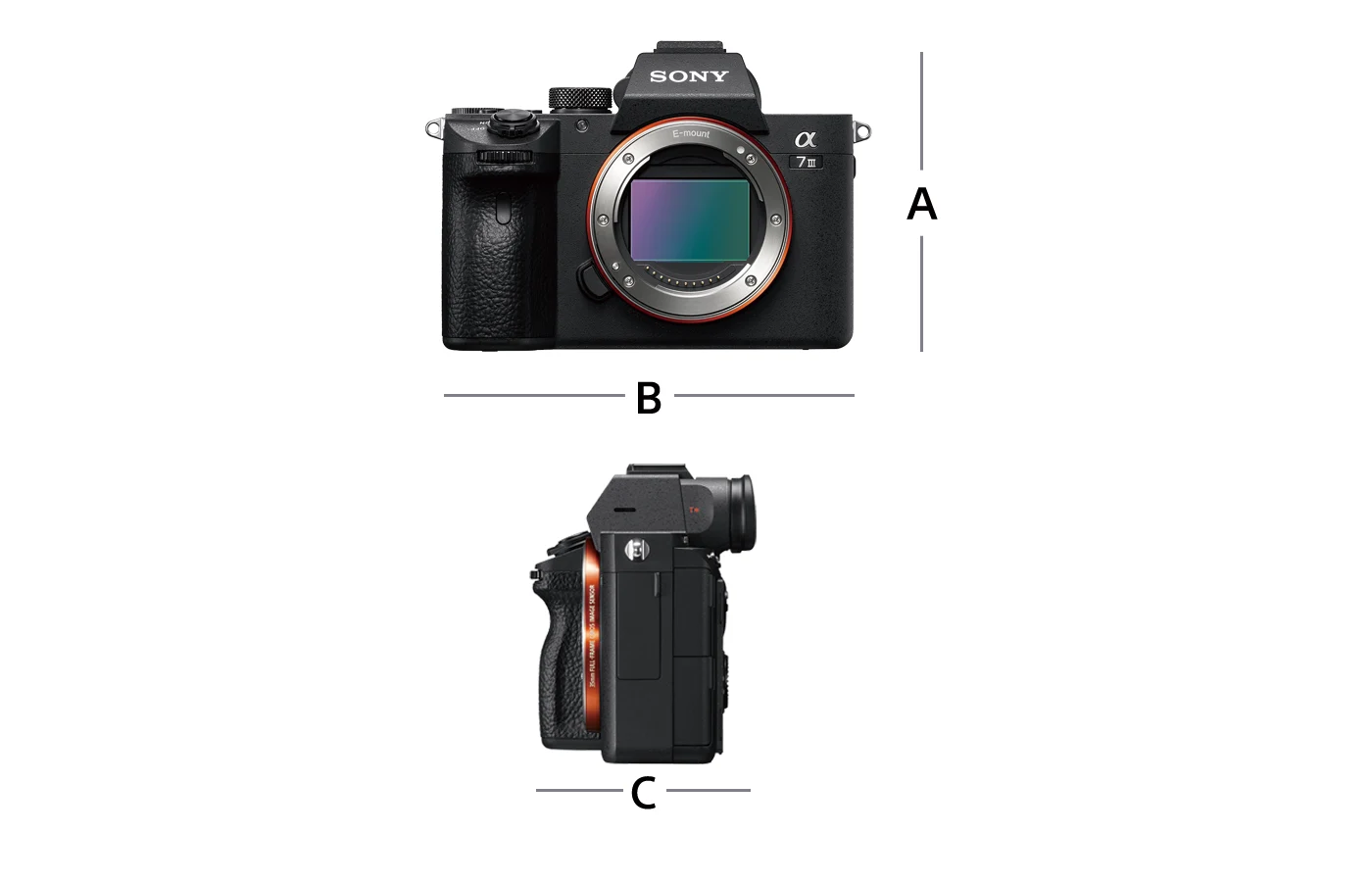
- 24.2 MP full-frame Exmor R CMOS
- Stabilization
- Five-axis sensor-shift system
- Maximum continuous rate
- 10 fps, subject to settings
- Media
- Two SD-compatible slots; only slot 1 supports UHS-II
- Video
- 4K up to 30p; 8-bit HDMI output
- Display
- 3-inch tilting touchscreen
- Battery
- NP-FZ100
A full-frame system is the real purchase
The Alpha 7 III is most persuasive when its purchase leaves enough money for a lens that suits the work. A full-frame body with an awkward or unsuitable lens is not an automatic improvement over a smaller camera carried comfortably. For portraits, the useful lens might be a modest prime; for family trips, a versatile zoom may matter more. Start with the pictures and the weight you are prepared to carry, then judge the body as part of that system.
Sony's current US product page still describes the original model, but that does not make every example new or every used listing equivalent. Check whether the offer is body-only, a particular lens kit or a third-party bundle. Our score evaluates the documented tools and ownership proposition, without assigning invented image-quality or durability results. An individual camera's history remains a separate purchase decision, especially for a model that may have seen years of assignments.
Moderate resolution can keep the workflow comfortable
The 24.2-megapixel sensor provides a useful balance for general still photography. Its resolution gives room for ordinary printing and some cropping without making the largest possible files the default goal. That can make editing, exporting and backing up a busy family or event shoot more manageable. It does not establish how the sensor compares with every newer camera in noise or dynamic range, which would require controlled measurements and consistent processing.
Five-axis sensor-shift stabilization adds flexibility with appropriate lenses, but the practical benefit depends on how the camera is held and what the subject is doing. It cannot stop a musician's hands or a running dog. Set shutter speed for subject movement before chasing a low ISO value. Buyers moving from a phone should also remember that shallow depth of field can become a disadvantage when several people stand at different distances. Choosing an aperture deliberately is part of getting value from the larger sensor.
Autofocus tools deserve a hands-on compatibility check
The documented hybrid autofocus system combines broad phase-detection coverage with contrast detection and eye-related functions. Those tools can help with subject placement, but they do not choose the intended person in every crowded scene. Set up a small number of focus-area options you understand and practise switching between them. A camera that offers many modes can still be frustrating if the useful one is buried behind an unfamiliar button assignment inherited from a previous owner.
Sony advertises a maximum continuous rate of ten frames per second under qualified conditions. That number should remain separate from focus consistency and the ability to follow movement in the finder. For a purchase trial, use a familiar lens and inspect a whole sequence rather than the best frame. If adapting lenses, check Sony's compatibility information for the exact adapter and lens. Physical attachment alone does not prove that eye detection, continuous focus or every exposure function behaves as expected.
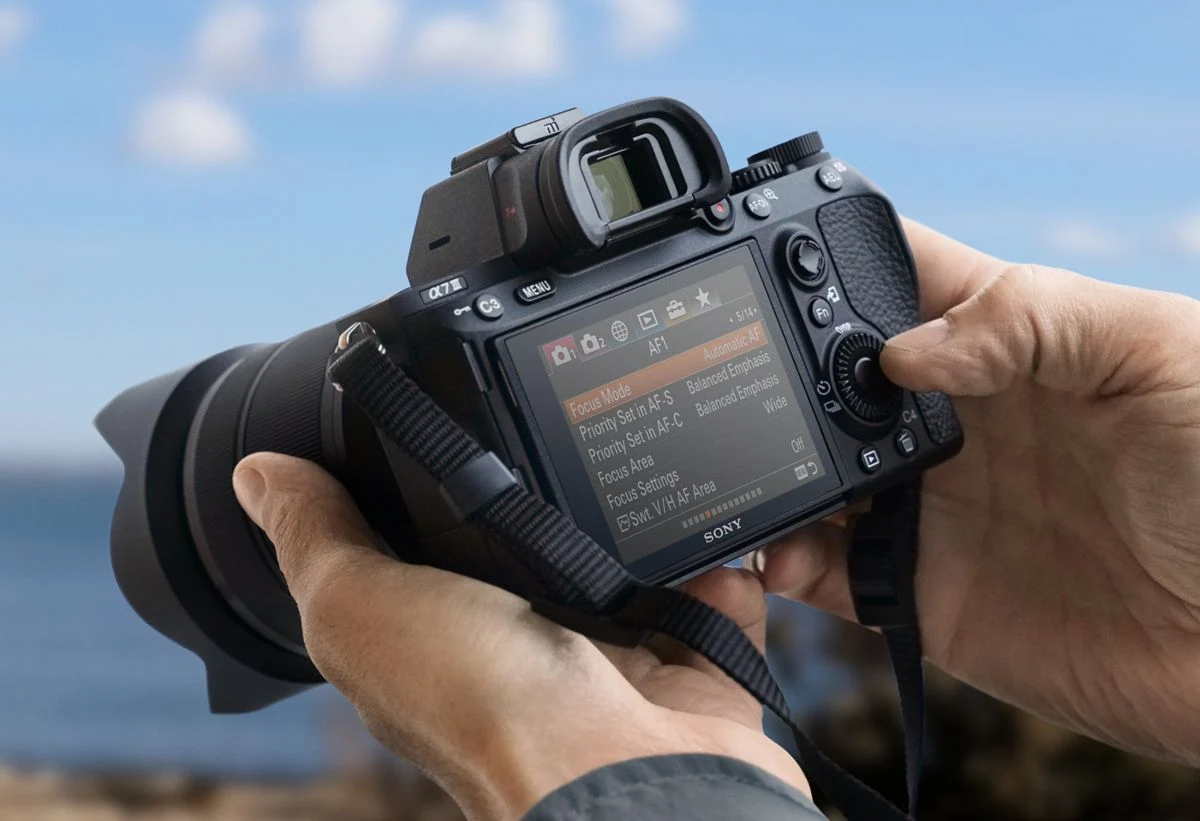
Two card slots are useful, but they are unequal
The A7 III accepts SD media in both slots, with UHS-II support in the first and UHS-I support in the second. That distinction can affect the value of buying very fast cards and the behaviour of a simultaneous-recording setup. It is worth planning the arrangement before an important shoot: duplicate files, separated RAW and JPEG files, and overflow are different strategies. The mere presence of two cards does not tell you which protection the camera is providing.
During a used inspection, test writing and playback from each slot, then transfer the files to another device. Confirm that the card door closes securely and that changing cards feels normal. After purchase, include an off-camera backup routine; two cards stored in the same camera share risks such as loss or damage to the bag. This is a model where a small amount of menu preparation can be more valuable than an expensive accessory. Make the recording arrangement explicit and verify it before relying on it.
The video formats define a sensible ceiling
The A7 III records 4K up to 30p and provides 8-bit HDMI output. Picture profiles, including log options, are documented, but a log label does not turn the recording into a later-generation 10-bit workflow. For straightforward interviews, travel clips and carefully exposed material, the available tools may fit the job. For extensive colour manipulation or matching a demanding production pipeline, check the complete format requirements before choosing the body because it once had a strong hybrid reputation.
The tilt-only rear display also shapes solo filming. It helps with low or high viewpoints behind the camera, but does not provide a forward-facing composition check. An external monitor adds another battery, cable and mounting decision. Microphone and headphone connections are useful for a controlled setup, yet their presence does not establish clean audio without a rehearsal. We have not measured heat limits, rolling shutter or recording endurance. Test the exact clip length, exposure profile and editing path that the intended project needs.
Battery, connections and controls are everyday features
Sony specifies the NP-FZ100 battery and supports USB power arrangements through the documented connections. A used bundle should identify the actual battery and charger, not merely promise several spares. Capacity changes with age and use, and an unknown pack can undermine confidence in an otherwise healthy camera. Check the condition of the battery compartment and verify the charging method you plan to use. A familiar battery label does not eliminate the need to inspect its origin and condition.
The body has configurable controls, a joystick and an electronic finder, so spending time on setup can make it far more comfortable than its default layout suggests. Conversely, copying somebody else's settings without understanding them can create surprises. Build a stills configuration first, then a separate video routine if needed. Test the ports with real cables, especially if the camera will be tethered or used with a monitor. A connection that works only when pressure is applied to the plug is a repair concern, not a harmless quirk.

Used condition matters more than a reputation
Inspect the sensor, mount, viewfinder, display hinge, hot shoe and card door. Take photographs at different apertures with a lens whose behaviour you know, and look for obvious contamination or inconsistent operation. Ask about repairs, impacts and moisture exposure. An advertised shutter count adds context but does not certify the remaining life of the mechanism, while cosmetic wear does not automatically mean the camera has been neglected. The evidence should be considered together rather than reduced to one number.
Keep expectations about environmental protection proportionate. Sony qualifies its dust and moisture resistance; this is not a waterproof body, and an older example has an unknown history of seals and port-cover wear. Protect the equipment in rain, store it dry and follow the official cleaning guidance. For Canadian and US purchases, confirm the original sales territory, local service route and any transferable coverage. A low imported price can be less attractive if the buyer assumes warranty rights that the seller cannot document.
Firmware support is useful evidence, not a future promise
The official download listing shows firmware 4.04 dated April 15, 2026, and separately lists software and product alerts. That distinction matters: an available desktop application is not the same thing as a camera firmware update, and the presence of an old cloud-service reference does not mean that service remains active. Read the model-specific update instructions and current app requirements before preparing a connection workflow around an old tutorial.
The A7 III's buying case is strongest for a photographer who wants its stills tools and the E-mount system more than the newest video conveniences. Compare the total cost of body, lenses, cards and a dependable power kit. If the difference to a newer option is small after those costs, the screen, media and recording compromises deserve more weight. If the savings are substantial and the particular body checks out, this remains a coherent documented platform for making photographs. Its age should prompt careful selection rather than either automatic dismissal or automatic enthusiasm.
Sources & further reading.
These are the sources behind this research review. Manufacturer claims are not independent performance measurements. Community accounts, when cited, describe individual experiences.
- Alpha 7 III official specifications ↗manufacturer
- Alpha 7 III product overview ↗manufacturer
- ILCE-7M3 downloads and product alerts ↗support
Documentation reviewed: 9 October 2026. Product software and regional bundles can change. Corrections and editorial disclosures.