An editorial assessment of documented capabilities and ownership trade-offs. This is not a hands-on test result or a measurement of reliability.
Task capability 30%8.6
Wide dual cutting and broad height adjustment complement AWD.
Navigation & control 20%8.5
Steered AWD and network positioning form an ambitious control design.
Ownership & upkeep 20%6.8
Complex mechanical hardware and variant-specific services add ownership questions.
Setup & usability 15%7.3
Network RTK can simplify setup where coverage exists.
Documentation & support clarity 15%7.4
Useful test footnotes, but availability and service distinctions need attention.
Compare scores within the same product category. Small decimal differences should not override your needs or the evidence limits.
How the Standpoint Score works
We score five aspects of the documented product on a 0–10 scale, then calculate a weighted total:
- Task capability30% of the total
- Navigation & control20% of the total
- Ownership & upkeep20% of the total
- Setup & usability15% of the total
- Documentation & support clarity15% of the total
This product’s 7.8/10 is a provisional research assessment. It does not claim measured performance, tested reliability or a verified customer satisfaction rate. Compare it with products in the same category, and read each criterion’s reasoning above.
Read the full rubric and score bands ↗The ownership case.
X4 is one of the more mechanically ambitious mower families in this group. Its turning system and wide cut are worth examining, but the advertised slope and efficiency figures carry test conditions that prevent treating them as universal lawn results.
Reasons to consider it
- Wide 17-inch cutting system
- Broad 0.75–4-inch height range
- AWD steering architecture
Go in knowing
- Slope and output claims have test conditions
- Network RTK depends on coverage
- Exact variant affects included services
The specification sheet.
Published specifications from the linked sources. Configurations and availability can differ by country.
- US versions
- X430 and X450
- Published areas
- 1.0 and 1.5 acres
- Cutting width
- 17 in
- Height range
- 0.75–4 in
- Drive
- Xero-Turn AWD
- Maximum slope claim
- 84% / 40°
A wider cut and a different way to turn
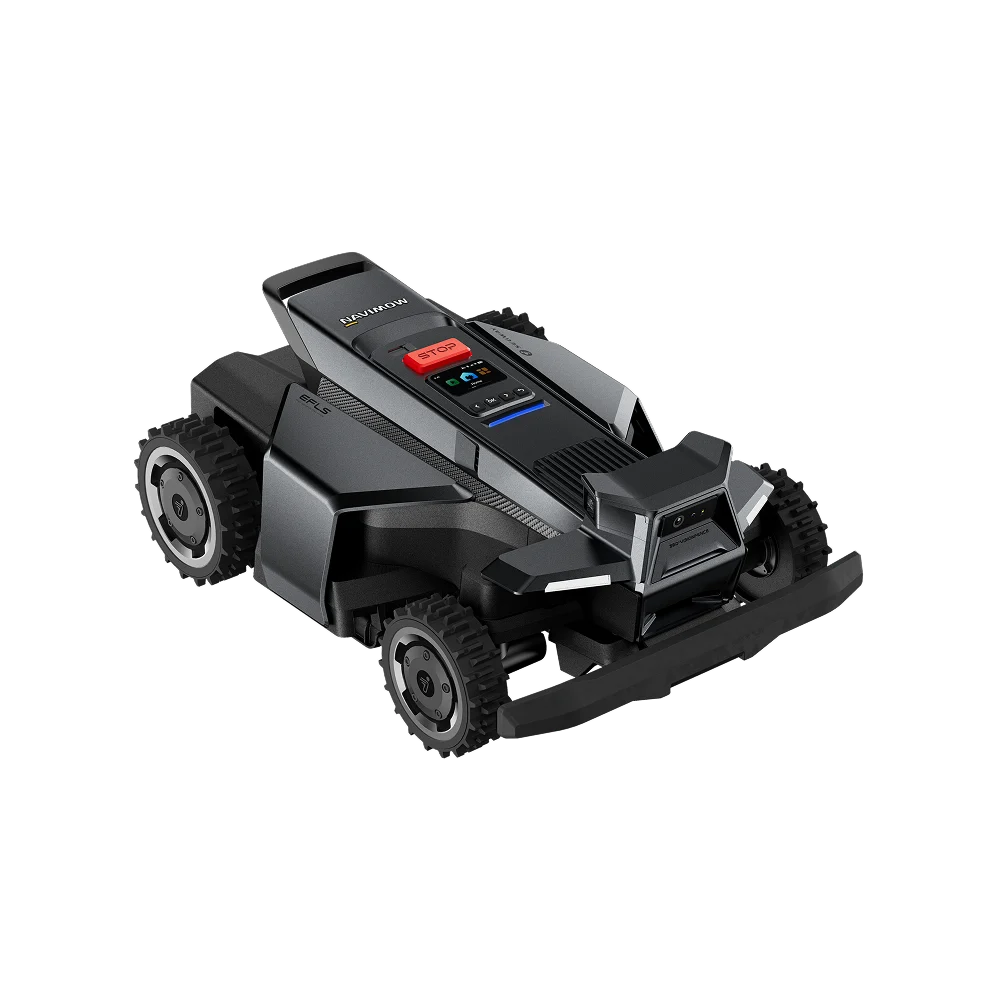
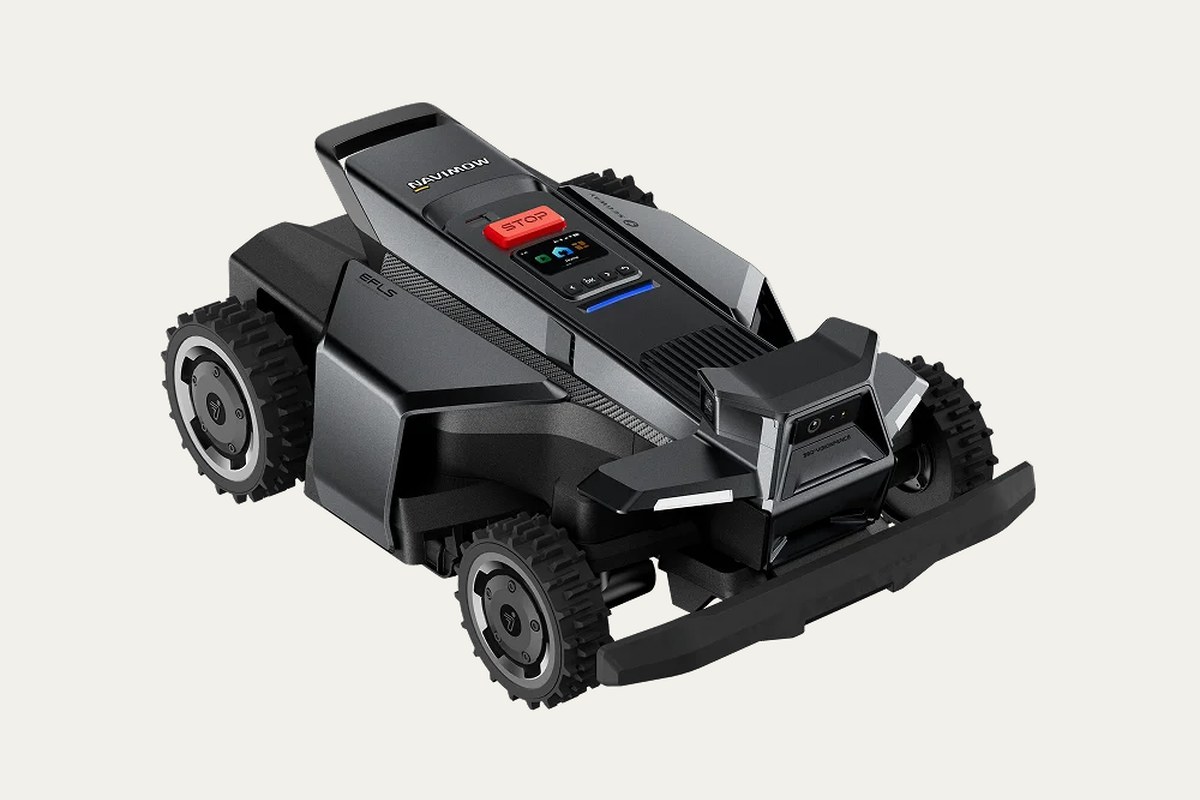
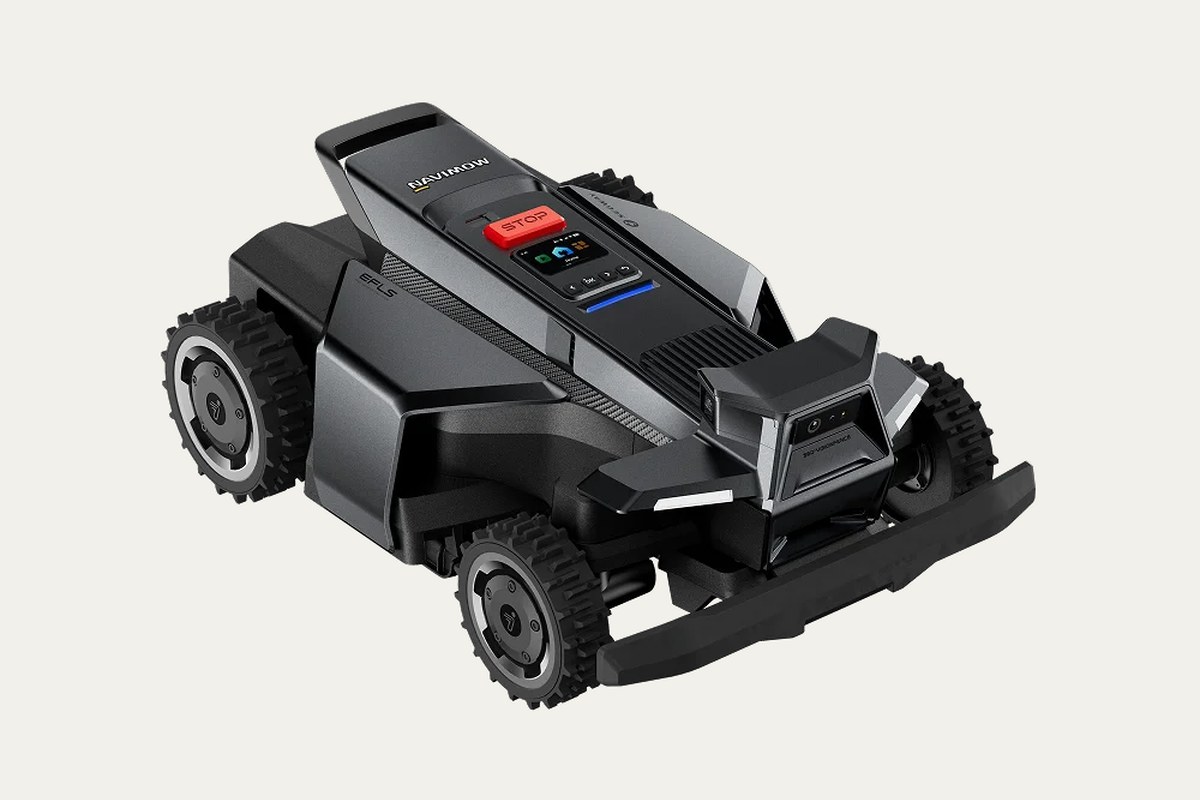
X4 changes the Navimow proposition more substantially than a simple capacity upgrade. The US page describes Xero-Turn AWD, steering that controls the front wheels, and a 17-inch cutting width. The purpose is to combine terrain access with less destructive manoeuvring and faster coverage. That is an appealing engineering direction, but we have not measured whether the claimed turf benefits hold on soft or fragile lawns.
The range shown comprises X430 and X450, rated for one and 1.5 acres respectively. We review the platform together rather than counting two bundles as unrelated inventions. Buyers still need the exact variant because included remote-service periods differ. The manufacturer distinguishes network correction access from Connect+ functions such as remote control and tracking; those services should not be collapsed into one vague claim of free connectivity.
The footnotes make the claims usable
The advertised 84% slope capability comes with specific testing conditions, including controlled grass height and manual remote-control testing. Step-climbing figures are also tied to cutting height and approach conditions. Those qualifications are valuable. They tell a buyer why a steep, slippery turning point on a real lawn cannot be certified by repeating the headline number.
The wide deck and 0.75–4-inch height range broaden the practical appeal beyond climbing. Yet a wide machine still needs room to pass through gates and turn around planting beds. We would measure accessible routes before considering coverage speed. The manufacturer's efficiency calculation uses a flat obstacle-free lawn and repeated mowing-and-charging cycles, so it should be treated as a comparison scenario rather than a promise for a heavily landscaped acre.
Antenna-free operation has a coverage condition
Network RTK can simplify setup where service is available, and the page provides a postcode coverage check. A physical GNSS antenna is also described as an installation option in the footnotes. The sensible choice is whichever arrangement proves stable on the property. A lack of hardware on the roof is convenient, but not enough to justify unreliable daily positioning.
Before recommending X4, we would compare turn marks against a conventional differential-drive mower, test recovery at changes of grade and measure edge strips around hard obstacles. We would also verify current delivery status and software rather than assume every launch promise is already available. The model page showed sold-out options during research. X4's value is strongest when the owner needs the combination of AWD, deck width and height range; a smaller smooth lawn may be better served by a simpler product with an easier service route.
A practical acceptance test before relying on it
X4's steering claim warrants a repeated-turn comparison on safe representative turf. Photograph the same turning area before and after a realistic sequence, then compare the result with a conventional robot operating within its limits. Also measure the narrowest required passage with the full machine width in mind. A wide deck cannot produce useful efficiency in an area it cannot enter. We would verify current network coverage and the included Connect+ period on the selected X430 or X450 before starting. That keeps the assessment focused on delivered hardware and services. The result should show whether the ambitious chassis improves this particular lawn, not just whether it looks advanced.
Setup, maintenance and the ownership decision
X4's broad cutting width makes the route survey unusually important. Measure gates, connectors and turning spaces using the machine dimensions, including the way the steered front wheels move through a manoeuvre. A 17-inch cutting system can improve open-area coverage yet still be a poor fit for a lawn divided by tight access. The first installation should demonstrate the complete charging journey rather than only the mowing area. Keep the map aligned with the household's real vehicle and gate routine. An ambitious drive system does not create access where the physical environment denies it.
Network RTK can remove an antenna-mounting task where coverage is available, but the page's coverage check should be completed for the actual address. Clarify the alternative antenna arrangement and which installation is supplied. Also distinguish correction access from Connect+ remote services. The X430 and X450 have different included periods in the source, so save the selected offer and renewal terms. A buyer should not discover later that a feature expected to be permanently included depends on a separate service. Account recovery and authorised-user management belong in the handover alongside the mowing map.
The Xero-Turn steering and traction system introduce new reasons to observe maintenance and turf effects. Check for debris near moving wheel assemblies and follow the cleaning instructions rather than improvising around the mechanism. We would photograph repeated turning locations and compare them after a realistic workload. The published slope and step claims have controlled test conditions, so do not use them as everyday operating targets. A wide machine climbing successfully is still not proof that it can turn safely beside a drop or on wet ground. Boundaries and recovery routes should be conservative enough that routine work rarely approaches those extremes.
The dual cutting system and broad height adjustment create a more versatile specification, while also making correct consumables important. Confirm blades, fasteners and replacement discs for the exact X4 version. Inspect after contact with debris and stop if vibration changes. The machine's ability to recognise objects should not be treated as proof that small hazards can remain on the lawn. Keep children and animals out of the active area and learn local stopping controls before relying on remote operation. A camera-assisted map and obstacle system are useful aids within a safe installation, not substitutes for one.
X4 deserves a support enquiry that goes beyond an ordinary accessory order. Ask who can diagnose steering, suspension and drive faults locally and how a heavy unit reaches that service point. Compare replacement-part prices and actual delivery status with the alternatives. The reviewed page showed sold-out options, so an estimated availability date should not be confused with equipment ready to maintain the lawn this week. If the property needs the combined width, height range and AWD architecture, the complexity may be justified. If it needs only simple flat-lawn coverage, a less elaborate supported machine can remain the more practical choice.
Seasonal storage and return to work
The X4's seasonal checklist should distinguish mechanical inspection from network setup. Check the steered wheel and cutting assemblies under the manual's procedure, then confirm the selected positioning arrangement and current Connect+ status. Record whether the unit is X430 or X450 when applying battery and service guidance. At restart, inspect narrow routes for new obstructions before using the wide deck across the full lawn. A staged return to work provides an opportunity to observe turning behaviour and turf condition before the robot resumes frequent passes.
Sources & further reading.
These are the sources behind this research review. Manufacturer claims are not independent performance measurements. Community accounts, when cited, describe individual experiences.
Documentation reviewed: 9 October 2026. Product software and regional bundles can change. Corrections and editorial disclosures.