An editorial assessment of documented capabilities and ownership trade-offs. This is not a hands-on test result or a measurement of reliability.
Task capability 30%8.1
Leak-control and waste-covering features address specific litter-box chores.
Navigation & control 20%7.8
Physical controls and app functions provide several operating choices.
Ownership & upkeep 20%6.8
Liner, drawer and optional odour systems require continued attention.
Setup & usability 15%7.4
Low entry is useful, with acclimation and placement still essential.
Documentation & support clarity 15%7.5
Explicit age restrictions are clearer than broad introductory all-ages wording.
Compare scores within the same product category. Small decimal differences should not override your needs or the evidence limits.
How the Standpoint Score works
We score five aspects of the documented product on a 0–10 scale, then calculate a weighted total:
- Task capability30% of the total
- Navigation & control20% of the total
- Ownership & upkeep20% of the total
- Setup & usability15% of the total
- Documentation & support clarity15% of the total
This product’s 7.6/10 is a provisional research assessment. It does not claim measured performance, tested reliability or a verified customer satisfaction rate. Compare it with products in the same category, and read each criterion’s reasoning above.
Read the full rubric and score bands ↗The ownership case.
Purobot Max 3 is worth considering when a low entry and accessible side waste bin address specific household needs, and when the cat meets the manufacturer's restrictions.
Reasons to consider it
- Low wide entrance
- Side waste bin
- Smart waste-covering option
Go in knowing
- Six-month minimum and weight restrictions apply
- Odour consumables add cost
- Do not confuse with redirected PuraMax 2 listing
The specification sheet.
Published specifications from the linked sources. Configurations and availability can differ by country.
- Task
- Automatic litter separation
- Waste bin
- 7 L
- Cat restriction
- 6+ months and 1.5–10 kg per current page
- Sensing
- 12-sensor system, manufacturer description
The current model behind an older link
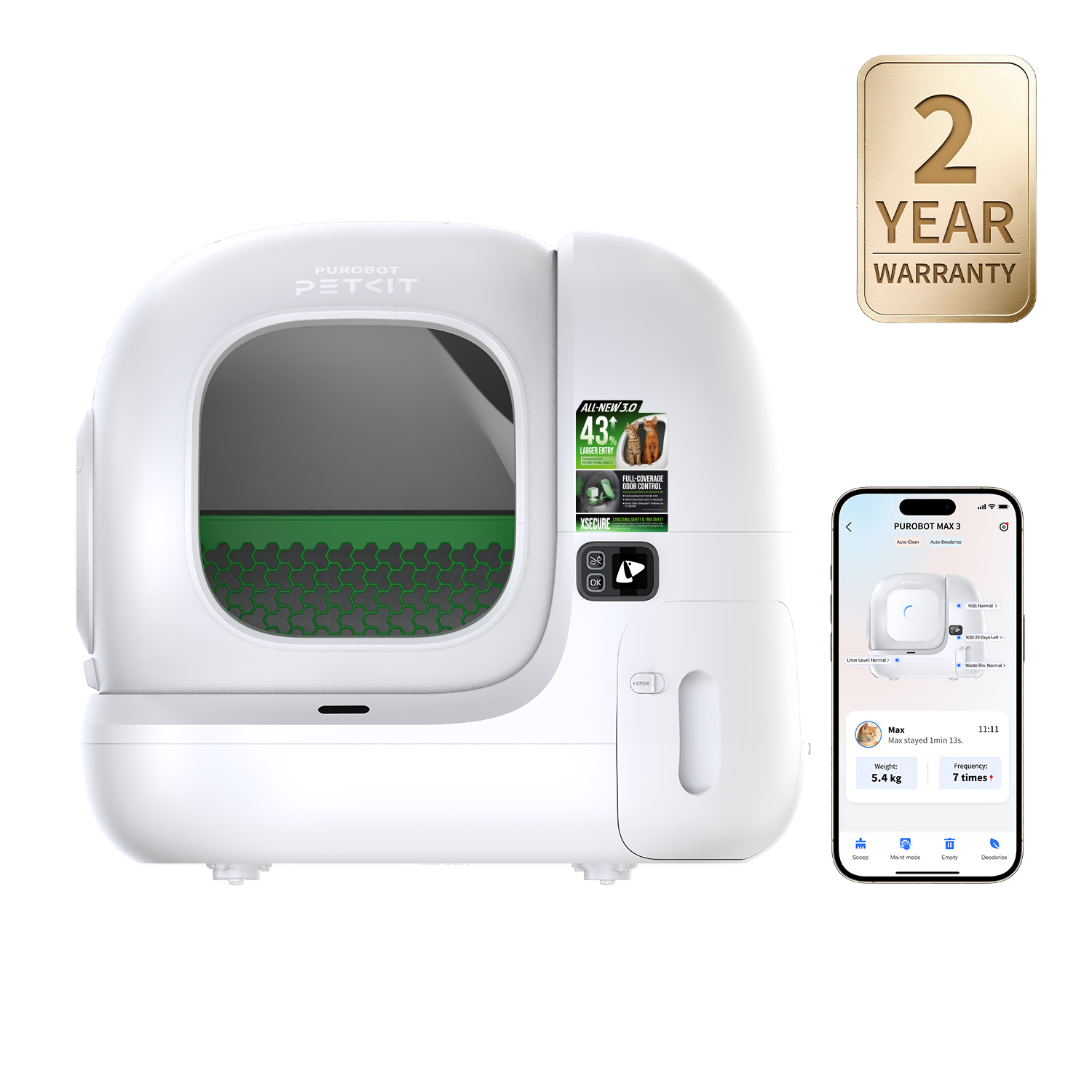
PETKIT's former PuraMax 2 bundle link now redirects to Purobot Max 3, so this review concerns the Max 3 rather than silently combining two generations. The current page describes a low, wide entry, a seven-litre side waste bin, app-based usage tracking and a redesigned leak-control structure. It specifies cats at least six months old within a stated 1.5–10kg range, despite broader introductory language about all ages. The explicit restrictions should govern a purchase. The robot's purpose is to separate waste from suitable litter and make routine scooping less frequent. It still depends on animal acceptance, correct setup and a person who empties, refills and cleans it. None of those outcomes has been independently tested here.
Entry comfort matters more than a large volume claim
A low opening can be useful for a cat that dislikes climbing into a high entrance, but internal space and turning posture matter too. A quoted cylinder volume does not tell the owner exactly how comfortably a particular animal can stand, turn and dig. Compare dimensions with the existing box and observe the animal without forcing the transition. Keep an acceptable alternative available while introducing the robot according to the manufacturer's guidance. The machine should be chosen around the cat, not around the smallest space where an owner can squeeze it. A low entry that faces a cramped wall or noisy appliance may be less inviting than a conventional box in a better location.
Mechanical design and sensing should both be understood
PETKIT describes twelve sensors and a physical geometry intended to maintain an exit opening. These are different safety approaches and should not be collapsed into a vague claim of complete safety. Follow the installation, animal-size and maintenance requirements in the exact current manual. Do not disable sensors or improvise repairs to keep a faulting unit operational. Observe the first cycles and check that alerts are understood by everyone responsible for the animal. We have not independently tested interruption or entrapment protection. A product page can explain the intended mechanism, but it cannot establish that an incorrectly assembled or contaminated unit will behave safely under every condition. Routine inspection remains part of responsible ownership.
Smart waste covering is a behavioural accommodation
The Max 3's app can enable an additional movement intended to cover waste that a cat leaves exposed. That is a specific response to an ordinary litter-box problem, potentially reducing the time waste remains uncovered. Its usefulness will depend on the litter's behaviour and the cat's reaction to the additional cycle. Watch whether the process improves the condition of the bed without creating extra mess or discouraging use. It should not be assumed to compensate for incompatible litter or poor cleaning intervals. We would test clump formation and residue on the liner across normal visits rather than judge the feature from a single demonstration. More movement is beneficial only when it produces a better result with acceptable disturbance.
Odour control has several consumable layers
PETKIT's OdorVoid approach combines waste containment and optional odour-related accessories or refills. Those components should be priced separately and evaluated against the household's preferences. The seven-litre bin provides storage space, but the advertised single-cat interval is not a sensible universal emptying schedule. Multiple cats, warm rooms and the nature of the waste can shorten the useful interval. Check the actual drawer frequently while establishing a routine. A sealed compartment still needs cleaning, and a deodorising product does not remove waste. Avoid assuming that a strong scent or a product's natural-sounding description is automatically preferable for an animal. The practical goal is an acceptable environment with predictable maintenance, not the largest possible number of days between human attention.
Leak resistance deserves realistic observation
A redesigned base and liner can address a meaningful problem in enclosed rotating boxes: liquid reaching areas that are difficult to clean. The test must include the cat's real posture and habits, not just a controlled splash into the middle of the litter bed. Inspect accessible seams, the underside and surrounding floor during early use, following the manual's disassembly limits. If residue appears, investigate litter level, assembly and the approved cleaning procedure rather than covering the area with an improvised barrier that could interfere with movement or sensing. We have not performed a leak test. The design is a reason to examine this model, but the claim should not erase the need for observation in a particular household.
Logs can help attention without replacing it
The PETKIT app records visits and weight-related information and aims to distinguish cats. That can help an owner notice a change, but it does not make the machine a diagnostic instrument. Similar animals and unusual entries can complicate attribution. Compare the records with direct observation and do not wait for software to validate an obvious concern about the pet. The app also carries settings that are absent from the physical panel, so check which functions remain available without a connection. Review current privacy and account-sharing information if more than one person needs access. We have not audited the system's data practices or measurement accuracy and do not infer either from the presence of an attractive dashboard.
The real upkeep and service budget
Budget for compatible litter, drawer bags, odour consumables if used and eventual replacement of wear components such as the liner. Confirm that the current Max 3 parts are identified clearly rather than assumed interchangeable with PuraMax 2. Learn which sections can be washed and which contain electronics, then plan where the cylinder can be cleaned and dried. The unit's side-bin layout also needs clearance in its chosen location. Ask how a motor, sensor or power fault is handled locally and whether the whole machine must be shipped. A low initial price or a large accessory bundle does not establish inexpensive ownership. The important question is whether the ongoing cleaning and repair routine is manageable for the household.
Our conditional recommendation
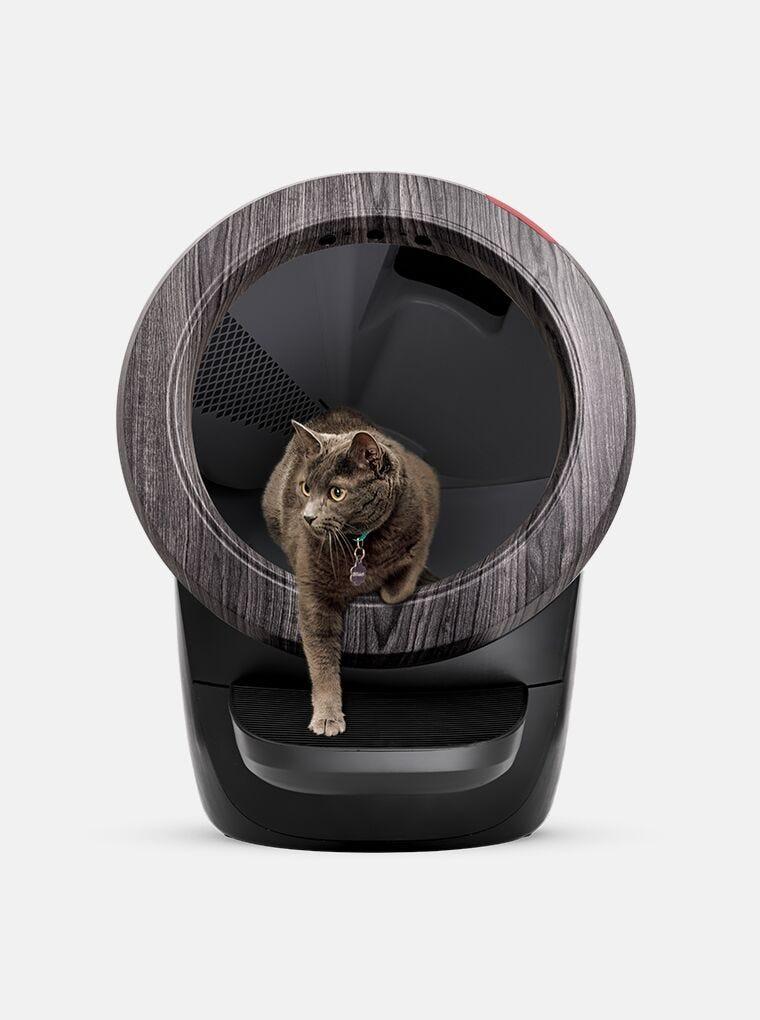
Purobot Max 3 is worth considering when a low entry and accessible side waste bin address specific household needs, and when the cat meets the manufacturer's restrictions. Its updated leak-control and waste-covering ideas are practical features to test rather than reasons to declare the litter chore solved. We have not conducted an animal trial or verified odour, safety or tracking accuracy. A meaningful trial should record acceptance, interrupted cycles, liner residue, leaks, bin emptying and total maintenance time while retaining a familiar alternative. Compare those results with Litter-Robot 4 and an ordinary box on the needs of the animal and caregiver. A successful routine matters more than the number of automated functions advertised.
Sources & further reading.
These are the sources behind this research review. Manufacturer claims are not independent performance measurements. Community accounts, when cited, describe individual experiences.
Documentation reviewed: 9 October 2026. Product software and regional bundles can change. Corrections and editorial disclosures.