An editorial assessment of documented capabilities and ownership trade-offs. This is not a hands-on test result or a measurement of reliability.
Task capability 30%8.3
Automatic separation addresses a frequent household chore.
Navigation & control 20%8.0
Sensor-based interruption and app logs provide meaningful control and information.
Ownership & upkeep 20%7.0
Drawer emptying and globe cleaning remain substantial ownership tasks.
Setup & usability 15%7.1
Size, placement and cat acclimation prevent a universal easy setup.
Documentation & support clarity 15%8.5
Detailed sensor support and manuals explain important operating conditions.
Compare scores within the same product category. Small decimal differences should not override your needs or the evidence limits.
How the Standpoint Score works
We score five aspects of the documented product on a 0–10 scale, then calculate a weighted total:
- Task capability30% of the total
- Navigation & control20% of the total
- Ownership & upkeep20% of the total
- Setup & usability15% of the total
- Documentation & support clarity15% of the total
This product’s 7.8/10 is a provisional research assessment. It does not claim measured performance, tested reliability or a verified customer satisfaction rate. Compare it with products in the same category, and read each criterion’s reasoning above.
Read the full rubric and score bands ↗The ownership case.
Litter-Robot 4 is a credible option for owners seeking less routine scooping who can provide appropriate placement, compatible litter and ongoing inspection.
Reasons to consider it
- Automatic clump separation
- Usage and weight logs
- Modular cleaning access
Go in knowing
- Animal acceptance is decisive
- Sensors require correct installation
- Logs are observations, not diagnoses
The specification sheet.
Published specifications from the linked sources. Configurations and availability can differ by country.
- Task
- Automatic litter sifting
- Entry
- 15.75 × 15.75 inches, published specification
- Wi-Fi
- 2.4 GHz
- Empty weight
- 24 lb, published specification
The job is waste separation, not pet care in general
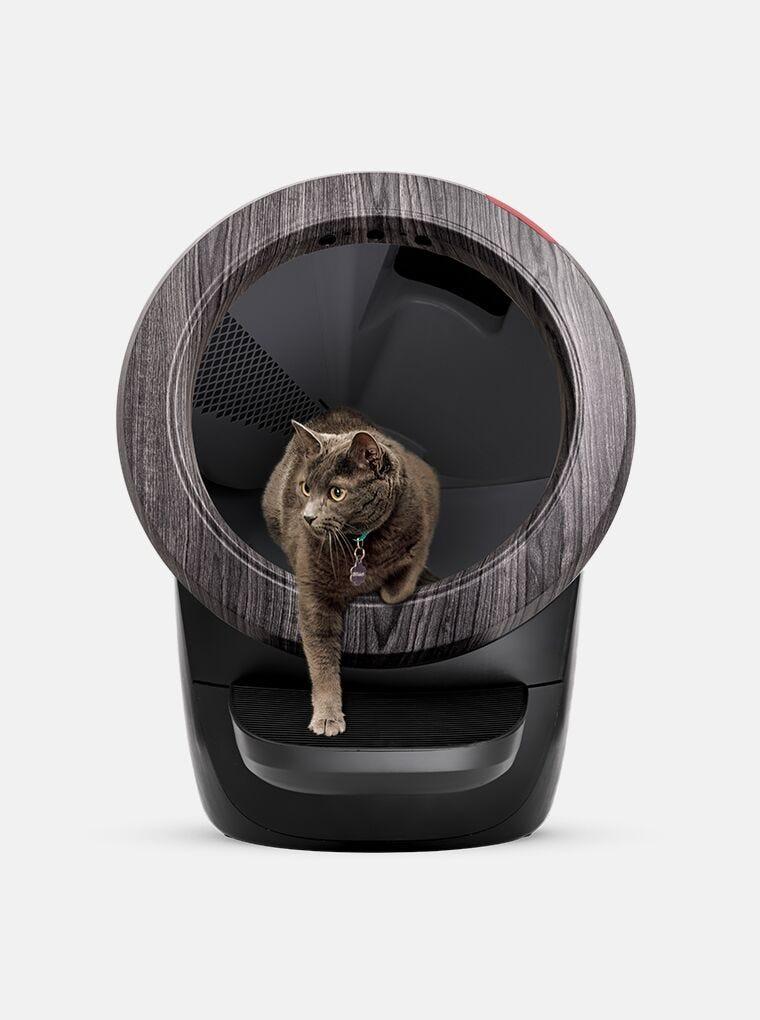
Litter-Robot 4 automates the repeated task of separating clumps from usable litter and moving waste into a drawer. Whisker adds app reporting for usage and weight, plus a sensor system intended to detect a cat and interrupt movement. The appeal is substantial for a household that dislikes frequent scooping, but the robot still needs litter, drawer emptying, surface cleaning and a cat willing to use it. It should be judged as an appliance serving the animal's preferences, not as a gadget the animal must accommodate. We have not tested a unit with cats or measured odour, litter savings or reliability. The strongest buying case is reduced repetitive handling with a clear plan for the remaining maintenance.
Acceptance is the first performance test
A perfectly functioning robot has little value if the cat avoids it. The opening, internal posture, step height, location and sounds all influence the experience. Compare the space with the cat's existing box and leave a familiar alternative available during a gradual introduction consistent with Whisker's guidance. Do not force the animal inside or remove its only acceptable toileting option to accelerate the transition. The manufacturer's acclimation statistics are not a guarantee for a particular cat. A return period can be useful, but check shipping charges and the condition requirements before relying on it. An owner should have enough time to observe ordinary use, not merely one successful visit during the first excited day after delivery.
Sensors depend on installation and cleanliness
Whisker's support material explains that the system uses downward-looking curtain sensors and weight sensing. Those mechanisms provide different information, and their correct operation depends on following setup instructions. Placement on a suitable level surface, adequate clearance and correct resetting after changes to the unit's weight are practical details, not optional refinements. Dust or litter around a sensing area may also require the specified cleaning routine. Follow the exact minimum animal-size and use restrictions in the current manual, particularly for kittens, rather than borrowing thresholds from another automatic litter box. We have not tested safety interruptions. A published sensor description does not justify leaving an unsuitable animal with an incorrectly installed appliance or bypassing a fault to keep it cycling.
Litter choice changes the entire cycle
The rotating sifting process relies on compatible litter forming clumps and passing through the separation system appropriately. A favourite litter in a conventional box is not automatically suitable here. Follow the approved type and fill level, then observe whether clumps set adequately before cleaning begins. Too much litter, an unsuitable texture or a dirty liner can change the result. The practical measure is not merely how little litter appears in the drawer, but whether the remaining bed stays acceptable to the cat and the mechanism remains clean. We would compare maintenance and litter consumption over a meaningful period with the same household conditions. No savings percentage is established by this review, and advertised savings should not be treated as guaranteed household economics.
The drawer moves the odour problem
Moving waste out of the visible litter bed can make the box more pleasant, but it concentrates waste in a separate compartment that still needs emptying. Odour depends on the animal, litter, environment, cleaning interval and the condition of seals or filters. A full-drawer notification is useful only when it is accurate enough and someone responds. In a multi-cat household, the interval may be much shorter than a single-cat marketing example. Inspect the drawer and the surrounding surfaces during the first weeks rather than immediately stretching maintenance to the longest suggested period. Optional odour products are consumables with costs and preferences to consider; they are not a substitute for removing waste and cleaning the parts that contact it.
Weight and usage data are observations
The Whisker app can make changes in visits or recorded weight easier to notice, but the readings should not be treated as a diagnosis or a replacement for attention to the animal. Similar-weight cats, partial entries and installation conditions can complicate attribution or interpretation. Check whether the data plausibly match what you observe before relying on trends. If a concerning behavioural change occurs, act on the animal's condition rather than waiting for an app alert. From a product perspective, the useful question is whether the logs are clear, consistent and easy to review. We have not validated measurement accuracy or multi-cat identification, so the review does not award the system clinical significance merely because it produces a graph.
Cleaning is less frequent scooping, not zero work
A rotating globe and waste drawer create surfaces, seals and recesses that need periodic cleaning. Learn the disassembly procedure before the first deep clean, identify which parts can be washed and keep electrical components out of any cleaning method the manual does not permit. Dry components thoroughly as directed before reassembly. Consider where a large globe can actually be cleaned in your home. A shower, utility sink or outdoor area may make the task straightforward; a small apartment sink may not. The ownership calculation should include this occasional larger job alongside daily time saved. A machine that reduces scooping can still be inconvenient if its deep-cleaning process is physically difficult for the person responsible.
Space, connectivity and repair
The product's footprint, entry clearance and access to the drawer make it larger in practice than the outline of its base. Leave room for the cat to approach comfortably and for the owner to remove parts. The referenced page specifies 2.4GHz Wi-Fi, so verify that the intended location has suitable coverage. Check app-account access, notifications and what the physical controls allow if connectivity fails. Before purchase, identify available liners, filters, replacement parts and the local service process. Warranty extensions should be compared by actual coverage and shipping terms. We have not established long-term failure rates. The advantage of a repairable modular appliance depends on parts and support being accessible where the owner lives, not simply on a well-known brand name.
Our research verdict
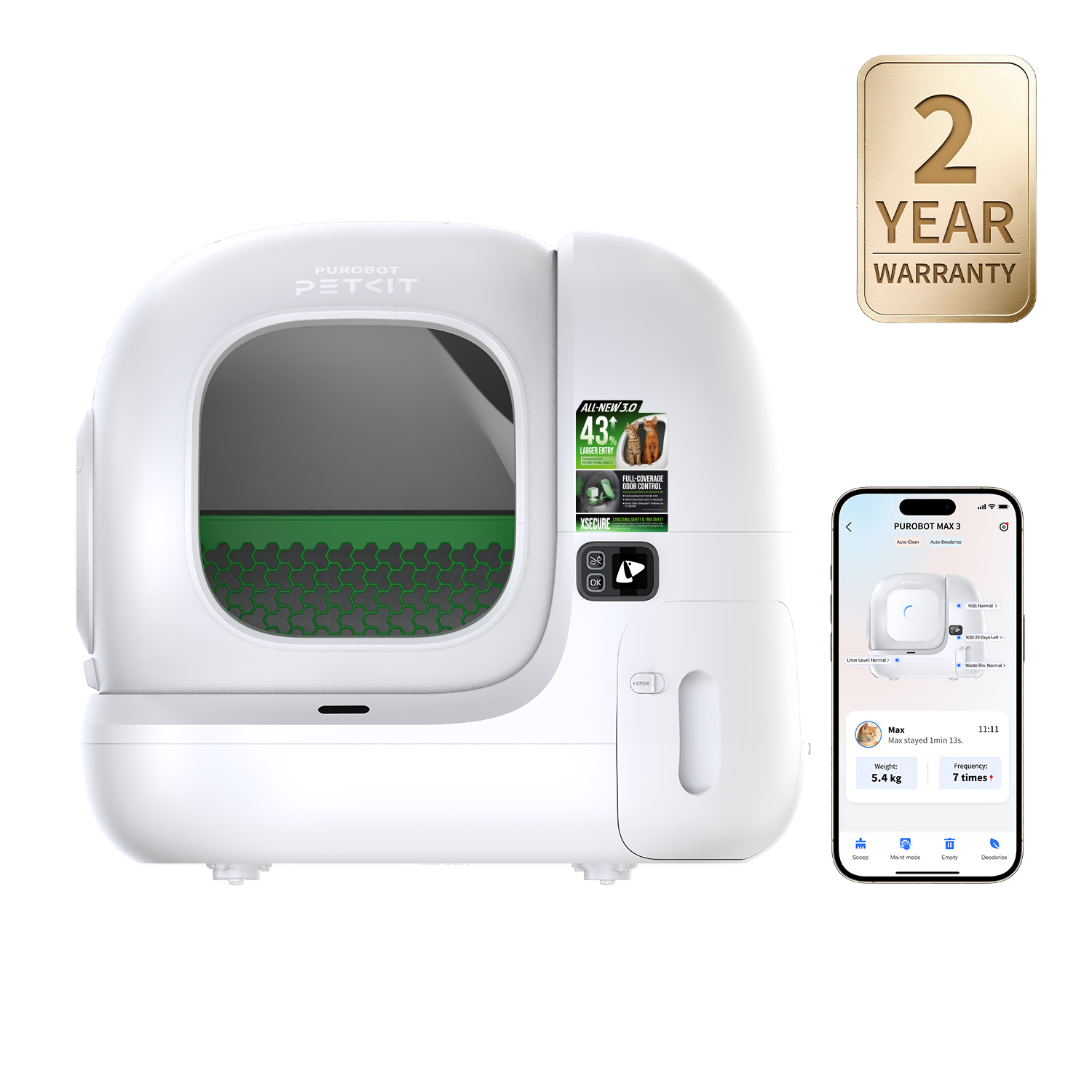
Litter-Robot 4 is a credible option for owners seeking less routine scooping who can provide appropriate placement, compatible litter and ongoing inspection. The cat's acceptance and the owner's ability to clean the machine are decisive. PETKIT's lower-entry designs may suit a different household, while a conventional box remains a sensible choice when simplicity or animal preference dominates. We have not performed an animal trial. A useful evaluation would record acceptance, interruptions, drawer intervals, odour, tracking and actual maintenance time over several weeks. It would preserve an alternative box and follow the manufacturer's safety guidance throughout. The product can plausibly remove a disliked chore, but its value comes from a successful household routine rather than from the promise of never thinking about litter again.
Sources & further reading.
These are the sources behind this research review. Manufacturer claims are not independent performance measurements. Community accounts, when cited, describe individual experiences.
- Litter-Robot 4 — official product information ↗manufacturer
- Whisker: Litter-Robot 4 sensors and functions ↗support
- Whisker: Litter-Robot 4 frequently asked questions ↗support
Documentation reviewed: 9 October 2026. Product software and regional bundles can change. Corrections and editorial disclosures.