An editorial assessment of documented capabilities and ownership trade-offs. This is not a hands-on test result or a measurement of reliability.
Features & capability 30%8.5
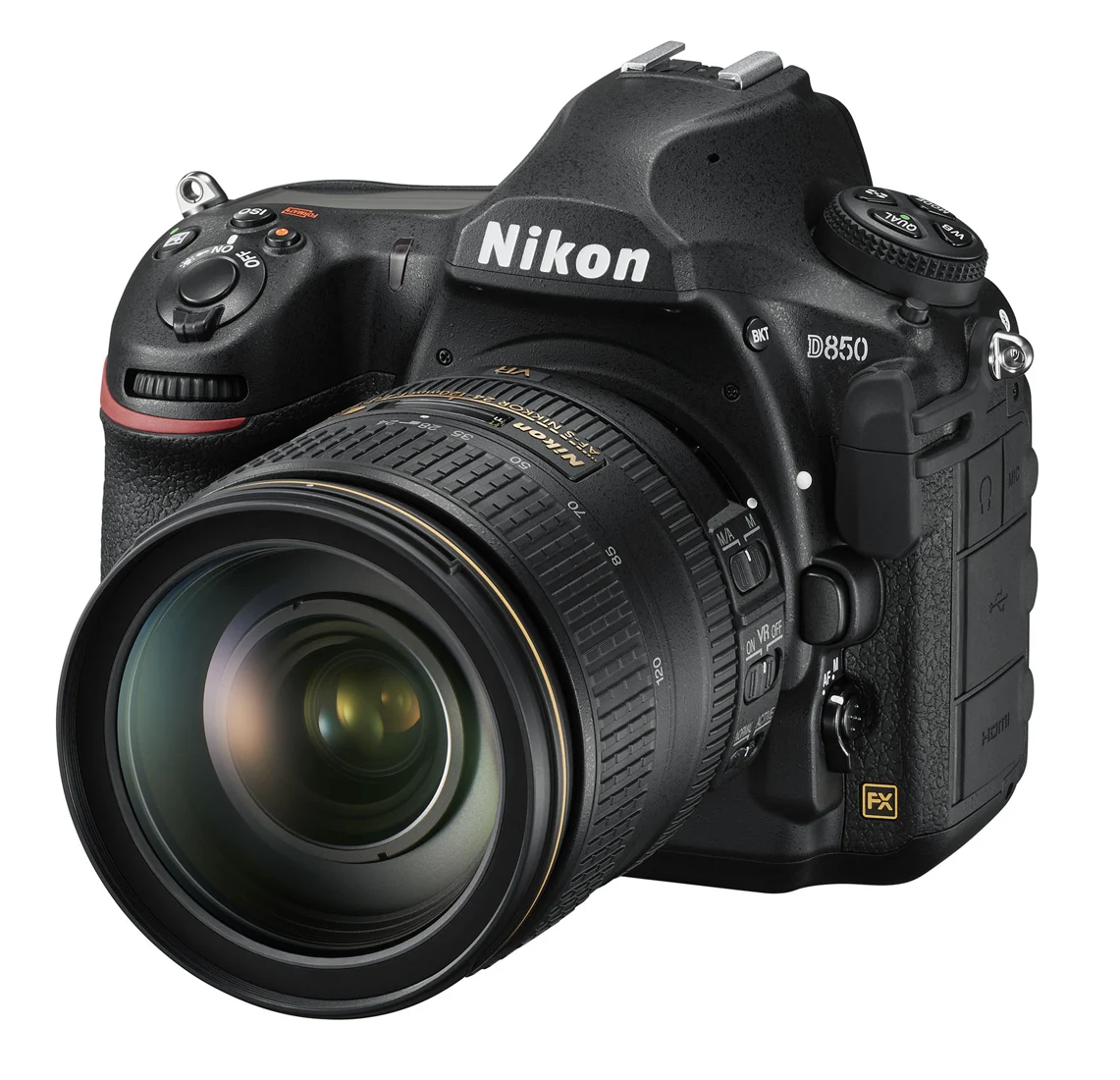
High-resolution stills, optical viewing and a capable documented DSLR feature set support demanding photography.
Compatibility & connectivity 20%7.7
F-mount breadth is valuable, but exact lens and card compatibility require checking.
Ownership & upkeep 20%6.9
Mechanical age, substantial kit weight and accessory costs shape used ownership.
Setup & everyday use 15%7.6
Direct controls reward familiarity; live view and optical operation need separate understanding.
Documentation & support clarity 15%8.7
Nikon retains extensive specifications, manuals and dated firmware resources.
Compare scores within the same product category. Small decimal differences should not override your needs or the evidence limits.
How the Standpoint Score works
We score five aspects of the documented product on a 0–10 scale, then calculate a weighted total:
- Features & capability30% of the total
- Compatibility & connectivity20% of the total
- Ownership & upkeep20% of the total
- Setup & everyday use15% of the total
- Documentation & support clarity15% of the total
This product’s 7.9/10 is a provisional research assessment. It does not claim measured performance, tested reliability or a verified customer satisfaction rate. Compare it with products in the same category, and read each criterion’s reasoning above.
Read the full rubric and score bands ↗The ownership case.
A strong documented fit for deliberate still photography and established F-mount kits, provided the buyer accepts DSLR handling and verifies the condition of an ageing professional body.
Reasons to consider it
- High-resolution stills with a direct optical viewfinder
- Extensive physical controls and a tilting rear display
- F-mount system can reward owners of compatible existing lenses
Go in knowing
- Large body and lenses can make a heavy travel kit
- Maximum burst rate requires specific optional accessories
- Used mechanical condition and media compatibility need careful inspection
The specification sheet.
Published specifications from the linked sources. Configurations and availability can differ by country.
- Sensor
- 45.7 MP full-frame BSI CMOS
- Native sensitivity
- ISO 64–25,600
- Viewfinder
- Optical pentaprism; approximately 100% FX coverage
- Continuous shooting
- 7 fps body; up to 9 fps with specified optional power accessories
- Original media specification
- XQD and UHS-II SD slots
- Video
- 4K UHD up to 30p
- Body weight
- Approximately 915 g without battery or card
A DSLR purchase should begin with the way you see
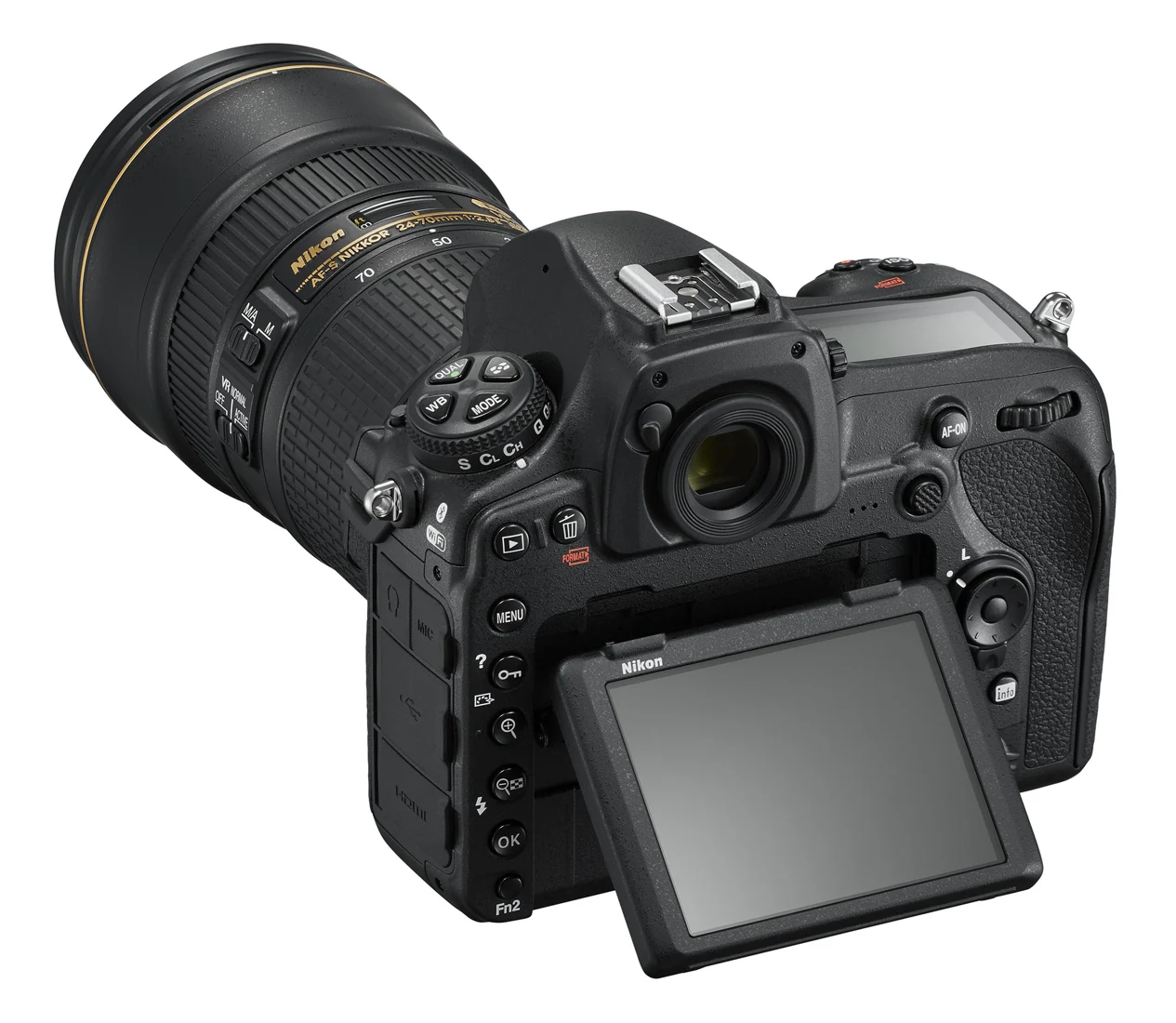
The D850 is a deliberate choice for an optical-viewfinder workflow. Looking through a lens via a mirror gives a direct view of the scene rather than an electronic preview of the finished exposure. Some photographers value that experience, especially when following activity for long periods. Others prefer seeing exposure and colour changes before releasing the shutter. Neither preference is resolved by the camera's resolution. Try the finder and controls in realistic light before deciding that a high-specification used DSLR is the right replacement for your current equipment.
This body also makes particular sense for someone who already owns suitable F-mount lenses. Starting from nothing produces a different cost and weight calculation. Our review considers the documented camera and the practical questions of buying an older example. It does not claim laboratory image-quality results, tested weather resistance or a measured remaining shutter life. With a professional DSLR, the condition of the individual unit can matter as much as the original specification sheet.
High-resolution files bring both flexibility and discipline
Nikon specifies a 45.7-megapixel full-frame sensor with a native sensitivity range beginning at ISO 64. The appeal is clear for detailed landscapes, carefully lit products and photographs intended for substantial prints. Cropping flexibility can be useful too, but it should not become a substitute for appropriate focal length and composition. Every heavy crop discards some of the very information for which the camera was chosen. Think about the finished image before treating resolution as a universal advantage.
Large files also expose weaknesses in technique when examined closely. Camera movement, focus placement, lens behaviour and subject motion all deserve attention. The D850 does not make a poor support arrangement stable or turn an unsuitable shutter speed into a sharp frame. For critical work, practise the release method and support technique you will actually use. Judge the exported image at its intended size as well as at high magnification. A pixel-level difference that disappears in delivery may matter less than capturing a convincing moment.
Optical autofocus and live view are different experiences
The DSLR design separates looking through the optical finder from composing on the rear screen. A buyer should try both methods rather than assume the controls and focusing experience will feel identical. For portraits through the finder, check focus placement with the lenses you intend to keep. For tripod work using the screen, test magnification, touch operation and the ease of moving between composition and exposure settings. The best camera for a workflow is one whose repeated actions are comfortable, not simply one with an impressive autofocus description.
An established lens collection deserves a careful compatibility review. F mount spans many generations, and physical attachment does not guarantee every metering or autofocus function. Identify complete lens names rather than relying on broad phrases such as all Nikon lenses. A seller's demonstration with one modern zoom cannot establish the behaviour of an older lens in your cupboard. If a particular lens is central to the purchase, bring it along and verify the combination before committing to the body.
Burst speed includes an accessory condition
The D850's standard continuous rate is 7 frames per second, while Nikon's higher 9-frame-per-second figure requires a specified optional grip and battery arrangement. That distinction matters financially and physically. A listing that includes a grip does not automatically include the exact battery and accessories needed for the headline rate. Ask for the actual part numbers and confirm the configuration against Nikon's instructions. The faster arrangement also changes the size and weight of the camera you will carry.
Before pursuing the maximum rate, consider whether the subject requires it. Timing, anticipation and focus consistency can be more useful than additional nearly identical frames. A high-resolution burst also produces a substantial sorting and storage task. During a used inspection, run a sequence long enough to assess basic operation and card writing, then inspect the resulting files. An advertised shutter count is useful context but not a mechanical warranty. Unusual sounds, inconsistent operation or an unclear service history deserve more attention than a reassuringly low number alone.
Media and backups are part of professional use
The original specification lists an XQD slot alongside a UHS-II SD slot. Firmware can affect card compatibility on older cameras, so verify the installed version and Nikon's current guidance before buying media based on a generic compatibility claim. The two slots should be configured intentionally: redundancy, overflow and separated file types serve different purposes. Check what the camera is actually writing rather than assuming that inserting two cards automatically creates two complete copies of every photograph.
A high-resolution body also needs an orderly path from card to archive. Include readers, drive capacity and backup time in the ownership budget. For important work, confirm files on independent storage before formatting the cards for another assignment. Inspect both slots during purchase and check that the doors close securely. A damaged slot can be costly even if the other one appears to work. The D850's original professional ambitions are best supported by disciplined handling, not by treating the presence of two slots as protection against every kind of loss.
Video and time-lapse claims should stay distinct
The D850 records 4K UHD video up to 30p, while its high-resolution still capture can support an 8K time-lapse workflow. Those are different capabilities. An 8K time-lapse sequence assembled from photographs is not evidence that the camera records ordinary 8K video. Buyers comparing listings should be especially alert to this distinction because a short specification summary can omit the word that explains the entire workflow. Decide whether the job is continuous motion, an interval sequence or still photographs before choosing settings and accessories.
For occasional video, shared lenses and a familiar body can be convenient. For a video-first purchase, consider focusing behaviour, audio, monitoring, file transfer and support equipment as a complete system. The tilting screen helps some camera positions but does not become a fully articulated presenter display. We have not measured rolling shutter, heat limits or recording endurance. A rehearsal using the intended lens, microphone and clip length is more informative than assuming that a respected stills camera will suit every moving-image assignment.
Inspect the history as carefully as the body
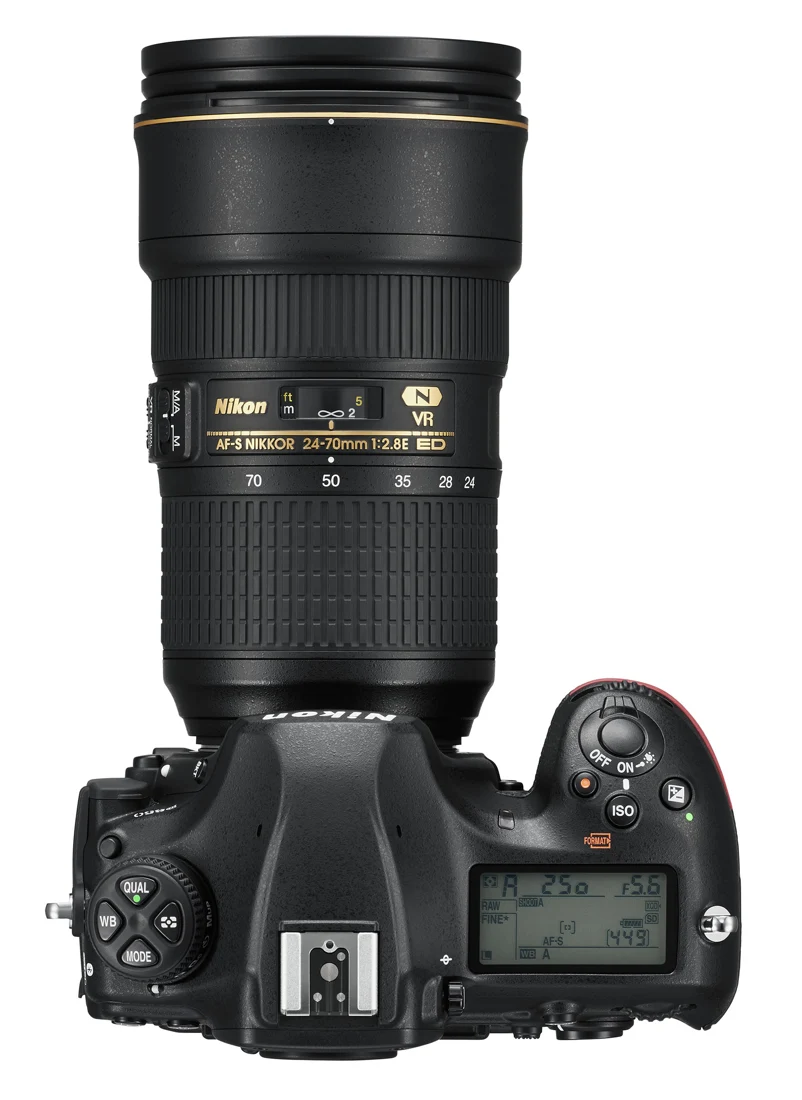
The D850 is large enough that a used example may have spent years doing demanding work. Inspect the mount, hot shoe, tripod socket, rubber coverings, display hinge, card doors and external connections. Ask about drops, liquid exposure and repairs, then look for a service record that supports the answer. Take test photographs with familiar lenses and check both the finder-based and screen-based workflows. Cosmetic wear can be harmless, while a clean exterior can conceal problems; neither appearance alone establishes reliability.
Battery health and accessory authenticity deserve equal attention. The included pack may be much older than the seller's most recent photographs of the camera suggest. Check the exact battery, charger and grip components rather than assigning value to an unspecified bundle. For ordinary care, protect the mirror box during lens changes and follow Nikon's cleaning instructions. A DSLR's internal mirror and focusing components are not an invitation to improvise cleaning methods. Factor professional inspection or cleaning into the cost if the camera's history is uncertain.
Support availability and a realistic final recommendation
Nikon's D850 download listing retains manuals and firmware C 1.31 dated April 25, 2024. This gives a buyer a documented route to instructions and updates available at the verification date. It does not promise indefinite parts availability or future firmware work. Check the installed version, read the update notes and use the exact file intended for the D850. A seller saying the camera has the latest firmware should be easy to verify directly in the menu.
Canadian and US buyers should establish regional service eligibility, the original sales territory and any remaining or transferable coverage before relying on it. The US product page is evidence about the model, not a guarantee that an imported used body receives local warranty service. The D850's strongest case is an owner who wants optical viewing, useful F-mount lenses and detailed still files enough to accept the weight and mechanical age. If those benefits align with the work, a carefully inspected example can be a thoughtful purchase. If they do not, its former flagship-like status is not a sufficient reason to buy it.
Sources & further reading.
These are the sources behind this research review. Manufacturer claims are not independent performance measurements. Community accounts, when cited, describe individual experiences.
- Nikon D850 official product specifications ↗manufacturer
- Nikon D850 official announcement ↗manufacturer
- D850 manuals, firmware and software listing ↗support
Documentation reviewed: 9 October 2026. Product software and regional bundles can change. Corrections and editorial disclosures.