An editorial assessment of documented capabilities and ownership trade-offs. This is not a hands-on test result or a measurement of reliability.
Task capability 30%7.6
Useful high-cut range and rear drive form a focused small-lawn package.
Navigation & control 20%8.0
Local LiDAR and vision avoid conventional reference-station installation.
Ownership & upkeep 20%7.3
Simpler drive than LUBA, though exact battery and parts support matter.
Setup & usability 15%8.0
Antenna-free local sensing suits straightforward residential setup.
Documentation & support clarity 15%6.9
1000H identity is clear, but some software claims retain future timing.
Compare scores within the same product category. Small decimal differences should not override your needs or the evidence limits.
How the Standpoint Score works
We score five aspects of the documented product on a 0–10 scale, then calculate a weighted total:
- Task capability30% of the total
- Navigation & control20% of the total
- Ownership & upkeep20% of the total
- Setup & usability15% of the total
- Documentation & support clarity15% of the total
This product’s 7.6/10 is a provisional research assessment. It does not claim measured performance, tested reliability or a verified customer satisfaction rate. Compare it with products in the same category, and read each criterion’s reasoning above.
Read the full rubric and score bands ↗The ownership case.
YUKA mini 2 1000H is a more focused choice for ordinary terrain than an AWD flagship. Its useful high-cut range and LiDAR setup deserve attention, while capacity, edge work and app behaviour need to be checked on the actual lawn.
Reasons to consider it
- Useful 2.0–3.5-inch height range
- LiDAR-based installation proposition
- Focused rear-drive design
Go in knowing
- Not an AWD machine
- Narrow deck needs adequate schedule time
- Generation-specific claims must stay separate
The specification sheet.
Published specifications from the linked sources. Configurations and availability can differ by country.
- Navigation
- 360-degree LiDAR and vision
- Drive
- Rear-wheel drive
- Slope claim
- 45%
- Cutting width
- 7.5 in
- Cutting-height range
- 2.0–3.5 in
- Battery capacity
- 6.1 Ah published
Do not buy AWD merely because it exists
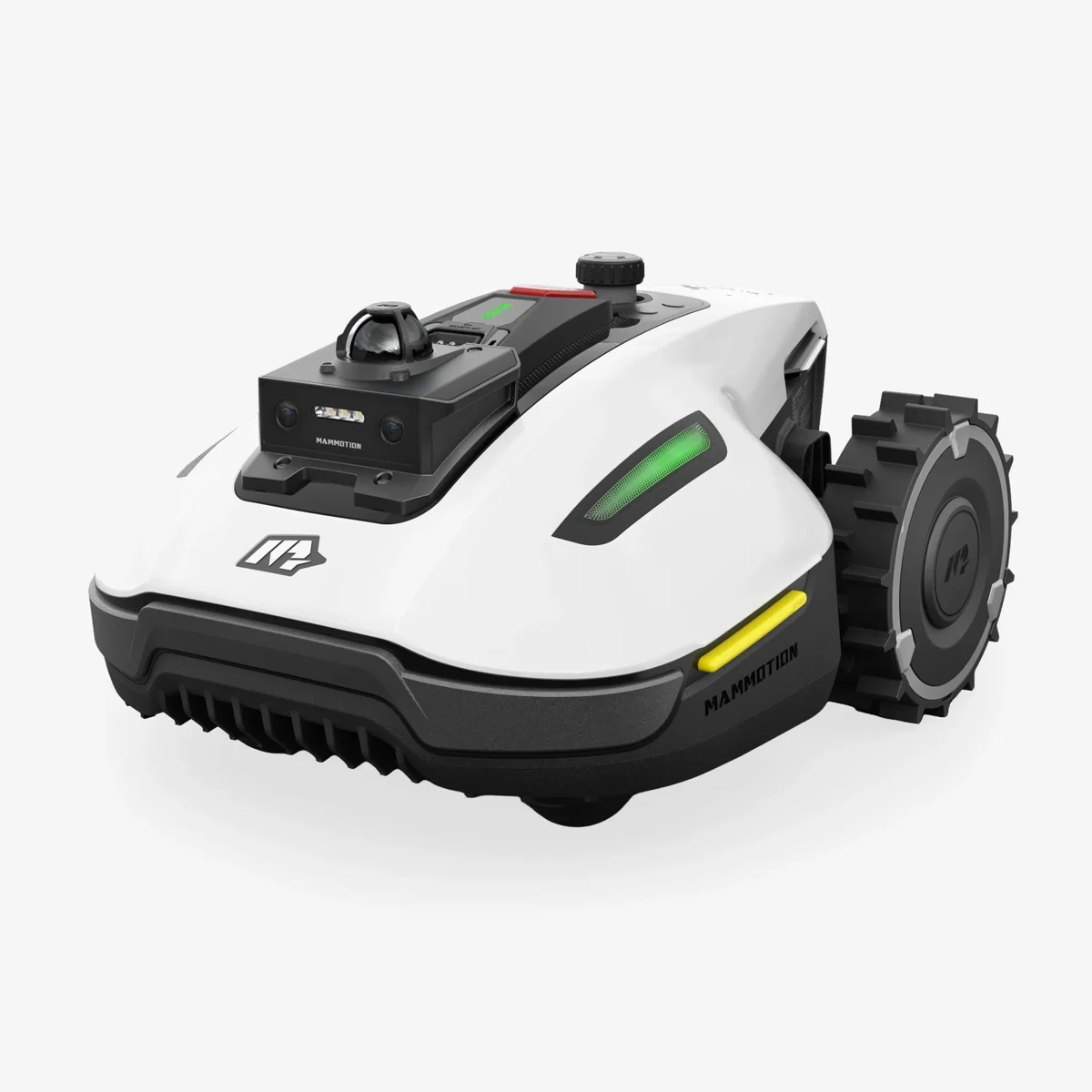
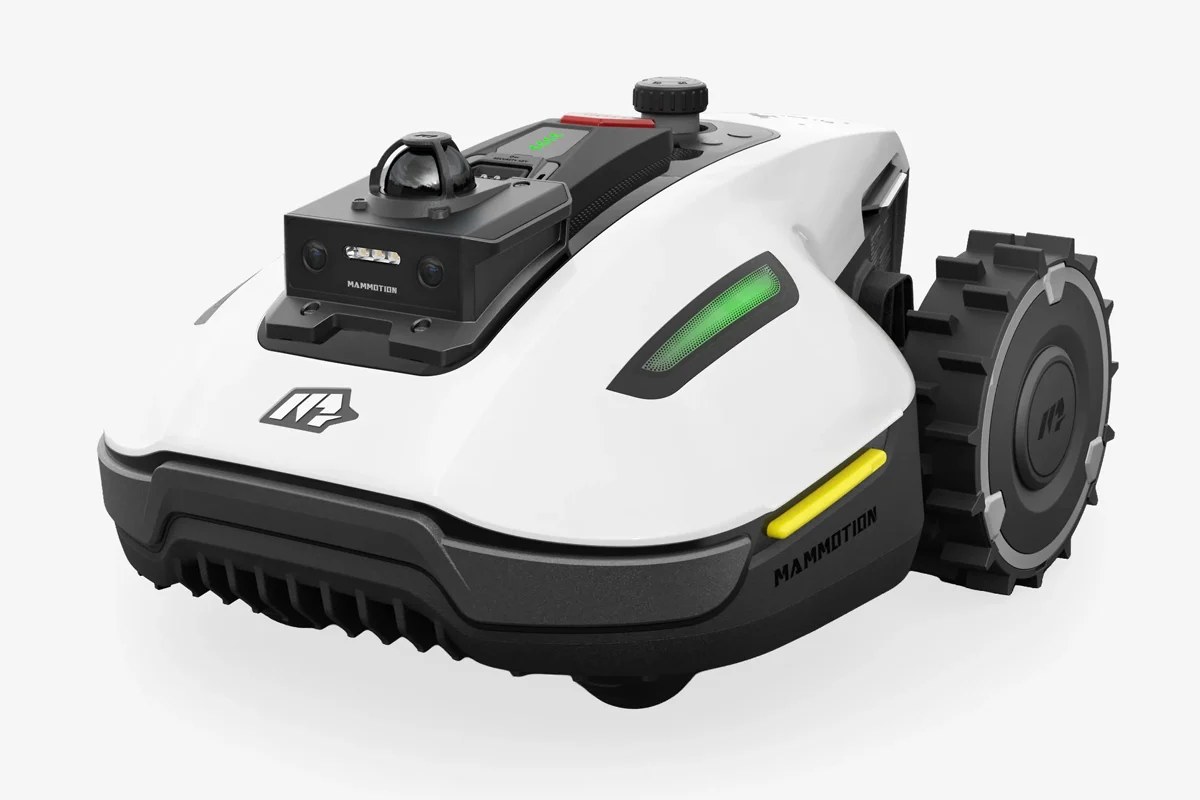
YUKA mini 2 1000H is interesting as a deliberate step away from Mammotion's more elaborate all-wheel-drive machines. The published specification combines local LiDAR sensing with a rear-wheel-drive layout, a 7.5-inch cut and a 2.0–3.5-inch height range. For a relatively ordinary small lawn, that may be a better match than paying for the LUBA family's climbing emphasis. The right comparison begins with the terrain the robot must actually cross.
The 1000H identity should remain attached to every specification. Mammotion sells multiple mini generations and regional versions, and a short retailer title can obscure those distinctions. The page describes a 6.1 Ah battery, but battery capacity alone does not establish daily coverage. Grass resistance, route shape, charging and the number of turns all affect how much useful mowing a charge produces.
Local navigation with a modest cutting footprint
LiDAR and cameras make the model attractive for a yard where installing an RTK base would be awkward. That is especially relevant beside taller buildings or in a garden where the dock has few sensible locations. We would still test the farthest return route and the narrowest connection. A mower that maps the lawn easily but loses time every time it docks has not solved the whole problem.
Mammotion lists a 45% slope claim for this generation. Do not import the original YUKA mini's published slope figure or the LUBA's much larger claim into this review. Rear-wheel drive can be sufficient on many lawns, but we would look carefully at soft patches, roots and small holes that can unload a wheel or catch the front of the chassis. Filling an avoidable depression may produce a better result than buying a more expensive machine to negotiate it.
The quiet value questions
The narrow deck will require more passes than a wide dual-disc mower on the same open area. That need not be a problem if there is ample scheduled time, but it matters if the lawn is available only for short windows. The high-cut range is a tangible benefit for an owner who does not want a close-shaved finish. We would check actual cut height on uneven ground and inspect whether the floating behaviour leaves a consistent surface.
The source promotes map tools, DropMow and obstacle recognition while retaining future timing notes for some editing features. Confirm delivered functions and remote-service terms before purchase. Against LUBA mini 2, the YUKA proposition is lower complexity where AWD is unnecessary; against an inexpensive wired mower, it is easier boundary changes and local sensing. Neither comparison warrants a reliability claim without use. Our evaluation would focus on boundary stability, residual trimming and whether the smaller machine completes its real schedule with room to spare.
A practical acceptance test before relying on it
A YUKA mini 2 trial should concentrate on the ordinary obstacles that distinguish a manageable small lawn from a frustrating one: shallow depressions, roots, a narrow connector and a slightly uneven dock approach. We would not start with dramatic hill demonstrations because this is the rear-drive option. Record whether modest ground preparation eliminates most interruptions. Also compare complete tasks at the owner's preferred taller cutting setting, rather than judging only a low-cut demonstration. The 1000H should earn its place through a consistent finish and a comfortable schedule. If those are achieved, the absence of AWD can be a sensible economy rather than a deficiency.
Setup, maintenance and the ownership decision
The 1000H's rear-wheel-drive format should shape the first installation. Place the station on an easy approach and avoid making the daily return cross a soft or rutted patch. Ground preparation that is modest for a homeowner can remove a recurring challenge for a small robot. We would inspect the front-wheel path at paving transitions and shallow depressions before deciding the lawn requires AWD. The purpose of choosing YUKA mini 2 is to obtain sufficient capability without buying an unnecessarily elaborate drive system, so small inexpensive improvements to the site belong in the comparison.
The 2.0–3.5-inch cutting range is a real reason to select this specific H version. Keep the height choice tied to the desired lawn rather than a competitor's default demonstration setting. Check that the finish remains consistent when the wheels encounter softer soil and that the cutting system has enough room over uneven ground. The 7.5-inch width also means the schedule needs space for many passes. A compact mower can maintain an attractive lawn while taking longer to complete the same open area than a broader model. The relevant question is whether that time interferes with household use.
LiDAR and vision reduce the need for conventional RTK hardware, but their surfaces still need care. Inspect dust, dried water marks and grass debris according to the manual before diagnosing a positioning problem as a software failure. Use the correct blade and disc parts for the mini 2, not a visually similar component from another YUKA. The published 6.1 Ah battery should prompt a replacement-availability enquiry, not an assumption of a particular lifespan. Ask whether the local seller can supply the pack and handle diagnosis without shipping the entire mower across a border.
Mammotion's app offers map and temporary-work concepts that can be convenient on a small property. Learn how temporary operation interacts with the main map and demonstrate the current editing functions before relying on them. Some advertised tools carry future timing notes. Also confirm which remote features need additional hardware or ongoing service in the exact regional package. Review family permissions and location access, and practise a local stop. The presence of cameras and object-recognition claims does not make active cutting compatible with children or animals sharing the area.
YUKA mini 2's value should be evaluated against both the original YUKA and the LUBA mini 2. The original may have a lower installed price when its reference station is easy to place, while LUBA may solve terrain the rear-drive YUKA cannot handle comfortably. Do not pay for either alternative solely because its specification is longer. Compare manual trimming, weekly cleaning and intervention time on the actual lawn. A supported, correctly specified YUKA that completes its schedule with margin is a better outcome than a flagship whose extra capability adds little to the household's daily life.
Seasonal storage and return to work
For YUKA mini 2 1000H, keep the regional model and battery identification with the seasonal storage record. Follow the prescribed battery conditions and inspect the front-wheel route when restarting, since frost or garden work can create new small depressions. Check the preferred tall-cut setting and allow an observed cycle before restoring the full schedule. Local sensing simplifies the external hardware inventory, but it still needs clean surfaces and a current map that matches the garden the mower encounters in spring.
Sources & further reading.
These are the sources behind this research review. Manufacturer claims are not independent performance measurements. Community accounts, when cited, describe individual experiences.
Documentation reviewed: 9 October 2026. Product software and regional bundles can change. Corrections and editorial disclosures.