An editorial assessment of documented capabilities and ownership trade-offs. This is not a hands-on test result or a measurement of reliability.
Task capability 30%7.5
The entertainment role is clear, with utility best treated as secondary.
Navigation & control 20%7.5
Multiple interaction inputs support expressive responses.
Ownership & upkeep 20%6.9
Battery, moving joints and service support affect longevity.
Setup & usability 15%7.6
Compact form helps, but a safe clear desk is needed.
Documentation & support clarity 15%7.0
Core features are described, while data-flow and package details need confirmation.
Compare scores within the same product category. Small decimal differences should not override your needs or the evidence limits.
How the Standpoint Score works
We score five aspects of the documented product on a 0–10 scale, then calculate a weighted total:
- Task capability30% of the total
- Navigation & control20% of the total
- Ownership & upkeep20% of the total
- Setup & usability15% of the total
- Documentation & support clarity15% of the total
This product’s 7.3/10 is a provisional research assessment. It does not claim measured performance, tested reliability or a verified customer satisfaction rate. Compare it with products in the same category, and read each criterion’s reasoning above.
Read the full rubric and score bands ↗The ownership case.
EMO makes sense for a buyer who specifically wants an animated desktop pet and enjoys occasional interaction throughout the day.
Reasons to consider it
- Walking desktop character
- Touch and recognition features
- Games and animations
Go in knowing
- Keep away from unsafe edges
- Camera and microphones affect placement
- Charging packages and service dependence vary
The specification sheet.
Published specifications from the linked sources. Configurations and availability can differ by country.
- Role
- Desktop companion
- Input
- Camera, microphone array and touch
- Movement
- Small legged motion
- Utility
- Voice features and games, service dependent
A desktop presence rather than a general assistant
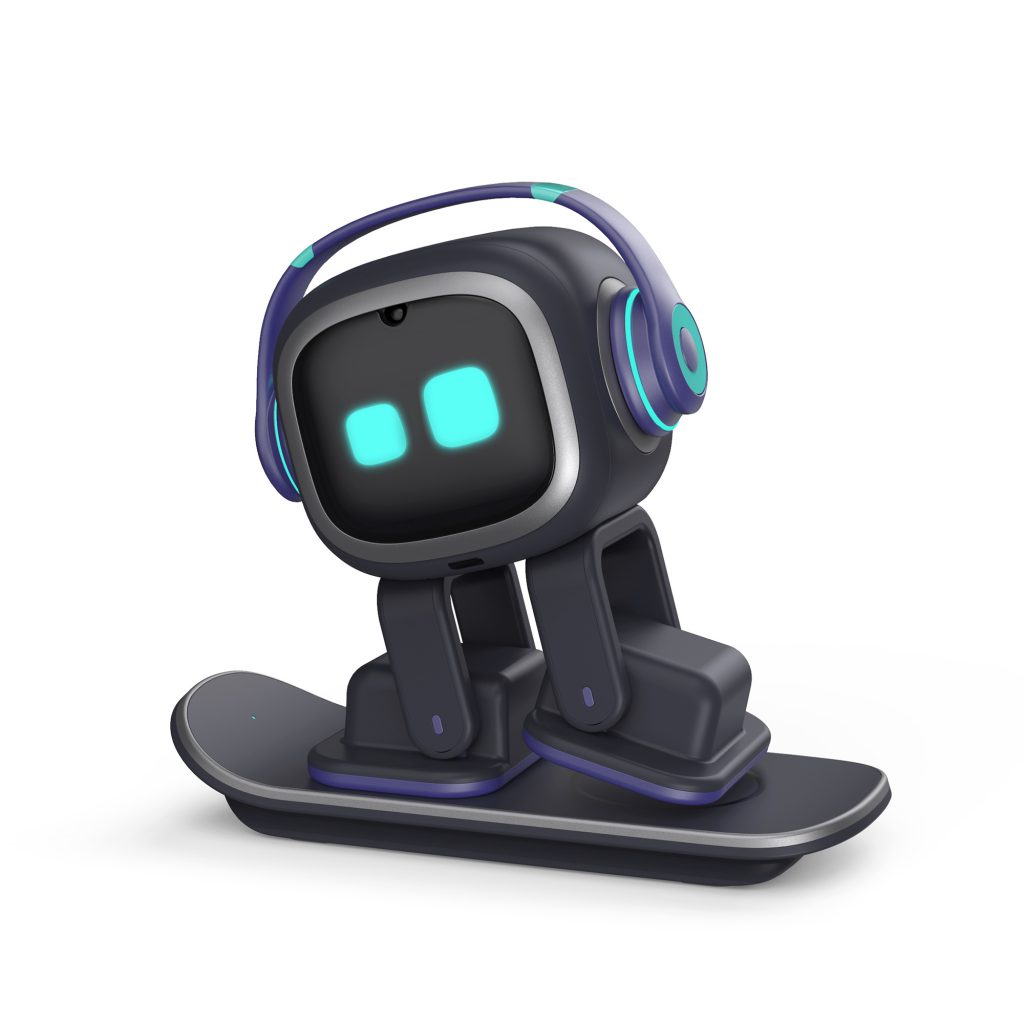
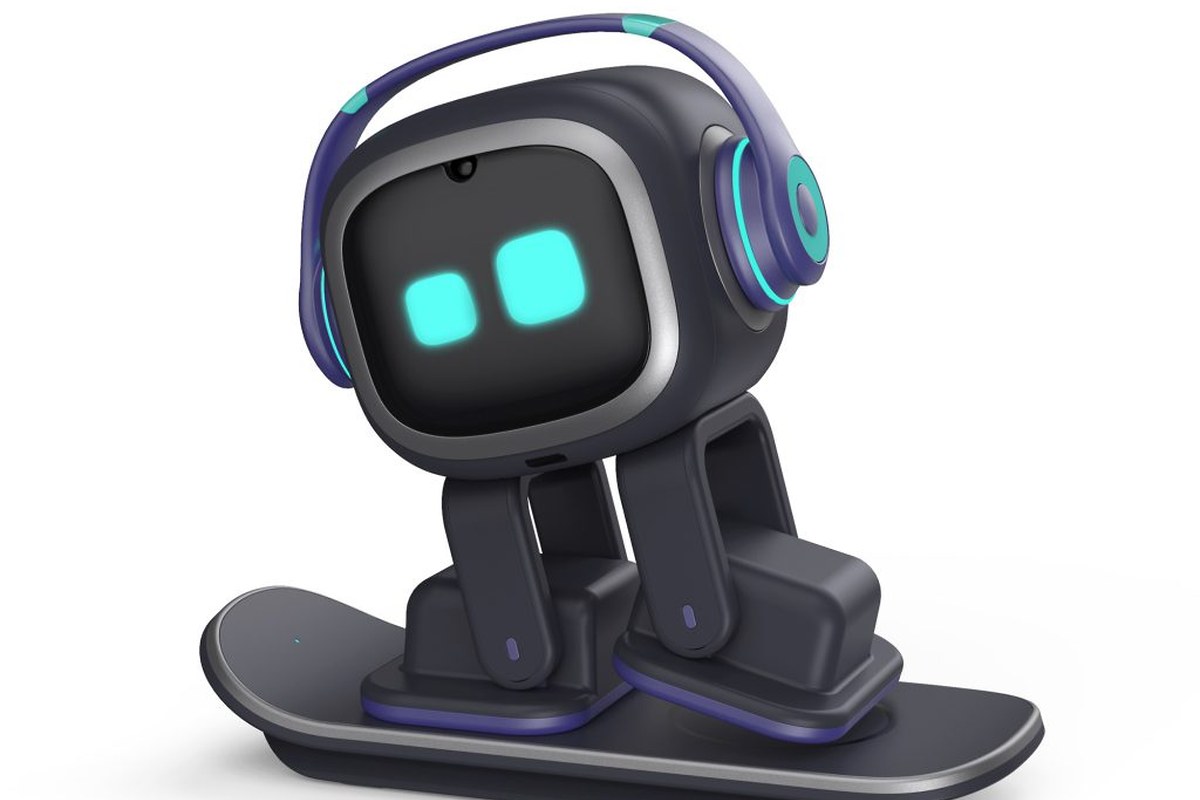
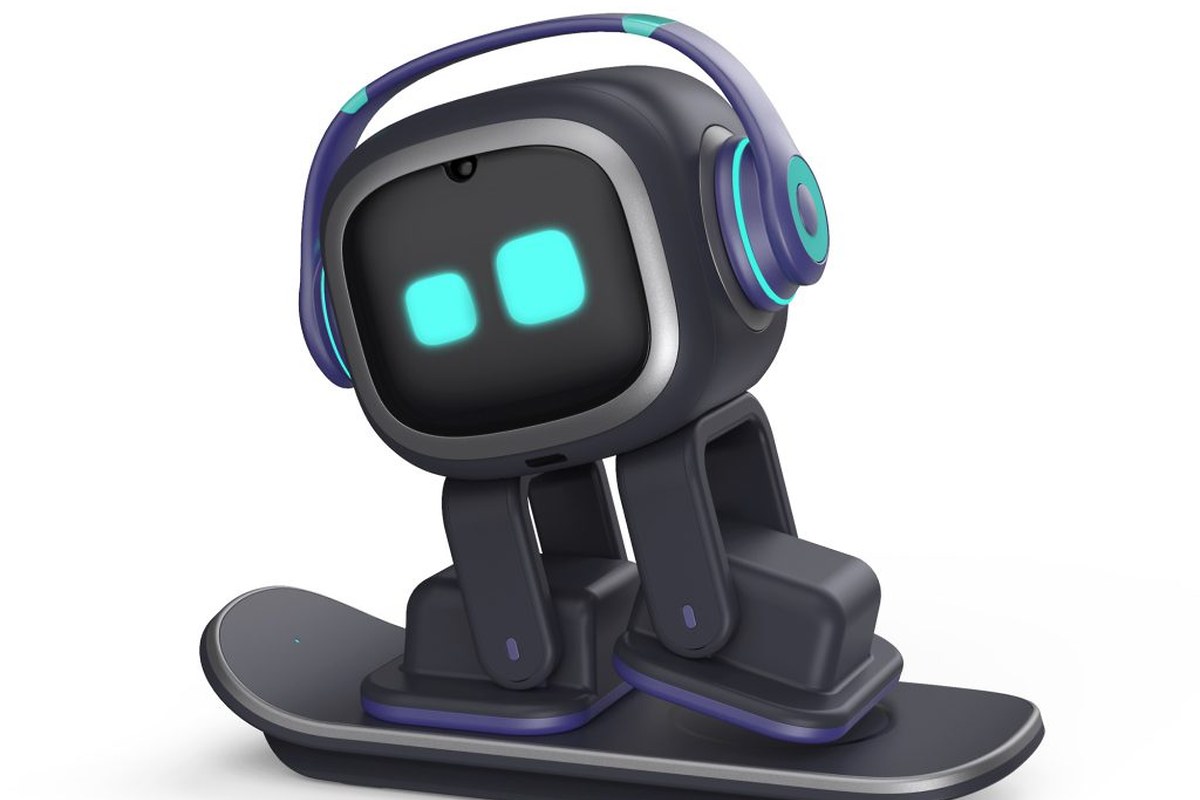
EMO is a small walking desktop character with a screen face, camera, microphones, touch sensing and a range of animated reactions. LivingAI describes recognition, games, music, pictures and voice-driven utility functions. Its most distinctive role is simply occupying a desk in a lively way. That can be enjoyable for someone who likes expressive gadgets, but it should not be evaluated as a reliable substitute for a phone, calendar or human companion. The manufacturer uses emotional language to describe personality and moods; those are designed behaviours, not evidence of consciousness or human understanding. We have not lived with an EMO. This review asks what the documented design means for desk space, interaction, maintenance and long-term value.
The desk is the operating environment
A desk contains cables, paper edges, mugs, keyboards and objects that move throughout the day. That makes it a more variable environment than an empty promotional tabletop. LivingAI describes edge detection and autonomous exploration, but a prudent owner should still provide a clear, suitable area and avoid exposing the robot to a fall. Do not treat a claim about not falling as a guarantee across glossy, dark, transparent or obstructed surfaces without checking the manual. Keep liquids and fragile objects away from its route. The useful test is how much intervention it needs on the actual desk. A robot that repeatedly becomes trapped behind a monitor stand may feel less like a companion and more like another item to rearrange.
Walking gives personality and creates limits
EMO's small legged movement contributes much of its character. It also means the device should not be assumed to navigate the same terrain as a wheeled floor robot or a larger quadruped. Papers, uneven surfaces and narrow gaps can become substantial obstacles at this scale. Observe its normal movement before allowing it near any edge or equipment. We would evaluate how confidently it returns to a usable position and how often the owner has to rescue it. The mechanism's value is expressive rather than productive: it is not expected to transport useful loads or patrol a home. Understanding that distinction helps a buyer appreciate the design without expecting a tiny animated character to become a miniature general-purpose robot.
Recognition is an interaction feature
The source describes face recognition and directional hearing. Those can make a response feel more personal because the robot appears to orient toward a person or recognise a familiar visitor. The practical questions are how well it works under the desk's lighting, with glasses or changing appearance, and amid ordinary room noise. We have not tested recognition accuracy. A failure to respond need not mean a mechanical fault; lighting, sound and service conditions may contribute. Likewise, an apparently personal reaction does not establish that the robot understands the owner in a human sense. Evaluate whether the interaction is pleasant and predictable enough for its intended entertainment role, rather than judging it by the expectations attached to a person or animal.
The utility features should remain secondary
Alarms, questions, photographs and music can add useful moments to a desktop robot. They should not become critical dependencies until their reliability has been verified in the owner's setup. A phone or dedicated alarm remains easier to audit for an essential wake-up. Spoken answers may depend on online services and should not be assumed accurate because the robot presents them confidently. The best purchase case is that EMO is enjoyable even when these functions are treated as extras. If the main goal is a dependable assistant for work, compare the actual supported integrations and limitations with conventional software. The animated body does not automatically make the underlying utility functions more capable or more reliable.
Connectivity and privacy need a clear boundary
A camera and microphone array on a work desk may share space with private conversations, documents and video meetings. Read LivingAI's current privacy and service information and decide where the device is appropriate. We did not verify a complete data-flow architecture or perform a security audit. Do not assume every recognition or voice function is local merely because the robot contains its own processor. Check which functions require internet access, whether there are ongoing service charges and how account data can be managed. For a shared workplace, obtain the relevant household or workplace agreement before enabling a recording-capable device. The important product question is whether its interaction model fits the privacy expectations of the space where it will live.
Charging arrangements differ by package
EMO is sold with different charging-related accessories and configurations, so confirm what the exact package includes and whether automatic charging is part of that configuration. A photograph of an accessory should not be treated as proof it is in every box. The ordinary charging routine should be easy enough that the robot does not spend weeks unused after its battery runs down. Check how it indicates low power and how the owner places it safely on the supplied charger. Battery ageing also matters for an appliance intended to remain on a desk for years. Ask about service rather than assuming the small body implies a readily replaceable battery. We have not measured runtime, charging reliability or capacity retention.
Long-term enjoyment is the real durability test
For an expressive robot, software content and behaviour variety can matter almost as much as mechanical wear. A large advertised number of expressions does not tell us how often ordinary interaction feels repetitive. We would evaluate EMO over weeks, noting which behaviours remain enjoyable and whether games offer meaningful variation. Updates may add value, but a purchase should not depend on an imagined future feature set. Check support for the app, replacement accessories and repair shipping in your region. A used unit should demonstrate normal walking, display, audio, sensing and charging, with account transfer resolved. Community videos are useful for understanding the style of interaction, but they are often edited highlights rather than evidence of the average hour spent beside the robot.
Our conditional verdict
EMO makes sense for a buyer who specifically wants an animated desktop pet and enjoys occasional interaction throughout the day. It is less suitable when desk space is scarce, privacy requirements are strict or the expectation is dependable practical assistance. Our outstanding questions concern edge handling, recognition, repetitive behaviour, service dependence and charging convenience. No hands-on results are claimed here. A good trial would take place on a cleared version of the actual desk, with normal lighting and room noise, followed by several weeks of ordinary use. The value lies in whether the owner continues to enjoy its presence, not in a list of utility features that more conventional devices may already perform well.
Sources & further reading.
These are the sources behind this research review. Manufacturer claims are not independent performance measurements. Community accounts, when cited, describe individual experiences.
- LivingAI EMO — official product information ↗manufacturer
Documentation reviewed: 9 October 2026. Product software and regional bundles can change. Corrections and editorial disclosures.