An editorial assessment of documented capabilities and ownership trade-offs. This is not a hands-on test result or a measurement of reliability.
Task capability 30%6.8
Regional capacity is useful, but the low maximum cut limits some lawns.
Navigation & control 20%7.3
Beacon-based navigation offers a distinct installation alternative.
Ownership & upkeep 20%6.0
Beacon availability and North American service are unresolved.
Setup & usability 15%6.3
Physical beacon placement adds infrastructure despite wire-free boundaries.
Documentation & support clarity 15%6.7
Overseas product and manual sources are detailed; local availability is unverified.
Compare scores within the same product category. Small decimal differences should not override your needs or the evidence limits.
How the Standpoint Score works
We score five aspects of the documented product on a 0–10 scale, then calculate a weighted total:
- Task capability30% of the total
- Navigation & control20% of the total
- Ownership & upkeep20% of the total
- Setup & usability15% of the total
- Documentation & support clarity15% of the total
This product’s 6.7/10 is a provisional research assessment. It does not claim measured performance, tested reliability or a verified customer satisfaction rate. Compare it with products in the same category, and read each criterion’s reasoning above.
Read the full rubric and score bands ↗The ownership case.
GOAT G1 is an instructive alternative to wire and RTK-base installations, but its navigation beacons and regional support need careful planning. North American buyers should not treat an Australian product listing as proof of local availability or warranty.
Reasons to consider it
- Distinct beacon-based approach
- Camera monitoring capability advertised
- Documented global generation
Go in knowing
- North American availability not established
- Navigation beacons need planning
- Six-centimetre maximum may be too low
The specification sheet.
Published specifications from the linked sources. Configurations and availability can differ by country.
- Regional source
- Official Australian GOAT G1 page
- Published area
- Up to 1,600 m²
- Published daily reference
- 600 m²/day
- Navigation
- TrueMapping with navigation beacons
- Cutting width
- 22 cm
- Cutting-height range
- 3–6 cm
Wire-free does not mean infrastructure-free
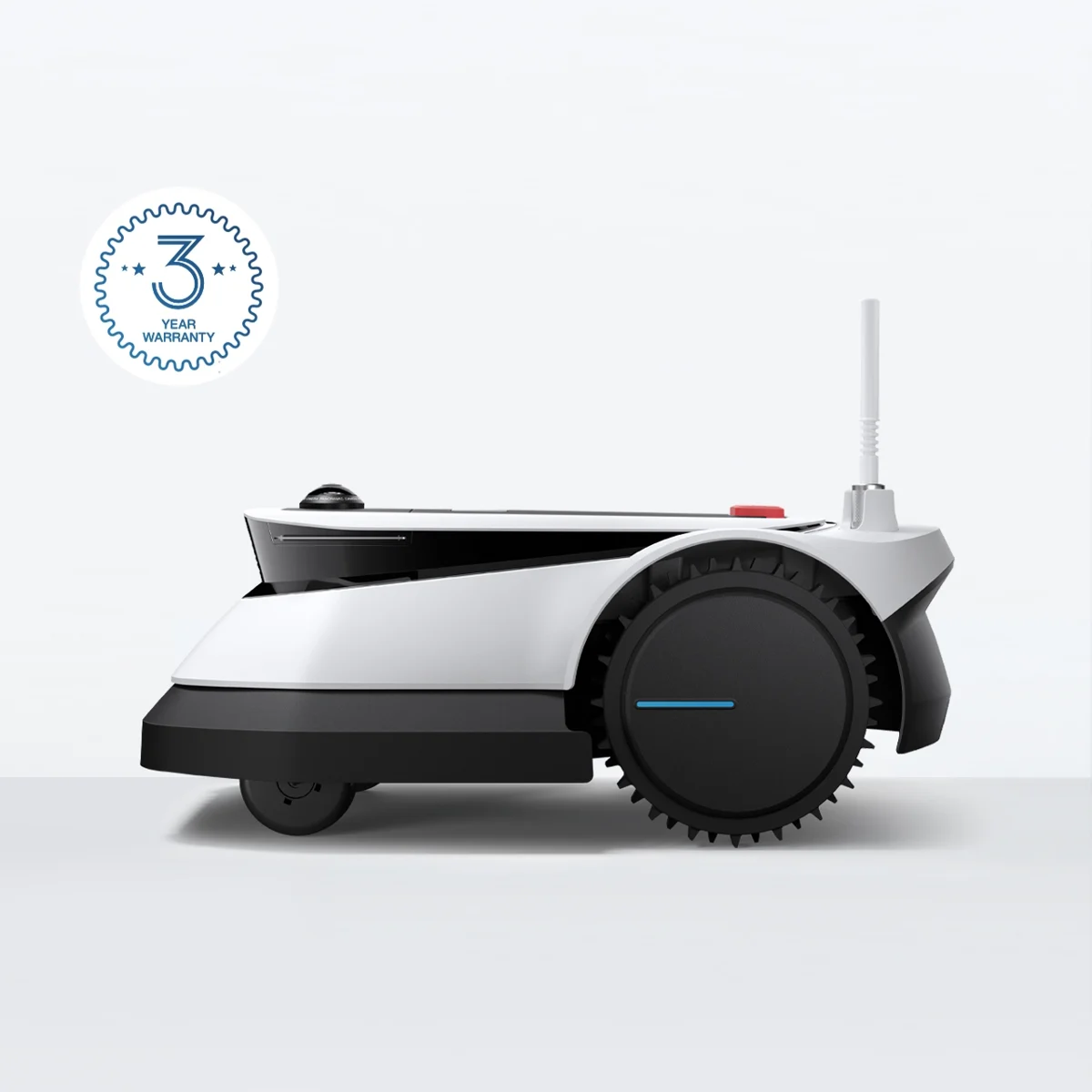
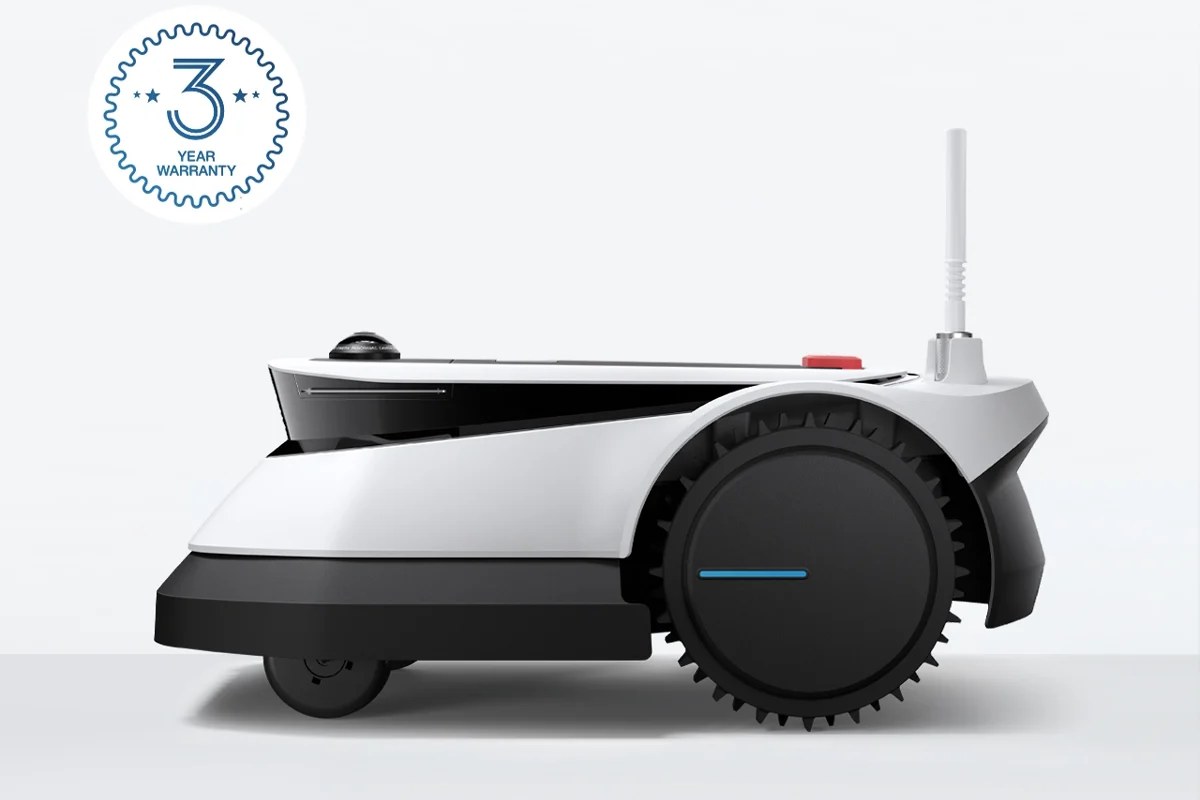
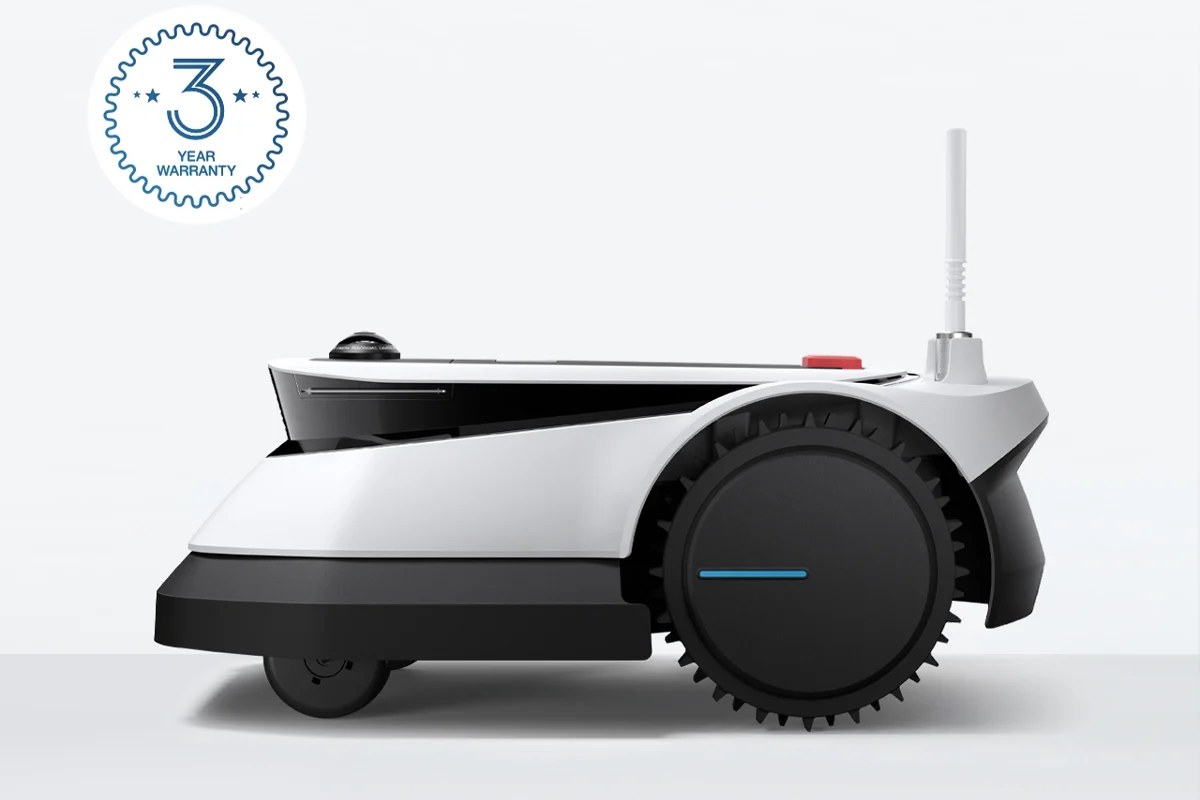
GOAT G1 uses navigation beacons as part of its TrueMapping arrangement. That is a distinctive proposition beside perimeter-wire and conventional RTK systems: the owner avoids a buried boundary but still places physical aids around the property. A review that calls it simply wireless misses an important part of installation. The best fit is a garden where the required beacon positions can remain stable and unobstructed.
The official Australian page rates the model for up to 1,600 square metres and gives a 600-square-metre daily reference. These are regional manufacturer figures, not proof that a Canadian or US retailer currently supports the same configuration. The page is useful for understanding the machine; it does not establish import suitability. Confirm local power, connectivity, parts and warranty before using the product in another market.
The garden becomes a mapped environment
Beacon placement should be planned around the complete lawn rather than the easiest patch. Buildings, narrow connections and changes in elevation can make the installation more involved than the headline promise suggests. Before buying additional hardware, ask for a layout assessment and identify whether the supplied set is sufficient. A beacon that is frequently moved by gardening work may become a recurring maintenance problem.
The G1 also promotes cameras for both obstacle handling and garden monitoring. Those roles should be assessed separately. A useful camera view is not evidence that every low object will be avoided, and an obstacle system does not automatically provide a useful security camera. We would test routine lawn objects and review account-sharing and viewing permissions as two distinct parts of ownership.
A narrower height range shapes its audience
The published three-to-six-centimetre cutting-height range deserves attention from North American owners accustomed to taller grass. A technically impressive navigation system may still be the wrong product if the desired lawn height sits above its maximum. The 22-centimetre cut likewise suggests a machine intended to maintain its area through regular scheduled work, rather than rush through a large property in a short window.
Against O1000 RTK, the decision is partly about which positioning infrastructure better suits the garden. Against A3000 LiDAR, it is whether beacons remain preferable to local sensing without those aids. Our evaluation would focus on mapping stability after gardening changes, recovery around beacons and the consistency of edge clearance. We would also determine how easily a replacement beacon can be obtained and paired. Until those questions and regional support are resolved, G1 is better viewed as a specific installation option than as a universal recommendation.
A practical acceptance test before relying on it
Before a G1 purchase, draw the proposed beacon positions and ask the regional support provider to confirm the layout. Include the cost of any additional beacons and a plan for replacing one. We would then move an ordinary piece of garden furniture while leaving the beacons fixed and observe whether the map remains usable. The goal is to distinguish normal environmental change from changes that disturb the positioning installation itself. A North American buyer should complete the local service and compatibility check before importing. A successful overseas review or the existence of an Australian sales page cannot answer those regional ownership questions on its own.
Setup, maintenance and the ownership decision
The G1's beacons should be treated as permanent navigation equipment rather than decorative garden accessories. Place them according to the model's layout guidance and consider how mowing, pruning and seasonal storage affect those positions. Label and document the installation so that another household member does not move a beacon while tidying. If more beacons are needed, include them in the purchase price from the start. Their availability is particularly important when buying a generation that may no longer be prominent in local retail ranges. A robot that depends on an unobtainable positioning component can become an expensive incomplete system.
The three-to-six-centimetre height range sets a clear limit on the desired lawn finish. North American buyers accustomed to a taller cut should resolve that mismatch before investigating import logistics. The 22-centimetre deck and published daily reference also point toward repeated maintenance rather than short occasional sessions. Plan a schedule around the actual growth and access. We would inspect the grass immediately around beacon positions and near furniture to see whether the navigation infrastructure creates extra finishing work. Wire-free installation can be convenient without making every edge and obstacle disappear from the owner's routine.
G1's camera features need separate consideration as navigation aids and as a garden-monitoring facility. Decide whether monitoring is wanted, identify who can access the view and confirm what connectivity is required. Account permissions should be reviewed if a retailer or previous owner initially configures the robot. We have not audited storage, encryption or cloud behaviour and would not turn a marketing statement into a security certification. Also establish how the owner stops the mower locally. A useful camera view cannot substitute for preventing people or animals from entering the cutting area.
Maintenance must cover both the robot and its outdoor navigation components. Keep sensor surfaces clean under the instructions, inspect blade condition and check the charging station approach. Use the exact G1 manual for permitted washing of the mower, station and beacons because their ratings and construction differ. Do not infer compatibility from the fact that an accessory is sold for another GOAT. Obtain correct blade, battery and beacon replacement references while they are easy to identify. This matters more on a regional or imported purchase, where a vague parts request can create unnecessary delays.
The official Australian source is evidence of the design, not a complete Canadian or US buying route. Ask about local power requirements, supported account region and written warranty handling before importing. Transporting a mower for repair may erase an attractive overseas discount. Compare that complete cost with a locally supported RTK or LiDAR model. G1 is most persuasive where its beacon arrangement solves a real installation problem and the support chain is clear. If either condition is uncertain, the sensible next step is a documented site and service assessment, not a stronger performance claim from a research article.
Seasonal storage and return to work
A G1 seasonal handover should identify every navigation beacon and its approved position. If components are removed for storage, preserve the layout and follow the instructions for recommissioning instead of relying on memory. Check availability of replacement beacon power components and other specified consumables locally. At spring restart, observe the mapped boundary and complete charging route before enabling normal operation. This is especially important for an imported machine, where obtaining advice or a missing regional component may take longer than a nearby supported purchase.
Sources & further reading.
These are the sources behind this research review. Manufacturer claims are not independent performance measurements. Community accounts, when cited, describe individual experiences.
- Ecovacs GOAT G1 — official manufacturer product information ↗manufacturer
- GOAT G1 French technical specifications ↗manufacturer
- GOAT G1 English instruction manual ↗manual
Documentation reviewed: 9 October 2026. Product software and regional bundles can change. Corrections and editorial disclosures.