An editorial assessment of documented capabilities and ownership trade-offs. This is not a hands-on test result or a measurement of reliability.
Task capability 30%8.2
Wide dual-disc cut and electronic height range support larger residential work.
Navigation & control 20%8.2
Dual LiDAR and camera avoid a local RTK base.
Ownership & upkeep 20%7.1
Dual cutting and sensors need upkeep; local parts support requires checking.
Setup & usability 15%7.9
Local sensing removes a significant installation component.
Documentation & support clarity 15%7.5
Detailed specifications are useful when separated from later PRO models.
Compare scores within the same product category. Small decimal differences should not override your needs or the evidence limits.
How the Standpoint Score works
We score five aspects of the documented product on a 0–10 scale, then calculate a weighted total:
- Task capability30% of the total
- Navigation & control20% of the total
- Ownership & upkeep20% of the total
- Setup & usability15% of the total
- Documentation & support clarity15% of the total
This product’s 7.8/10 is a provisional research assessment. It does not claim measured performance, tested reliability or a verified customer satisfaction rate. Compare it with products in the same category, and read each criterion’s reasoning above.
Read the full rubric and score bands ↗The ownership case.
A3000 LiDAR combines a sensible installation alternative with a substantial cutting system. The published output and charging figures are promising, but its advantage must be demonstrated through complete tasks and residual edge work.
Reasons to consider it
- Dual LiDAR navigation
- Wide dual-disc cut
- Electronic height adjustment
Go in knowing
- Distinct from later PRO versions
- Edge claims depend on border geometry
- Published output is not measured here
The specification sheet.
Published specifications from the linked sources. Configurations and availability can differ by country.
- Navigation
- Dual LiDAR and camera
- Cutting width
- 12.99 in / 33 cm
- Cutting height
- 1.2–3.6 in / 3–9 cm
- Height adjustment
- Electronic
- Internal slope limit
- 50% / 27°
- Charging time
- 45 ±5 minutes published
The mower and the later PRO are different products
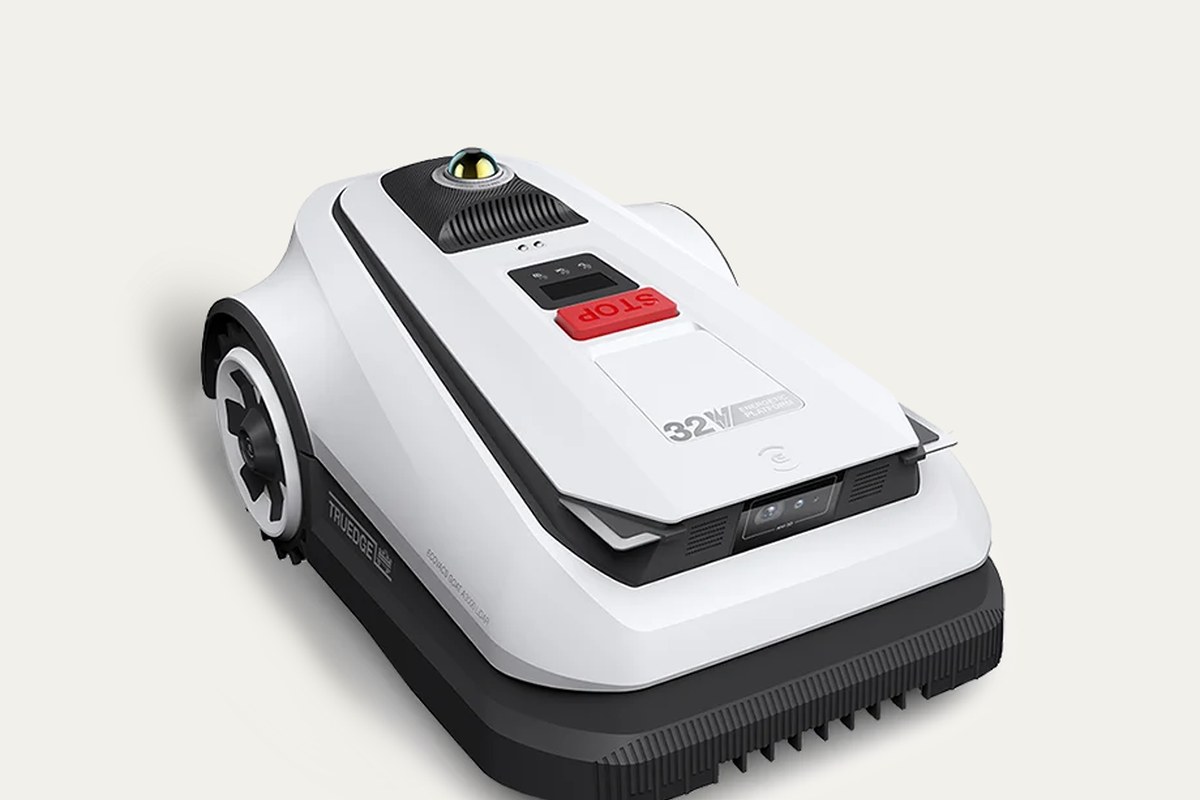
The GOAT A3000 LiDAR reviewed here is the original A3000 LiDAR, not a later LiDAR PRO with different edge hardware. Ecovacs lists dual LiDAR and camera navigation, a 33-centimetre cutting width and electronically adjustable height from three to nine centimetres. Those are useful concrete specifications. A shopper should not import features from a newer product simply because the family name and body colour are similar.
Its wider dual-disc cutting system is relevant on an open lawn where each straight pass can do more work. Yet width is only one component of coverage. Turning, obstacle avoidance and the charging route may consume much of a task on a crowded property. We would compare completed area over an entire day rather than extrapolate from a short straight-line demonstration.
Local sensing changes the installation trade
A3000 LiDAR avoids the traditional need to place an RTK reference station. That can make it attractive near tall buildings or tree cover, provided the local sensing system recognises the environment reliably. A useful test should include feature-poor open space as well as cluttered edges. A device may have plenty to see beside a house and less distinctive geometry in another part of the lawn.
The manufacturer promotes fast charging, listing about 45 minutes, and a high cutting-efficiency figure. These should be treated as controlled reference values. We would log mowing, charging, transport and blocked time separately. A machine that charges quickly but repeatedly abandons a narrow connection may provide less useful work than a slower-charging mower with a better fit to the site.
Height, edges and ordinary ownership
Electronic height adjustment is a meaningful convenience when different lawn areas or seasons require different settings. The nine-centimetre maximum may also suit a taller finish better than some overseas designs. The 50% internal slope claim remains a limit to assess against actual terrain; this is not evidence of equivalent performance on damp grass, loose soil or a sloping boundary.
Ecovacs' edge language should be checked against the physical border. A passable, level edge can permit a closer finish than a fence or raised bed. We would photograph and measure each type before deciding how much trimming the system saves. Against GOAT O1000 RTK, A3000's attraction is the wider cut, electronic height and different navigation arrangement. Against newer PRO products, confirm whether the extra edge mechanism solves enough work to justify its cost. Documentation alone cannot establish obstacle safety, long-term sensor cleanliness or maintenance burden on a real property.
A practical acceptance test before relying on it
For A3000 LiDAR, compare a broad open zone with a smaller obstacle-rich one and record productive cutting time separately. This shows where the wider dual-disc design provides an advantage and where route complexity erodes it. We would measure the edge strip beside a raised border rather than infer performance from the name TruEdge. Then repeat a safe return-to-dock task after ordinary garden furniture has moved. The installation benefit of local sensing should survive those everyday changes. Also verify the exact original A3000 model on the invoice, because importing claims from the newer PRO range would make both the edge assessment and purchase comparison misleading.
Setup, maintenance and the ownership decision
A3000 LiDAR's installation advantage is strongest when the owner would otherwise struggle to place RTK equipment. Use that freedom to choose an accessible dock with a simple approach rather than hiding the station in a difficult corner. Local sensing still needs a stable enough environment to recognise position. Check the lawn's least distinctive area and the route beside vegetation likely to change through the season. The first map should leave conservative margins, with small corrections made only after observing actual operation. Automatic mapping saves effort only if the owner can understand and verify the result.
The two cutting discs and electronic height adjustment deserve their own maintenance routine. Inspect the finish across the full cutting width, looking for a difference between the areas served by each disc. A damaged or worn blade set could otherwise be mistaken for a navigation problem. Use the specified replacement components and isolation procedure before working underneath. The three-to-nine-centimetre range is useful for different preferences, but the machine still needs suitable starting grass and enough operating time. We would not expect a fast-charging maintenance mower to recover every badly overgrown section without preparation.
Published charging speed is worth checking under ordinary ownership conditions. Record the starting charge, time at the dock and whether contacts need cleaning before a normal cycle resumes. The manufacturer's efficiency figures combine assumptions that may not match a divided yard. A stable charge-and-return routine can be more valuable than the lowest advertised charging time. Keep the station approach free of deep ruts and trapped clippings, and follow the manual for washing the mower. IPX6 describes a water-resistance classification, not blanket approval for pressure washing every joint, sensor or electrical connection.
The camera and local obstacle sensing introduce both useful functionality and account questions. Review any remote viewing permissions, family access and optional cellular arrangements for the exact original A3000. We have not tested privacy protections or detection of particular objects. Schedule mowing away from children and pets, and clear loose debris even when a product claims to recognise hundreds of obstacles. A mower avoiding a chair may leave a grass island; a missed small object can create a different problem. Measure avoidance clearance and manual finishing together rather than awarding credit solely for the presence of a sensor.
Service enquiries should explicitly name A3000 LiDAR without the PRO suffix. Later GOAT products can use different cutting or edge equipment, and an accessory page that says A Series may need closer checking. Obtain the local battery, charger and blade supply route before the return window ends. Canadian buyers should not assume the US shop's terms apply to their retailer. Compare the complete support and maintenance arrangement with Dreame A2 or another LiDAR candidate. A wider cutting system is useful on the right lawn, but it cannot compensate for unavailable parts or an installation that requires daily intervention.
Seasonal storage and return to work
Before storing the original A3000 LiDAR, retain its exact model identification and blade references so that later PRO accessories are not ordered by mistake. Follow the battery and cleaning guidance and inspect both cutting discs before spring use. Restart with the preferred electronic height setting and a conservative map check around changed planting. Confirm charging contact condition and completion notifications during a full cycle. The wider cutting system should resume as a maintained machine, rather than be asked to compensate immediately for accumulated winter debris or severe overgrowth.
Sources & further reading.
These are the sources behind this research review. Manufacturer claims are not independent performance measurements. Community accounts, when cited, describe individual experiences.
Documentation reviewed: 9 October 2026. Product software and regional bundles can change. Corrections and editorial disclosures.