The ownership case.
Worth considering for portable listening if its battery, cushions and folding frame are healthy. Check the split-profile Bluetooth arrangement before buying for a phone-and-laptop routine.
Reasons to consider it
- Cancellation, ambient listening and Quick Attention provide distinct listening modes
- SBC, AAC, aptX, aptX HD and LDAC support, subject to the sending device
- Powered wired listening retains cancellation; unpowered playback offers a passive fallback
Go in knowing
- Two-device operation separates music and calls; it is not general switching between two music sources
- Charging interrupts playback; USB-C is not a USB-audio connection
- Battery endurance and cushion condition must be checked on the individual used pair
The specification sheet.
Published specifications from the linked sources. Configurations and availability can differ by country.
- Driver
- 40 mm dome-type dynamic driver
- Bluetooth
- 4.2; SBC, AAC, LDAC, aptX, aptX HD
- Battery claim (manufacturer)
- Up to 30 hours with NC on
- Charging
- USB-C; approximately 3 hours full; 10 min quick charge yields approximately 5 hours
- Weight
- Approximately 255 g
- Wired connection
- 3.5 mm analogue; powered cancellation or passive playback
- Folding
- Inward-folding ear cups with hard carrying case
A useful older Sony, with generation-specific limits
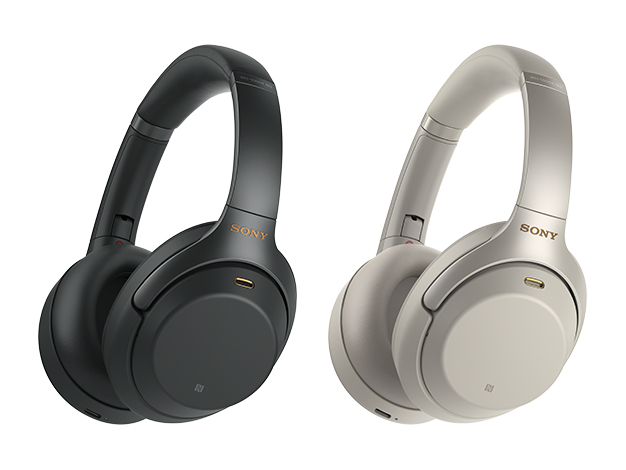
The WH-1000XM3 is worth considering as a portable noise-cancelling headphone, provided the particular pair is healthy and its connection behaviour suits your day. The combination of a folding body, touch controls, adjustable listening settings and an analogue cable gives it several practical roles. None of those features requires pretending that the XM3 is an XM4 with a different badge. Source switching, microphone expectations and physical condition can matter more than the family resemblance.
Sony’s specifications identify a 40 mm driver, not the 30 mm unit associated with a later model. Driver diameter alone does not rank headphones by sound quality. It does, however, illustrate why shopping by a shortened XM-series name can lead to the wrong assumptions. This assessment uses documentation and attributed independent reviews. We have not worn the XM3, measured its cancellation or tested an individual battery. Its value as a used purchase remains dependent on what arrives, not only what was advertised at launch.
A bass-forward starting point, with room to adjust
RTINGS characterises the default sound as bass-heavy and notes adjustment through the companion app. What Hi-Fi’s listening review was positive about the presentation and detail. Those are their assessments, not ours, and they do not establish that everyone will prefer this tuning. For someone who enjoys a stronger low end, the default may be attractive. Someone who mainly follows voices or uses headphones for editing should compare familiar recordings rather than interpret a premium model name as a promise of neutrality.
EQ can be useful, but it should solve a specific preference rather than become an attempt to correct a damaged pair. First check that the two sides play consistently and that the cushions fit correctly. Then compare a small adjustment at the same listening level. A louder setting can seem more impressive without being more faithful. Software processing and the selected Bluetooth connection mode also belong in the comparison: a listening result made with one combination of settings does not automatically describe another.
Cancellation, ambient listening and a changing seal
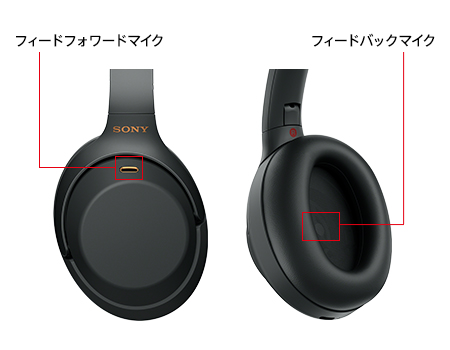
Sony documents a personal cancellation optimiser, atmospheric-pressure optimisation, ambient listening and Quick Attention. They address different situations. Cancellation is for reducing unwanted sound; ambient listening lets more of the surroundings through; covering the touch panel temporarily lowers the music and admits outside sound. Learn that last gesture before using the headphones at a ticket counter. It is a practical control for a short exchange, rather than a reason to leave a complicated setting permanently enabled.
RTINGS’ evaluation found effective cancellation. Applying that finding to a used pair requires care: compressed cushions, replacement pads and glasses can change the seal. Compare the settings with steady background sound and ordinary speech, without raising music to drown out the result. We have not tested the optimiser or pressure adjustment. If a particular fit feels uncomfortable with cancellation engaged, the number of available modes cannot resolve that on paper. A travel headphone must work on your head, in your normal posture.
Its two-device option has a narrower meaning
A blanket statement that the XM3 has no multipoint is inaccurate. Sony documents a split-profile arrangement: one device provides music over A2DP while another handles calls over HFP or HSP. That is not the same proposition as freely switching two music sources. The manual also excludes this arrangement while Google Assistant or Amazon Alexa is in use. Anyone buying for a phone-and-laptop routine should read that procedure rather than assume the behaviour demonstrated on an XM4 also applies here.
Make the trial resemble the actual working day. Connect the music source, add the phone for calls as instructed, then check what happens when a call arrives and ends. Some computers combine communications and music in ways that make this setup less straightforward. The important result is whether the intended applications behave usefully, not whether two pairing records appear in a menu. NFC can simplify pairing with a compatible device, but it does not turn this older connection arrangement into a newer implementation.
Several codecs, but the sender decides what is available
Sony lists SBC, AAC, aptX, aptX HD and LDAC for the XM3. That is a broader list than some later models, but both ends of a connection must support the chosen format. A Bluetooth transmitter or phone does not gain a codec merely because the headphones list it. Check the sender and the negotiated mode. No claim is made here that a particular codec produces an audible improvement with your recordings, listening level or environment.
A codec is not a complete quality assessment. Connection stability, the recording, application processing and the fit of the headphones all remain relevant. If a higher-bandwidth mode drops out during a normal walk or around the desk, a more stable setting can be the better practical choice. Do not pay extra for a capability you cannot use with the equipment already owned. This is also a reason to compare an older XM3 on its own merits: a long list of supported formats and an easy source-switching workflow are separate requirements.
Wired playback can retain cancellation when powered
The cable offers two modes. With power off, the XM3 can play passively without active cancellation. With power on, Sony documents wired listening with cancellation or ambient sound. It is therefore wrong to describe every wired session as passive or to say the cable always removes cancellation. Choose the mode deliberately when connecting an aircraft entertainment system or a desk source, and listen separately to powered and unpowered operation.
Wired operation also changes the controls. Sony says Bluetooth is unavailable while the cable is connected, and the touch panel is limited to Quick Attention rather than ordinary playback and volume gestures. Calls use the phone’s microphone in the documented cable arrangement. This is an audio fallback, not a complete wired conferencing headset. A buyer who needs a microphone over a computer’s analogue connection should resolve that requirement separately. Check the cable seats firmly, then try both modes before interpreting a difference in output as a fault.
USB-C is convenient; charging still interrupts listening
Sony rates music playback at up to 30 hours with cancellation and 38 hours without it. These are manufacturer maxima, not a runtime measurement by this publication or a prediction for used stock. The documented full charge is approximately three hours. More importantly for a desk routine, the guide says the headset turns off when charging starts and cannot play while connected for charging. The presence of USB-C should not be mistaken for a USB-audio mode or continuous listen-and-charge operation.
Battery age is a reason to inspect, not a basis for inventing a remaining-hour estimate. Ask about use and storage, then observe a normal listening session during the return period. A brief demonstration that the indicator lights does not establish useful endurance. Sony directs owners to seek battery replacement advice if operating time falls substantially; the guide does not provide a simple user-swappable cell procedure. Include service uncertainty in the purchase decision rather than treating the cable as a substitute for powered cancellation.
Touch gestures and a folding frame need a physical trial
What Hi-Fi’s review found the touch controls required some adjustment in use. They are a different interaction from the separate buttons on a Bose QC35 II. Try track changes, volume adjustment and Quick Attention while seated and while moving normally. A control that works in a quiet demonstration may still be frustrating for someone wearing gloves or frequently repositioning the cups. We have not tested cold-weather behaviour, so no performance claim is made for Canadian winter commuting.
The inward-folding construction is a reason to compare the XM3 with a larger non-folding design when bag space matters. Inspect the hinges and sliders gently, and check whether the actual case closes with the headphones arranged correctly. Look for uneven cup movement, cracks and worn cushions. A clean outer shell can hide deteriorated contact surfaces. These observations establish the condition of the unit being bought; they do not support a claim that every hinge fails at a particular age or that replacement parts are guaranteed to remain available.
Buy it for the routine it can actually support
The strongest case is portable listening from equipment that supports the desired connection, with a healthy battery, intact folding frame and cushions that fit. The weaker case is buying it specifically for effortless two-source music switching or assuming its wired cable also carries the headset microphone to a computer. A QC35 II offers a different controls and connection proposition; an XM4 should be compared when source switching is central. The complete price should account for condition and supplied accessories.
An older flagship is not automatically a bargain, and a newer model is not automatically the better fit. Choose the operating behaviour first, then compare the condition and return protection of the actual offers. The XM3 has enough documented versatility to merit a shortlist, but this publication has not completed a listening or cancellation test. A numerical rating remains withheld. Our recommendation is conditional on a working pair and a workflow that respects its documented Bluetooth, cable and charging limits.
Sources & further reading.
These are the sources behind this research review. Manufacturer claims are not independent performance measurements. Community accounts, when cited, describe individual experiences.
- Sony USA WH-1000XM3 technical specifications ↗manufacturer
- Sony WH-1000XM3: separate music and phone Bluetooth connections ↗manual
- Sony WH-1000XM3: wired listening and control limits ↗manual
- Sony WH-1000XM3: charging requirements and playback restrictions ↗manual
- What Hi-Fi? Sony WH-1000XM3 review (tested, Awards 2020 winner) ↗independent review
- RTINGS Sony WH-1000XM3 Wireless review (bought and lab-tested) ↗independent review
- Sony Japan WH-1000XM3 product photographs and microphone illustration ↗image reference
Documentation reviewed: 9 October 2026. Product software and regional bundles can change. Corrections and editorial disclosures.