An editorial assessment of documented capabilities and ownership trade-offs. This is not a hands-on test result or a measurement of reliability.
Features & capability 30%7.9
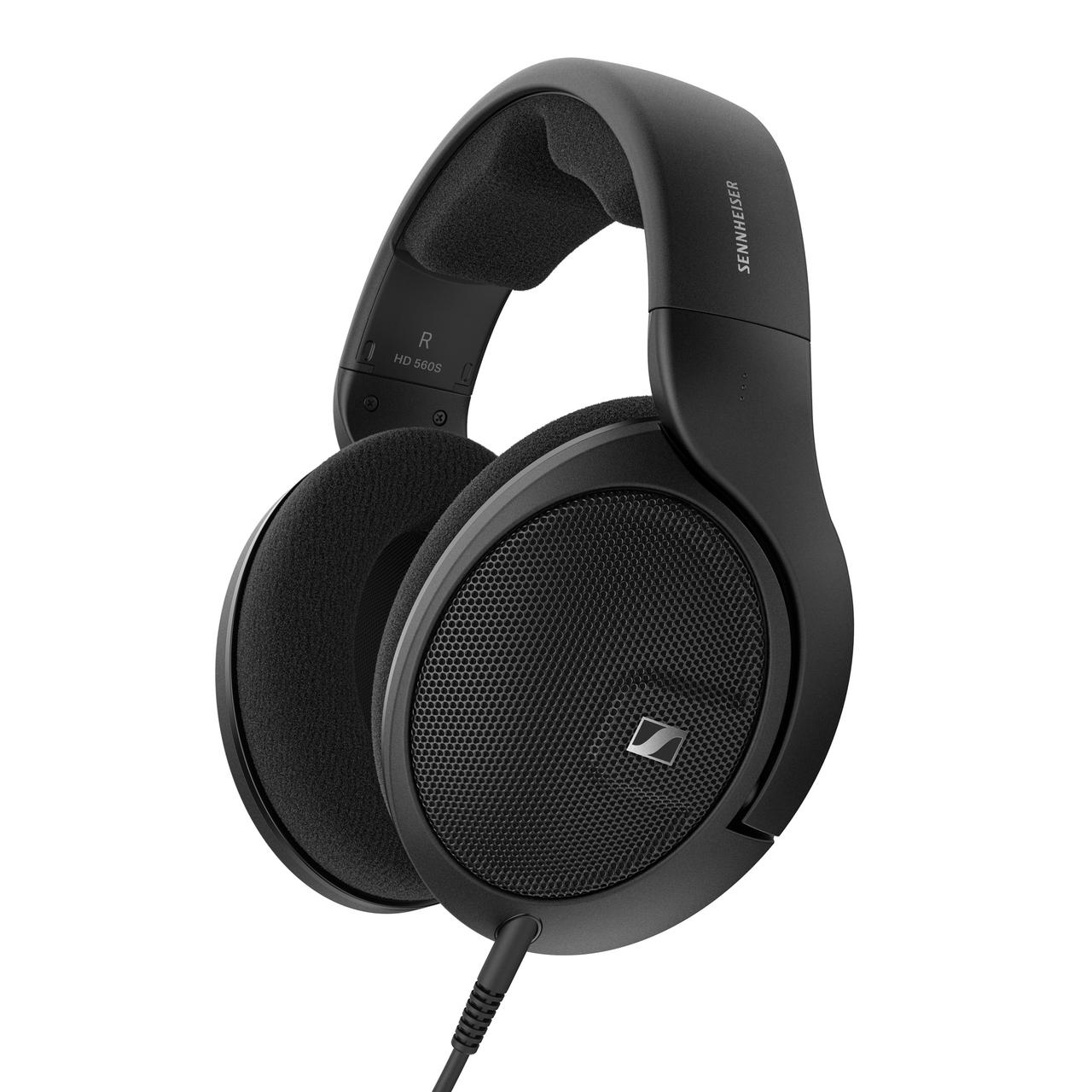
A clearly focused open-back design supports deliberate wired listening.
Compatibility & connectivity 20%7.7
Standard analogue source compatibility is useful, with source-level and room limitations.
Ownership & upkeep 20%8.5
Passive operation and replaceable cable simplify ongoing ownership.
Setup & everyday use 15%8.1
Daily use is straightforward once fit and cable routing are established.
Documentation & support clarity 15%8.7
The manufacturer addresses amplification directly and documents the current cable package.
Compare scores within the same product category. Small decimal differences should not override your needs or the evidence limits.
How the Standpoint Score works
We score five aspects of the documented product on a 0–10 scale, then calculate a weighted total:
- Features & capability30% of the total
- Compatibility & connectivity20% of the total
- Ownership & upkeep20% of the total
- Setup & everyday use15% of the total
- Documentation & support clarity15% of the total
This product’s 8.1/10 is a provisional research assessment. It does not claim measured performance, tested reliability or a verified customer satisfaction rate. Compare it with products in the same category, and read each criterion’s reasoning above.
Read the full rubric and score bands ↗The ownership case.
A rational choice for a quiet desk and a suitable headphone output when the open design and fit match the work.
Reasons to consider it
- Open construction with angled driver arrangement
- Detachable cable and straightforward analogue connection
- No charging or wireless-software dependency
Go in knowing
- Open cups allow environmental sound and outward leakage
- Actual source headroom still needs checking
- Cable packages and pad condition vary across older listings
The specification sheet.
Published specifications from the linked sources. Configurations and availability can differ by country.
- Introduced
- 2020
- Construction
- Dynamic open-back, around-ear
- Nominal impedance
- 120 ohms
- Driver arrangement
- E.A.R. angled alignment
- Current referenced cable
- Detachable 1.8 m with 3.5 mm plug
- Adapter
- 3.5 mm to 6.3 mm screw-on adapter in referenced package
A wired route into deliberate listening
The HD 560S was introduced in 2020 as an open-back headphone aimed at analytical listening. The useful part of that positioning is its clear focus: passive wired playback in an environment where an open design is acceptable. It does not try to replace a commuting headset, a wireless call companion and a studio monitoring system at once. That narrower role makes the purchase easier to assess if you know where and how you intend to listen.
Begin with the room. A quiet desk, a reading chair near a source or a home editing setup can accommodate its construction more readily than a busy shared workspace. Then consider whether the cable and lack of integrated call controls fit the routine. A product can be affordable in isolation while still requiring accessories or compromises that make another design more appropriate. The HD 560S earns consideration through a suitable use case, not simply because it is an accessible entry into a respected product family.
Angled drivers do not settle subjective quality
Sennheiser describes its E.A.R. arrangement as an angled driver alignment within the open cups. That identifies a deliberate acoustic design choice, but it does not establish how every listener will perceive space or tonal balance. Ear shape, placement and the recording remain relevant. Treat the claim as something to explore with familiar material rather than as a guaranteed substitute for a pair of loudspeakers in a particular room.
For a meaningful comparison, keep the source and level consistent. A louder headphone often makes a brief demonstration seem more detailed without establishing that it is more useful over an evening. Include ordinary spoken material and several recordings you know, rather than selecting only spectacular tracks. If the intended work is editing, use an actual project. The question is whether you can make repeatable decisions and listen comfortably, not whether one short example produces an impressive first reaction. This article does not claim a measured response or controlled soundstage result.
Open cups make the environment part of the system
The HD 560S allows sound to interact with the surroundings more freely than an isolating closed headphone. In practical terms, that means your room remains part of the experience. Listen for computer fans, ventilation and conversation before deciding whether the setting is quiet enough. Trying to overcome persistent background sound with more playback level is an unhelpful way to compensate for a mismatched design.
Sound escaping outward matters too. Ask someone nearby whether your normal listening level is intrusive, especially if the headphone will be used late at night. For microphone work, assess spill into the actual recording arrangement rather than assuming the word reference makes it suitable for every production stage. The same headphone may be convenient for editing a podcast and less convenient while recording a quiet speaker beside an open microphone. Matching the tool to the stage of work is more useful than assigning it a universal studio role.
Check the output before buying extra amplification
The manufacturer documents a 120-ohm transducer and says a separate amplifier is not automatically necessary for ordinary use. That is a reason to test the source you already have, not a promise that every output is identical. Check whether your device provides a useful volume range with the recordings you enjoy, including quieter material. If you need more headroom, identify that limitation before selecting an accessory to solve it.
A separate DAC or amplifier also changes the physical setup. It occupies space, needs a connection and may introduce another volume control. Those additions can be worthwhile, but they should have a purpose. For a laptop listener, a compact compatible adapter might address the missing headphone socket without requiring a larger system. For a desk with several sources, a dedicated output could simplify switching. The HD 560S does not dictate one correct ownership style; compatibility should follow the actual devices and listening requirements involved.
Cable revisions deserve a box check
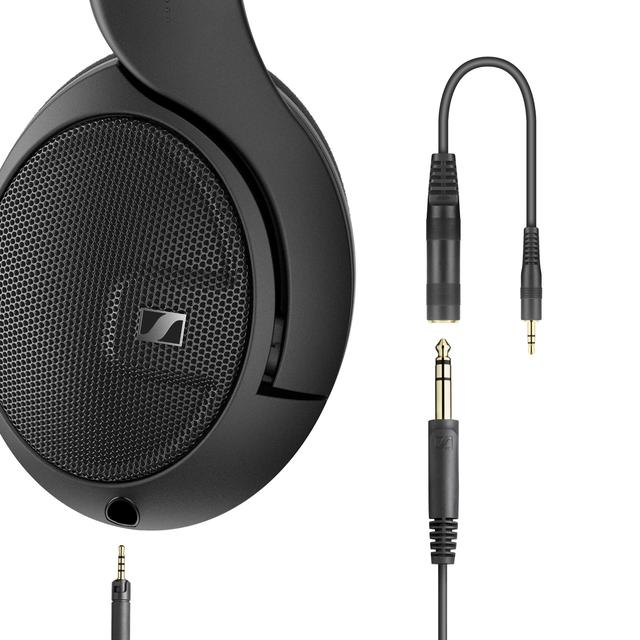
The current regional product page consulted for this review lists a detachable 1.8-metre cable with a 3.5 mm plug and a larger-jack adapter. Older packaging and used listings can contain a different supplied cable, so confirm the contents rather than treating every photograph of this long-running model as identical. The relevant question is whether the lead reaches your source without excessive slack or tension.
Detachment is useful when a cable is damaged or a different length is appropriate, but the headphone-side connection still needs to fit correctly. Check that it seats securely and that both channels remain stable during normal movement. A generic-looking replacement advertised for several models may require closer compatibility checking. If you plan to move the headphone between rooms, a repeatable place to route and store the lead will reduce unnecessary strain. Cable convenience is mundane compared with acoustic marketing, yet it affects almost every listening session.
Comfort and pads determine session length
The around-ear design and velour contact surfaces are intended for extended use. Whether they succeed for you depends on ear clearance, headband adjustment and pressure in the positions you actually adopt. Try looking down at a keyboard and leaning back, rather than judging fit only while sitting upright. Glasses and hair can also change how the pads rest. A return policy is particularly useful because comfort problems may develop later than an initial tonal impression.
On a used example, inspect pad compression and attachment. Uneven or non-original pads can alter the fit enough to make a comparison with a new demonstration unit misleading. Ask what has been replaced and why, then check the availability of appropriate parts in your region. The passive electronics avoid a charging routine, but the physical contact surfaces remain consumable elements of ownership. A realistic price comparison includes restoring those surfaces when necessary, not just the headline cost of the headphone.

Analytical use benefits from a repeatable method
The HD 560S is marketed around revealing detail, but a productive listening method matters more than repeating that phrase. Choose a small set of recordings with known qualities and revisit them when changing equipment or settings. Keep notes on specific questions such as vocal balance, editing artefacts or how clearly you can follow overlapping instruments. That produces a more useful personal reference than broad impressions collected at inconsistent levels.
If you create audio, check important decisions elsewhere as well. A headphone cannot reveal how a loudspeaker interacts with a room simply by being described as analytical. Nor does one frequency-range specification establish how evenly it reproduces everything inside that range. Our review therefore treats the manufacturer's specifications as design information and avoids turning them into independent test results. The potential benefit is a focused listening tool whose behaviour you can learn, rather than an automatic guarantee of correct production decisions.
Where the HD 560S remains a rational buy
The HD 560S makes sense for a listener who has a quiet place, a suitable wired source and an interest in spending time with the music or material itself. Its detachable cable and documented replacement ecosystem help make ownership understandable. The appeal is reduced if the actual need is isolation, wireless movement around a room or a microphone integrated into the same product. Those are different requirements and should be addressed directly.
For an older purchase, confirm the cable package, pad condition and return terms before judging the price. Our provisional score reflects the design's focused capability and relatively simple ownership demands, without claiming measured neutrality or listening superiority. A complete pair that fits comfortably can remain useful independently of phone software and wireless standards. That independence is a substantive advantage when it matches the task, but it cannot compensate for a room or daily routine that conflicts with the open, wired design.
Sources & further reading.
These are the sources behind this research review. Manufacturer claims are not independent performance measurements. Community accounts, when cited, describe individual experiences.
- Sennheiser manufacturer specifications, documentation or release ↗manufacturer
- Sennheiser manufacturer specifications, documentation or release ↗manufacturer
- Sennheiser manufacturer specifications, documentation or release ↗manufacturer
Documentation reviewed: 9 October 2026. Product software and regional bundles can change. Corrections and editorial disclosures.