The ownership case.
A plausible wired travel choice when the source, cable variant and individual pair are suitable. Replaceable AAA power and passive playback are useful; condition and remote compatibility remain material checks.
Reasons to consider it
- Replaceable AAA battery powers cancellation without a USB charging session
- Audio remains available with power off, in a different passive mode
- Wired operation needs no Bluetooth pairing or companion app
Go in knowing
- An analogue audio connection or compatible adapter is required
- Remote and microphone functions depend on cable variant and connected device
- Used cushions, cable and battery compartment need inspection; parts must be checked locally
The specification sheet.
Published specifications from the linked sources. Configurations and availability can differ by country.
- Type
- Closed-back, circumaural, wired
- Noise cancellation
- Analogue active, single AAA battery
- Cable
- Detachable 2.5 mm to 3.5 mm with inline remote/microphone; Apple and Android variants
- Passive operation
- Yes — audio continues without battery, but NC and built-in amplification are off
A cable-first alternative to rechargeable travel headphones
The QuietComfort 25 addresses a particular preference: listening through a cable while using active noise cancellation, with power supplied by a replaceable AAA battery. It does not pair over Bluetooth, need an app or require a USB charging session. That simplicity is appealing only if the source has an appropriate analogue output. A phone without a headphone socket needs an adapter, and the adapter becomes part of both the cost and the everyday routine.
This is the QC25, not the wireless QC35 or QC35 II. The cable, battery compartment and remote distinguish its ownership requirements. We have not listened to or measured a pair. The assessment combines Bose documentation, attributed independent findings and analysis of those requirements. Buying a used example depends on its present condition: a reputation for comfortable travel listening does not establish that the hinges, cable or cancellation electronics in a particular listing are healthy.
A replaceable battery removes one problem, not every problem
Bose’s quick-start guide places the AAA compartment in the right ear cup and explains the power switch and indicator. Keep a spare battery where it can be reached during a journey. This differs from a headphone that needs a suitable charging cable and time connected to a power source. It can make an interruption easier to resolve, especially when the rest of the travel kit uses different charging connectors.
The advantage is access to the power source, not proof that an old headphone performs like a new one. Inspect the compartment for residue or corrosion, check the cover closes properly and confirm that the power indicator behaves normally. A fresh battery cannot repair a damaged contact or an intermittent switch. Remove a battery for extended storage as the care instructions direct. Do not infer remaining service life from the fact that the design uses replaceable cells; the rest of the assembly still ages.
Passive playback is a useful fallback with a different sound
The guide confirms that audio remains available with power off, while Bose identifies powered operation as the route to its intended sound quality. That distinction is central to the QC25. If the battery runs out, the cable can still carry music; cancellation is no longer active. What Hi-Fi’s review also describes a change in the listening presentation between powered and unpowered operation. Treat the fallback as a separate mode rather than assume turning off the switch leaves everything except cancellation unchanged.
Try both modes using the same recording and source. Match the listening level sensibly before comparing, because a quieter mode can seem less engaging simply through the volume difference. If one side cuts out when the cable moves, investigate the connection before judging sound quality. Passive playback can help distinguish a power-related fault from a cable problem, but it is not a complete diagnostic procedure. A used pair should work consistently in each mode it is advertised to support.
Cancellation is the reason to consider it for travel
RTINGS found strong noise isolation in its QC25 assessment, and What Hi-Fi was positive about cancellation in its listening review. Those results belong to their samples and methods. They support investigating the model for travel; they do not establish how much sound a particular used pair will remove. Worn or substituted cushions can alter the seal. Test with the glasses and hairstyle normally worn rather than hold the cups tightly against the head for a favourable demonstration.
The relevant comparison is the actual background sound. A steady ventilation system, speech nearby and a changing street environment place different demands on a headphone. Check with music paused as well as playing. Avoid increasing volume to disguise a poor result. Cancellation is not certified hearing protection, and blocking what you hear does not establish what a microphone transmits on a call. The QC25 has a simple powered mode; someone wanting elaborate ambient controls should compare a different design.
Cable variants matter for calls and remote controls
Bose sold versions for Apple devices and for Samsung or Android devices. The remote and microphone compatibility is therefore a model-and-source question, not something settled by the headphone name alone. Bose’s surviving product page identifies the variant, while the quick-start material includes device-specific control instructions. Ask for photographs of the cable and packaging when a listing is vague. Do not assume every replacement cable reproduces every function of the originally supplied remote.
First confirm audio, then test volume, play or pause and the call control with the intended device. A working music connection does not prove the microphone or all remote commands are supported. USB-C or Lightning adapters can add another compatibility boundary. For computer meetings, establish whether the input accepts a headset microphone or only stereo output; a cable splitter or separate microphone may be necessary. The QC25 is not a wireless conferencing headset, and its cancellation does not remove these connector requirements.
Comfort deserves more than a quick try-on
RTINGS describes the QC25 as comfortable, but fit remains personal. Check that the cups surround the ears rather than rest on their edges, and that the headband adjustment leaves enough room without concentrating pressure. A short demonstration can miss heat or pressure that appears later. We have not worn the model, so no claim is made about comfort across a flight or a working day.
Inspect cushion surfaces and padding before paying for a used pair. Flaking material, flattened pads and an uneven seal are practical ownership issues, not merely cosmetic defects. Replacement pads may restore usable comfort, but their material and shape can also change the sound and cancellation. Confirm what has been fitted. The headband, sliders and hinges deserve a gentle check for cracks or excessive movement. Do not force a folding mechanism to demonstrate that it still works.
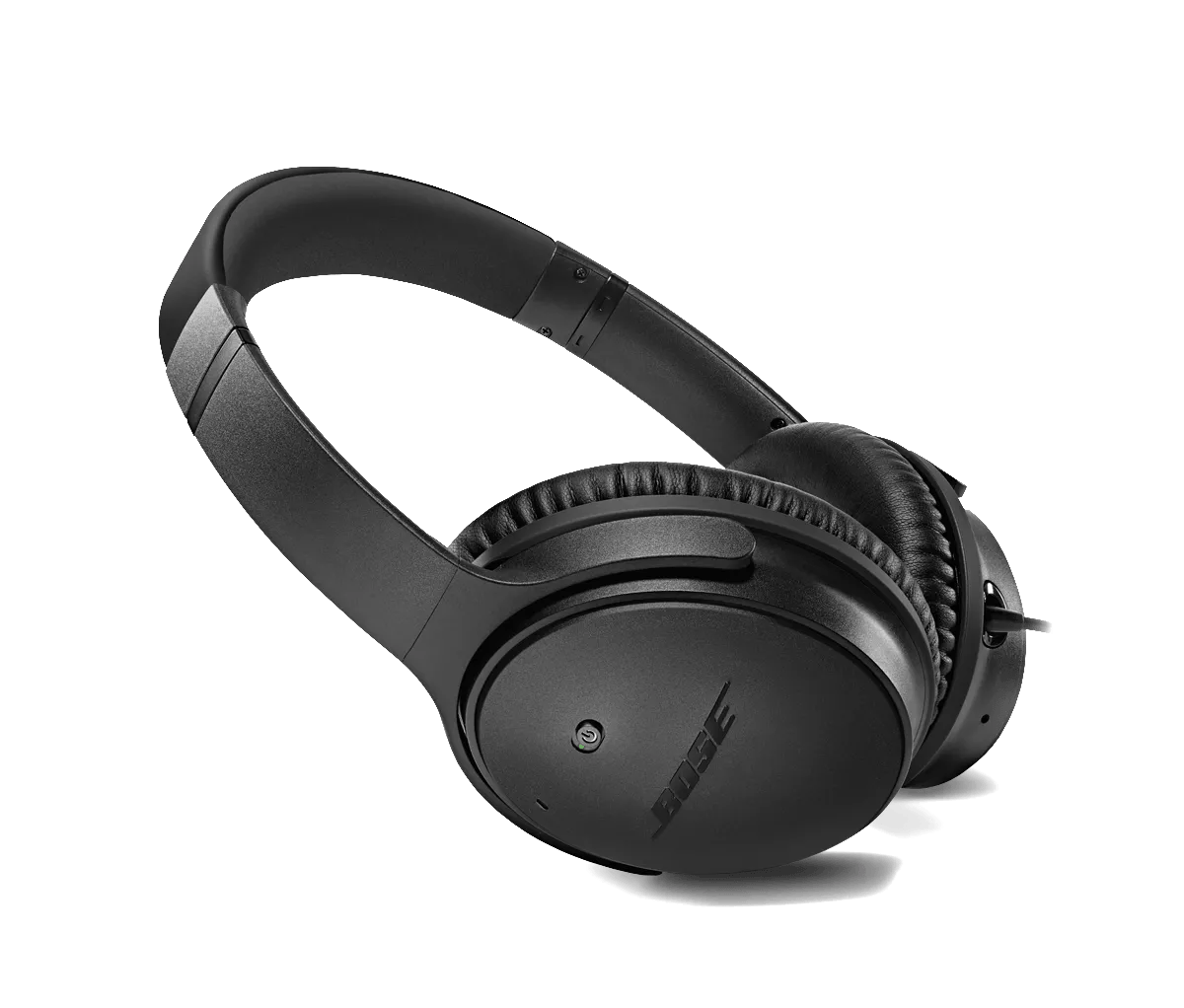
The cable and case belong in the purchase comparison
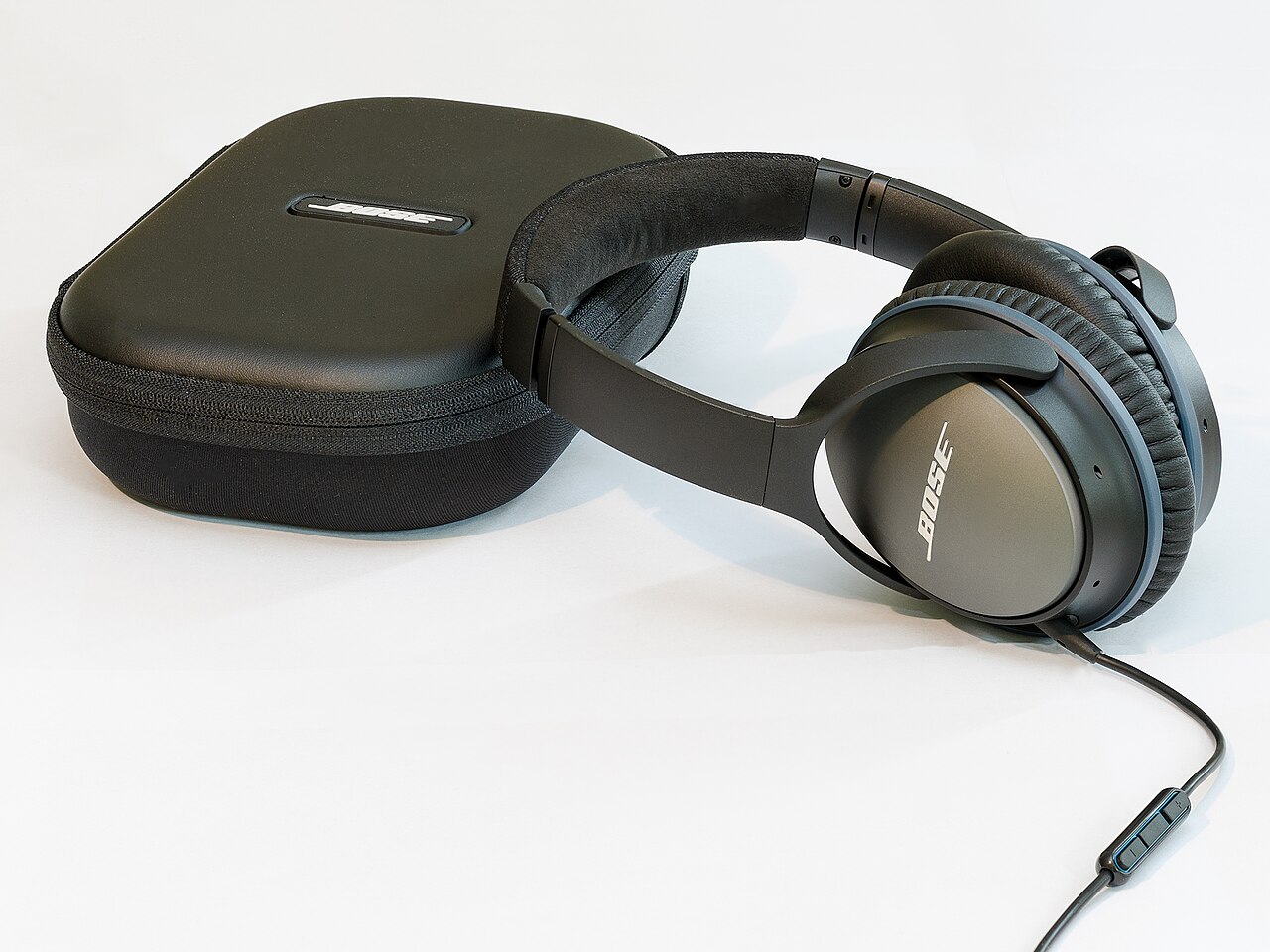
Bose’s product page lists a carrying case, audio cable, AAA battery and airline adapter among the original package contents. A used listing need not include all of them. Compare what is actually supplied, and check the arrangement against the storage instructions rather than assume the cups fold like a different QuietComfort model. A case is useful for keeping the headphone away from loose objects in a bag, but it does not make it waterproof or establish the condition of the pair inside.
An airline adapter is relevant only when the seat system needs that connector arrangement. Many trips will not require it. The everyday cable is more important: inspect its ends, strain relief and remote, then listen while moving it normally. Replacement costs should be checked at the time of purchase. A bargain missing the correct cable and usable cushions may cease to be attractive once those requirements are included.
Documentation exists; parts availability still needs checking
Bose still provides a QC25 product reference and a downloadable quick-start guide. It would be incorrect to treat a failed support URL as proof that every official document or part has disappeared. Documentation access and service availability are separate questions. Check the exact replacement part or repair route for your region, and distinguish an original Bose item from a third-party listing. We have not confirmed a service quotation or guaranteed future stock.
The replaceable AAA battery makes routine power management straightforward, but the cable, cushions, hinge assemblies and electronics are different repair questions. Ask a seller about repairs and substitutions. If the answer is uncertain, price the purchase accordingly and favour a return arrangement that permits real listening. Do not pay an exceptional premium simply for an older sealed box: storage condition and age still matter, and an unused battery left inside can itself be a problem.
A good fit for a specific wired routine
Consider the QC25 when the source has a suitable analogue connection, replaceable batteries suit the travel routine and the individual pair passes inspection. Its passive fallback is useful, and there is little software setup to manage. The compromises are equally concrete: a cable is always involved, remote compatibility varies, and powered and passive listening are different modes. Someone who moves frequently between a phone and computer may prefer a wireless model after checking its source-switching behaviour.
The decision should turn on condition, connectors and the complete cost rather than nostalgia for an older flagship. Test cancellation, both audio modes and the controls separately. This publication has not performed a controlled listening, battery or cancellation test, so a numerical rating remains withheld. The QC25 earns a place on a used-buying shortlist through its documented operating design; the actual pair must establish whether that design still works as intended.
Sources & further reading.
These are the sources behind this research review. Manufacturer claims are not independent performance measurements. Community accounts, when cited, describe individual experiences.
- Bose QC25 product reference and package contents ↗manufacturer
- Bose QC25 quick-start guide ↗manual
- What Hi-Fi? Bose QuietComfort 25 review (tested, Awards 2014) ↗independent review
- RTINGS Bose QuietComfort 25/QC25 review (bought and lab-tested) ↗independent review
- Wikimedia Commons QC25 public reference photograph ↗image reference
Documentation reviewed: 9 October 2026. Product software and regional bundles can change. Corrections and editorial disclosures.