An editorial assessment of documented capabilities and ownership trade-offs. This is not a hands-on test result or a measurement of reliability.
Task capability 30%8.6
The broad task brief can address complex pool-care needs.
Navigation & control 20%8.4
Richer perception is a plausible advantage for difficult geometry.
Ownership & upkeep 20%6.7
Capability comes with more mechanisms, filters and consumables.
Setup & usability 15%7.3
Retrieval helps, while setup and lifting still need a real trial.
Documentation & support clarity 15%7.5
Detailed claims are available but geometry and vision conditions need clarification.
Compare scores within the same product category. Small decimal differences should not override your needs or the evidence limits.
How the Standpoint Score works
We score five aspects of the documented product on a 0–10 scale, then calculate a weighted total:
- Task capability30% of the total
- Navigation & control20% of the total
- Ownership & upkeep20% of the total
- Setup & usability15% of the total
- Documentation & support clarity15% of the total
This product’s 7.8/10 is a provisional research assessment. It does not claim measured performance, tested reliability or a verified customer satisfaction rate. Compare it with products in the same category, and read each criterion’s reasoning above.
Read the full rubric and score bands ↗The ownership case.
The AquaSense 2 Ultra belongs on a shortlist for complex pools and owners who want a single machine to attempt a broad set of tasks.
Reasons to consider it
- HybridSense camera-assisted navigation
- Broad surface and submerged brief
- Adaptive multilevel proposition
Go in knowing
- Minimum depths and transitions require confirmation
- More mechanisms and consumables to maintain
- Vision advantage remains untested
The specification sheet.
Published specifications from the linked sources. Configurations and availability can differ by country.
- Coverage
- Floor, walls, waterline and surface
- Navigation
- HybridSense camera-assisted mapping
- Extra function
- ClearWater clarification
- Retrieval
- Surface parking
The premium is about difficult pools
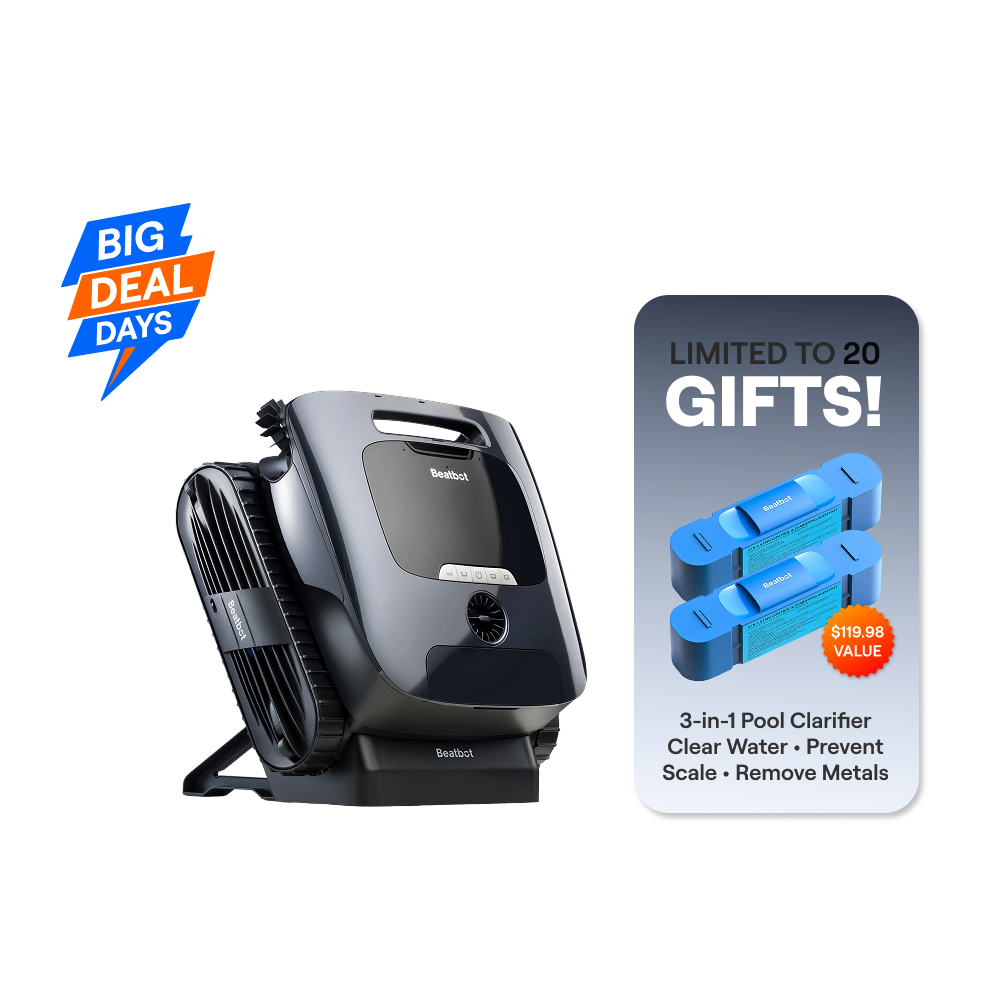
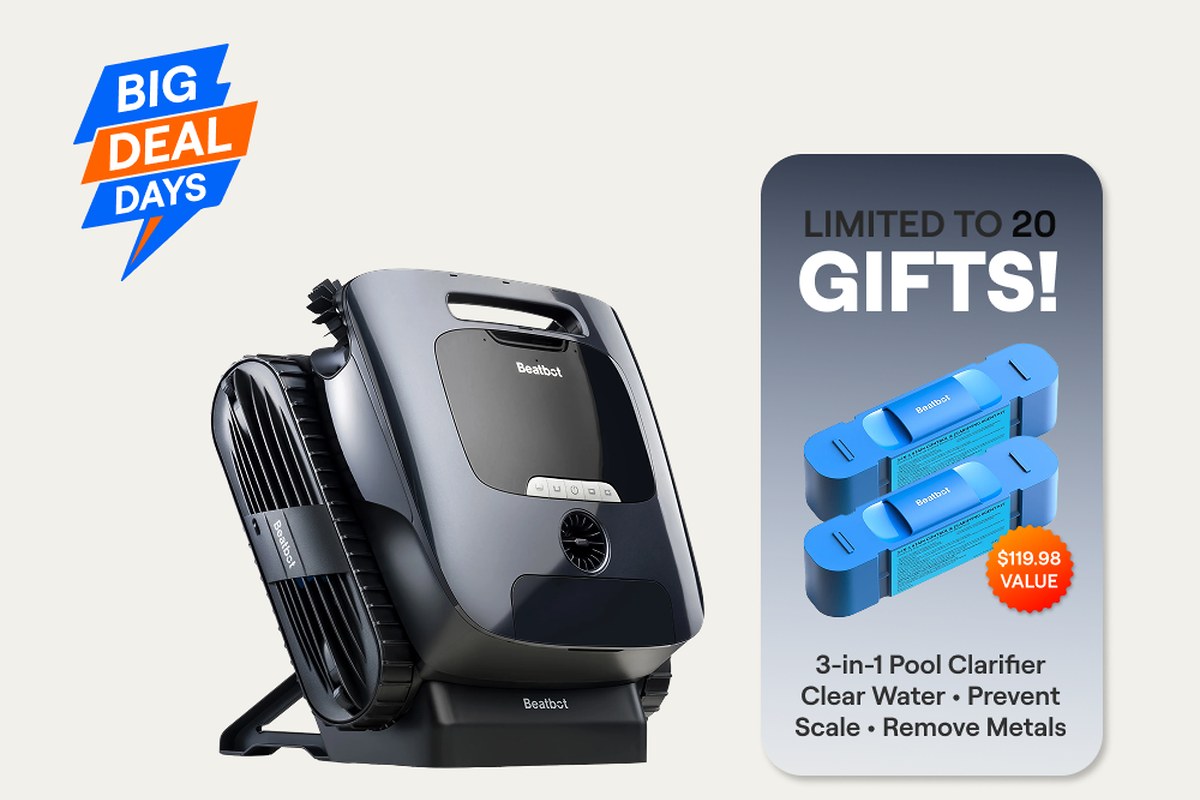
The AquaSense 2 Ultra adds camera-assisted HybridSense mapping and adaptive navigation to Beatbot's broad cleaning brief. Its documented remit includes floor, walls, waterline and surface collection, plus a clarification system. The more interesting question is not whether that is an impressive list, but whether your pool presents a problem that the additional perception can solve. A basin with shelves, irregular walls and changing levels is a more plausible candidate than a simple rectangle already cleaned reliably by a basic robot. We have not independently tested the mapping or cleaning performance. The Ultra should therefore be approached as a sophisticated design with specific potential advantages, rather than as evidence that every possible pool-cleaning task has become automatic.
Vision can help, but visibility still matters
A camera-based system can potentially distinguish debris and geometry in ways that simpler sensors cannot. Underwater visibility, lighting, surface pattern and suspended material can nevertheless affect the information available to it. A patterned liner and clear water are a different visual scene from pale plaster during a dusty cleanup. We would test the machine in normal morning and afternoon light and after a realistic debris event, not only in a pristine demonstration pool. A navigation feature is useful if it consistently changes the route in a productive way. Merely displaying a map does not establish better pickup. The strongest evidence would connect identified obstacles or debris to fewer missed areas and fewer manual rescues across repeated runs.
Multilevel capability needs precise boundaries
The Ultra is marketed for adaptive cleaning around multilevel platforms. That wording should prompt measurements, not assumptions. A broad shelf with sufficient water depth is different from a narrow stair tread or an elevated spa separated by a wall. Ask for the minimum depth, transition requirements and supported surface conditions for the exact regional version. Supply photographs and dimensions of any feature that matters to the purchase. We would be especially cautious about treating a manufacturer's picture of a robot on a ledge as proof it can independently enter and leave every ledge. The useful question is whether it completes the route in your geometry. If one important shelf remains inaccessible, factor the remaining manual work into the value calculation.
The five cleaning jobs need separate scores
An all-in-one robot can be very good at one task and merely adequate at another. Floor pickup, wall coverage, waterline scrubbing, surface collection and clarification should therefore be assessed individually. A large quantity of debris in the basket can obscure the fact that most of it came from one easy area. Likewise, clean-looking water does not establish correct chemistry or demonstrate the benefit of a consumable treatment. For the Ultra, surface-side brushes and the underwater cleaning system add different mechanisms with different limits. Observe the transitions between modes and the time allocated to each. If surface debris arrives continuously, consider whether the robot spends enough time skimming while also completing its submerged assignment.
Retrieval is part of the premium experience
Surface parking and water release are intended to make the end of a run less awkward. That is a practical advantage if the robot reliably presents its handle at an accessible edge. It still needs to be lifted, carried and cleaned. Test the process from the position you would actually use, with wet coping and a loaded basket taken into account. A heavy feature-rich robot can be less suitable for an owner with limited reach even when its retrieval software is sophisticated. We would also examine the fallback procedure when automatic parking is inconvenient or unavailable. A premium cleaner should have a comprehensible recovery routine, not merely an attractive normal-case demonstration.
The ownership cost includes more than electricity
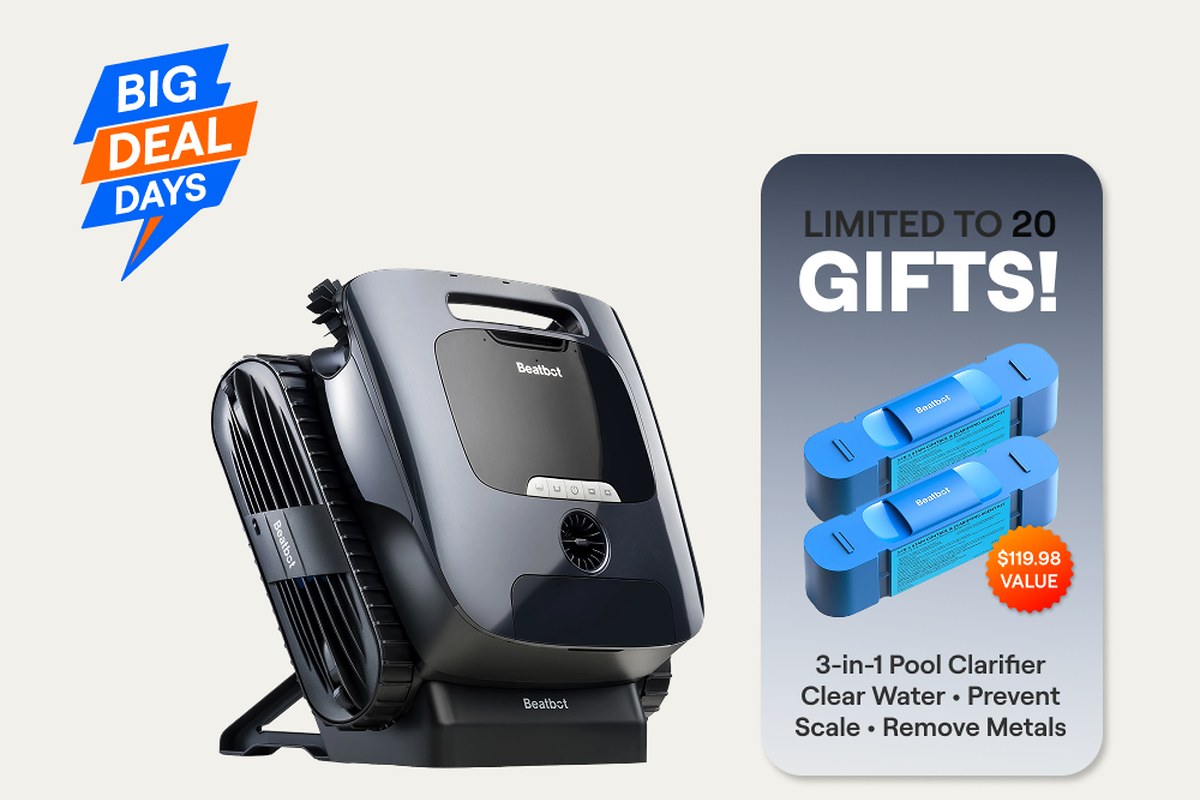
The Ultra's clarification consumable, filter media, brushes and eventual battery or mechanical service should be included in the budget. Ask how the clarification function can be managed and whether it suits the pool's treatment programme. No automatic dispensing feature replaces the need to follow chemical instructions and monitor the water independently. Software support is another component of ownership: clarify app requirements, update procedures, account transfer and the availability of essential functions if internet service is interrupted. We have not conducted a privacy or security audit. Because the machine uses a camera for cleaning, owners who care about image handling should read the current privacy information rather than assuming that underwater sensing is necessarily identical to local-only processing.
Maintenance scales with capability
More mechanisms create more inspection points. Keep the visible sensing surfaces clean as directed, remove trapped debris from brushes and inspect filter components after each demanding run. A fine filter loaded with dust can alter the hydraulic conditions under which the robot navigates and climbs. That means a navigation complaint may sometimes have a maintenance contributor. The charging dock needs a stable, suitable location with a sensible route from the rinse area. Plan winter storage before the season ends, especially for the battery. Ask whether a fault is repaired or handled through replacement in your region and what the process requires. A stated warranty is useful, but it is not the same thing as measured service turnaround or guaranteed uninterrupted pool care.
When the premium is hard to justify
If a conventional robot already reaches every important surface, the Ultra's perception features may provide less practical benefit than its price difference suggests. The standard AquaSense 2 may cover submerged work adequately, while a separate skimmer can remain on floating debris all day. Conversely, if existing cleaners repeatedly miss a shelf or become trapped by a complicated shape, richer sensing is worth investigating. The correct comparison is the amount of owner intervention avoided in that specific pool. Do not pay for a capability because it sounds advanced without identifying the task it improves. A sophisticated robot can be a rational purchase, but only after its particular strengths are connected to an actual limitation in the current routine.
Our evidence-based position
The AquaSense 2 Ultra belongs on a shortlist for complex pools and owners who want a single machine to attempt a broad set of tasks. It also deserves one of the most demanding trials, because its appeal rests on claims that are strongly dependent on geometry and conditions. We have not verified coverage, debris recognition, clarification effectiveness or battery life. A useful test series would repeat routes under varied light, document every shelf and corner, measure owner time and separate the results for surface and submerged work. Until those observations are available, the Ultra is a promising but conditional recommendation. Its technology is a reason to ask better questions, not a reason to stop asking them.
Sources & further reading.
These are the sources behind this research review. Manufacturer claims are not independent performance measurements. Community accounts, when cited, describe individual experiences.
Documentation reviewed: 9 October 2026. Product software and regional bundles can change. Corrections and editorial disclosures.