An editorial assessment of documented capabilities and ownership trade-offs. This is not a hands-on test result or a measurement of reliability.
Task capability 30%8.0
Broad submerged coverage is useful, with geometry-specific limits.
Navigation & control 20%7.8
Click-Up offers a distinct retrieval path alongside configurable cleaning.
Ownership & upkeep 20%7.3
Interchangeable filters help, but battery and charging upkeep remain.
Setup & usability 15%7.8
Cordless deployment and retrieval design can simplify handling.
Documentation & support clarity 15%7.3
Conflicting regional shallow-depth claims reduce specification clarity.
Compare scores within the same product category. Small decimal differences should not override your needs or the evidence limits.
How the Standpoint Score works
We score five aspects of the documented product on a 0–10 scale, then calculate a weighted total:
- Task capability30% of the total
- Navigation & control20% of the total
- Ownership & upkeep20% of the total
- Setup & usability15% of the total
- Documentation & support clarity15% of the total
This product’s 7.7/10 is a provisional research assessment. It does not claim measured performance, tested reliability or a verified customer satisfaction rate. Compare it with products in the same category, and read each criterion’s reasoning above.
Read the full rubric and score bands ↗The ownership case.
The Liberty 400 deserves a close look for owners who specifically want cordless submerged cleaning and find conventional retrieval awkward.
Reasons to consider it
- Click-Up retrieval
- Magnetic charging connection
- Floor, wall and waterline brief
Go in knowing
- Shallow-water claims differ by region or revision
- App connection is specified outside the pool
- Battery service should be checked
The specification sheet.
Published specifications from the linked sources. Configurations and availability can differ by country.
- Power
- Cordless
- Retrieval
- Click-Up sound activation
- Charging
- Magnetic connection
- App
- MyDolphin Plus, out-of-water connection
Cordless convenience with a retrieval idea
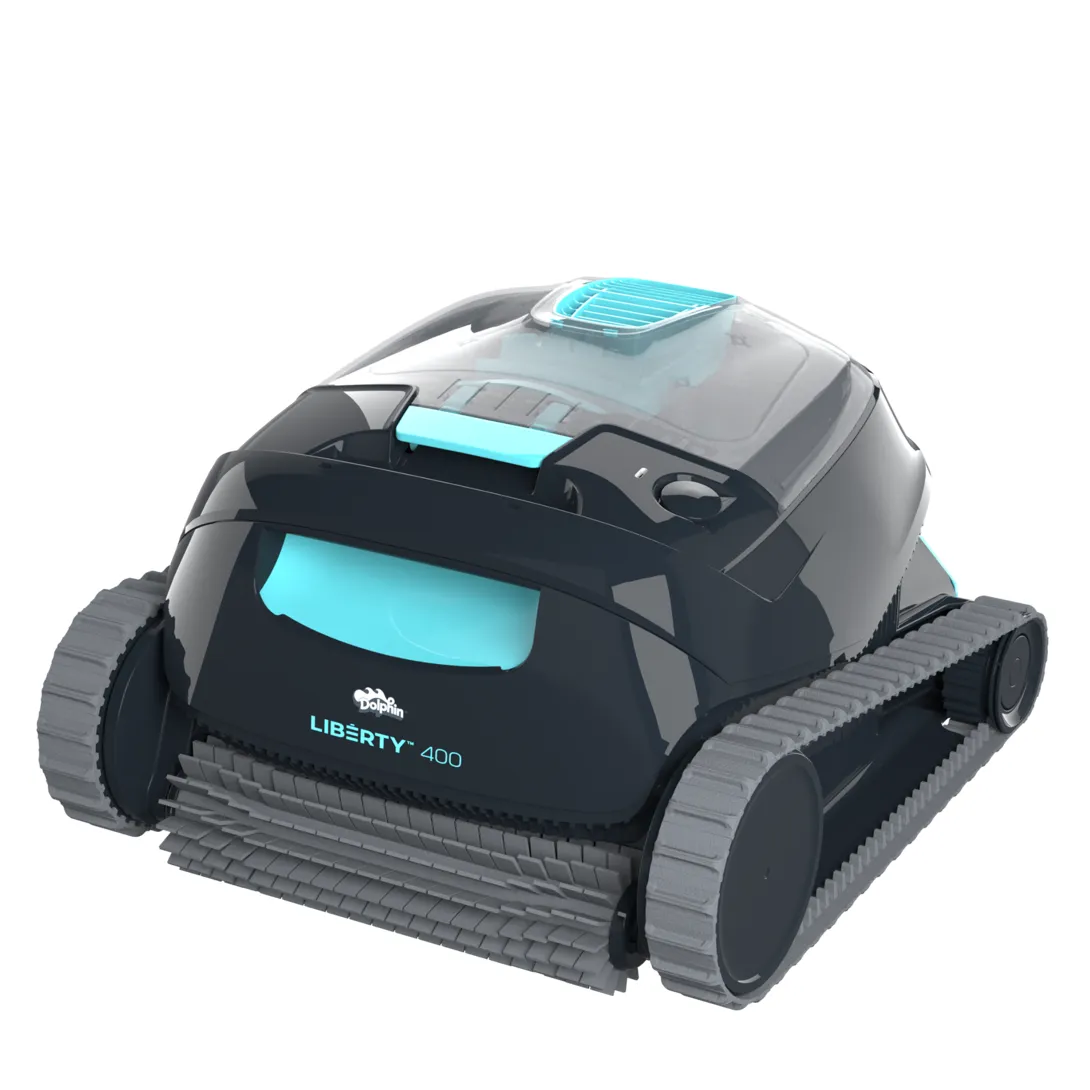
The Liberty 400 addresses a specific frustration with battery pool robots: getting them back out. Maytronics pairs cordless cleaning with its sound-activated Click-Up retrieval system and a magnetic charging connection. The referenced US listing describes floor, wall and waterline work and app connection while the robot is out of the pool. That last qualification is important. A phone interface does not imply an underwater remote control. The Liberty is most interesting for someone who wants Dolphin's cleaning approach without deploying a power cable across the deck and who values a deliberate retrieval method. It still requires an owner to carry it, clean its filter and place it on charge. The convenience is in the sequence of tasks, not the disappearance of those tasks.
Source versions require unusual care
The US page describes sun-ledge cleaning at an eleven-inch depth, while an available earlier European brochure gives a different shallow-water threshold. We would not combine those statements into one universal promise. Hardware revisions, regional specifications and updated firmware can change what a product name represents. Before buying for a tanning ledge, send the seller your exact depth, entry geometry and surface finish and ask for confirmation against the offered SKU. A robot that cleans the main basin beautifully but cannot enter the shelf may still be useful, but that is a different purchase from one intended to automate the entire pool. The same version check should cover app features, supplied filters, charging equipment and warranty.
Click-Up is more than a party trick
Retrieval matters because lifting is one of the few physical jobs left after a pool robot is purchased. Sound-triggered wall climbing could spare the owner from searching the bottom with a hook. Its real value depends on where the robot responds, whether it reaches an accessible wall and how much time the owner has to grasp it. Those are hands-on questions that a feature description cannot settle. During a demonstration, try the system from the location where you normally stand, not just beside the easiest section of coping. Consider how it works if the pool is noisy or the machine stops near a ladder. Keep the manufacturer's alternative retrieval method available rather than building the entire ownership routine around one convenient feature.
Cleaning coverage versus pool geometry
Floor, wall and waterline coverage is a broader brief than floor-only machines offer. It does not mean every step, bench and recess is reachable. A cleaner needs sufficient traction and a workable transition between surfaces; tight inside corners and narrow ledges can remain awkward regardless of navigation branding. We would pay particular attention to the junction where a steep wall meets a curved deep end. Observe whether the robot repeatedly climbs one accessible section while overlooking another. A full cycle should be evaluated for distribution of cleaning work, not just total time spent moving. The practical aim is a reliably acceptable pool with few interventions, rather than the longest advertised run or the most dramatic wall-climbing video.
Choosing cycles intelligently
The Liberty system offers different cleaning modes and an Eco approach to spreading floor-cleaning work across shorter sessions. That can suit a pool receiving a steady trickle of dust rather than one sudden heavy deposit. It also changes the maintenance arithmetic: a machine left ready for later sessions still carries the debris already collected unless its filter is emptied. Repeated brief runs should therefore be judged by the condition of the filter and the type of contamination, not treated as a free extension of one full cleaning cycle. Configure and verify programmes while the robot is accessible. If connectivity is only available outside the water, a mistaken setting may not be as easily corrected halfway through a submerged session as a home vacuum setting.
Charging, storage and seasonality
Magnetic-connect charging reduces the fiddliness of aligning a conventional plug, but the charging area still needs to remain clean and be used as instructed. Set aside a stable place where the robot can drain and dry without dripping onto electrical equipment. In a seasonal climate, consult the exact battery-storage instructions rather than leaving the machine depleted in an unheated shed until spring. Battery condition is part of the long-term ownership cost of every cordless robot. We have not established the Liberty's capacity retention after repeated seasons. Ask how a battery fault is diagnosed, whether replacement is a service operation and what shipping a complete cleaner would involve if local repair is unavailable.
Filter access deserves a demonstration
Maytronics describes interchangeable filtration, an important feature when debris ranges from leaves to fine material. The benefit depends on how quickly the owner can change or clean the components and whether they are readily available later. Bring a realistic maintenance mindset to the showroom: can the basket be removed without a struggle, is there space to rinse its folds and can it be seated securely with wet hands? A finer cartridge may require attention more often in a dusty pool. If climbing worsens during a cycle, filter loading should be considered alongside navigation and surface grip. Treat the robot as a pump, brush and filter system whose parts interact, rather than as software that can compensate for a restricted water path.
The sensible comparison
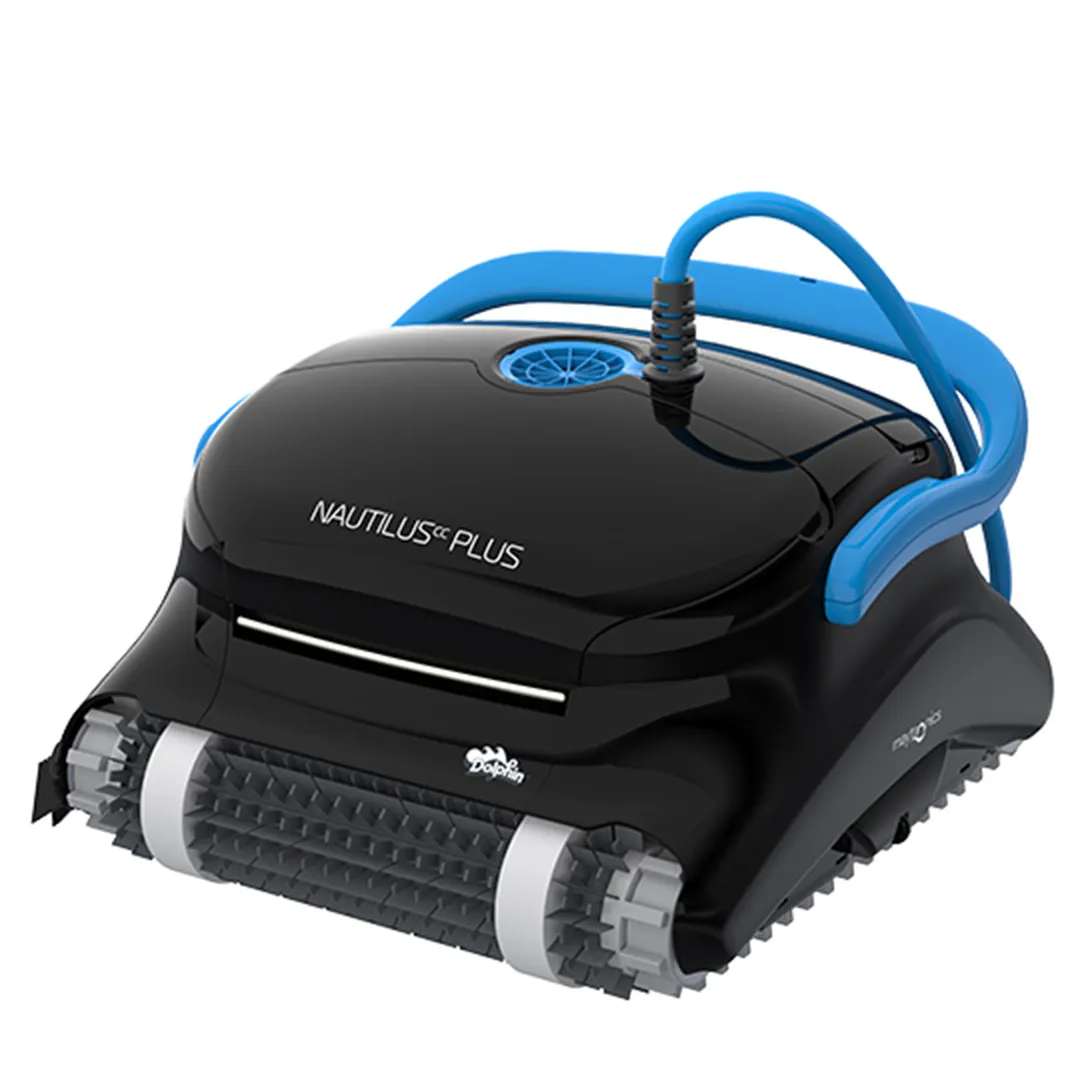
Against a corded Nautilus, Liberty offers freedom from the deployed cable and an appealing retrieval workflow. The corded machine offers a different kind of convenience: another run without waiting for an onboard battery. Against an all-in-one machine that also skims, Liberty's stated coverage is more limited but may be sufficient if the pool's existing skimmer already handles floating material well. Compare the entire weekly routine, including charging, retrieval and basket rinsing. A more expensive robot can be easier to own if it removes a difficult lift; it can also become an expensive compromise if a claimed shelf function does not apply to your depth. Compatibility evidence should outweigh a list of generic smart features.
Our conditional verdict
The Liberty 400 deserves a close look for owners who specifically want cordless submerged cleaning and find conventional retrieval awkward. Its documented separation between app setup outside the water and physical retrieval controls is sensible to understand before purchase. We have not independently verified cleaning speed, acoustic response, waterline coverage or battery endurance. A meaningful trial would include repeated retrievals, an obstructed pool shape, both fresh and loaded filters and a timed cleanup afterward. Ask the dealer to demonstrate the exact revision offered rather than a neighbouring Liberty model. With that evidence, it could be a very practical upgrade; without it, the shallow-water and automation claims remain reasons to ask precise questions rather than reasons to skip them.
Sources & further reading.
These are the sources behind this research review. Manufacturer claims are not independent performance measurements. Community accounts, when cited, describe individual experiences.
- Dolphin Liberty 400 — official product information ↗manufacturer
- Maytronics Liberty 400 manual portal ↗manual
- Earlier regional Liberty 400 specification brochure ↗manufacturer
Documentation reviewed: 9 October 2026. Product software and regional bundles can change. Corrections and editorial disclosures.