An editorial assessment of documented capabilities and ownership trade-offs. This is not a hands-on test result or a measurement of reliability.
Features & capability 30%8.1
Multiple listening modes and sensor-assisted operation provide useful flexibility.
Compatibility & connectivity 20%7.3
Apple integration is substantial, while Lightning and non-Apple limitations narrow the fit.
Ownership & upkeep 20%6.6
An ageing battery and the condition of the canopy and cushions need careful assessment.
Setup & everyday use 15%7.7
Crown controls are clearly located, but weight and case coverage affect daily handling.
Documentation & support clarity 15%8.8
Current support pages distinguish original Lightning connections from later versions.
Compare scores within the same product category. Small decimal differences should not override your needs or the evidence limits.
How the Standpoint Score works
We score five aspects of the documented product on a 0–10 scale, then calculate a weighted total:
- Features & capability30% of the total
- Compatibility & connectivity20% of the total
- Ownership & upkeep20% of the total
- Setup & everyday use15% of the total
- Documentation & support clarity15% of the total
This product’s 7.7/10 is a provisional research assessment. It does not claim measured performance, tested reliability or a verified customer satisfaction rate. Compare it with products in the same category, and read each criterion’s reasoning above.
Read the full rubric and score bands ↗The ownership case.
Consider a healthy original pair when the extended fit trial is comfortable and its Apple integration offers real daily convenience.
Reasons to consider it
- Digital Crown and a separate listening-mode button
- Documented automatic setup and switching across compatible Apple devices
- Cancellation, Transparency and spatial listening options
Go in knowing
- Approximately 384.8 g makes a long comfort trial worthwhile
- Lightning charging and wired-audio accessories require specific planning
- Original-generation battery health and account transfer matter
The specification sheet.
Published specifications from the linked sources. Configurations and availability can differ by country.
- Introduced
- 2020; Lightning model
- Bluetooth
- 5.0
- Processing
- Apple H1 chip in each earcup
- Weight
- Approximately 384.8 g including cushions
- Battery claim
- Up to 20 hours under Apple test conditions
- Charging
- Lightning connector
The original Max has a distinct ownership case
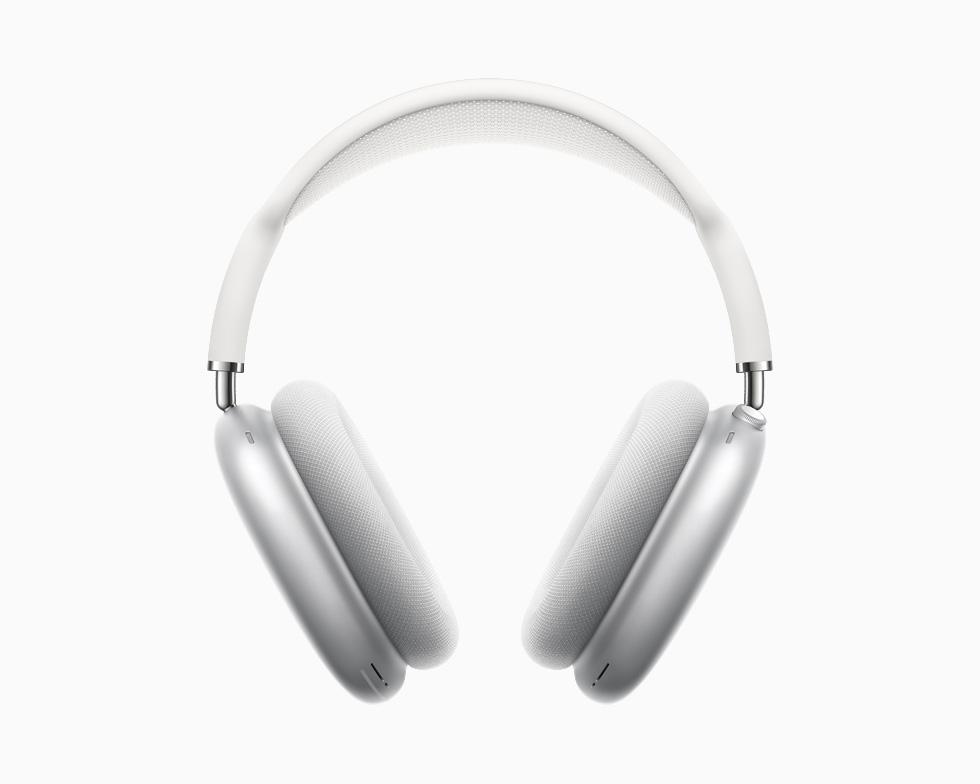
This review covers the original 2020 AirPods Max with Lightning charging. Later versions have different connection capabilities, so a seller's general AirPods Max description should not be treated as a complete specification. Confirm the port and exact model before deciding that a particular cable or software feature will work. For this older version, the strongest buying argument is still the combination of over-ear listening and integration with compatible Apple devices, rather than the novelty it had at launch.
That argument needs to survive a practical comparison with the equipment you own. If most listening happens at a Windows desk or through an analogue source, some of the convenience may be less valuable than it is for an iPhone-and-Mac user. If you already carry Lightning accessories, the charging arrangement may be unobtrusive; if every other device has moved to USB-C, it becomes another item to remember. Neither situation is inherently wrong, but they lead to different sensible purchase prices.
Weight distribution deserves an extended trial
Apple lists approximately 384.8 grams including the cushions. The number establishes that weight should be part of the decision, but it does not predict comfort by itself. The mesh canopy, adjustment arms and cup movement all contribute to how the load is distributed. Wear the headphones while looking down at a laptop, turning toward another screen and leaning back. Those positions reveal more than standing still for a short showroom demonstration.
A used example also needs inspection of the parts that support that load. Look for uneven adjustment, a canopy that no longer provides the expected support, and cushions that sit differently on the two sides. Personal preference matters here: some listeners appreciate a substantial construction, while others become distracted by it. A lower asking price does not compensate for discomfort that appears every evening. Make an extended wear period, ideally with your usual glasses and working posture, a condition of deciding whether this particular pair suits you.
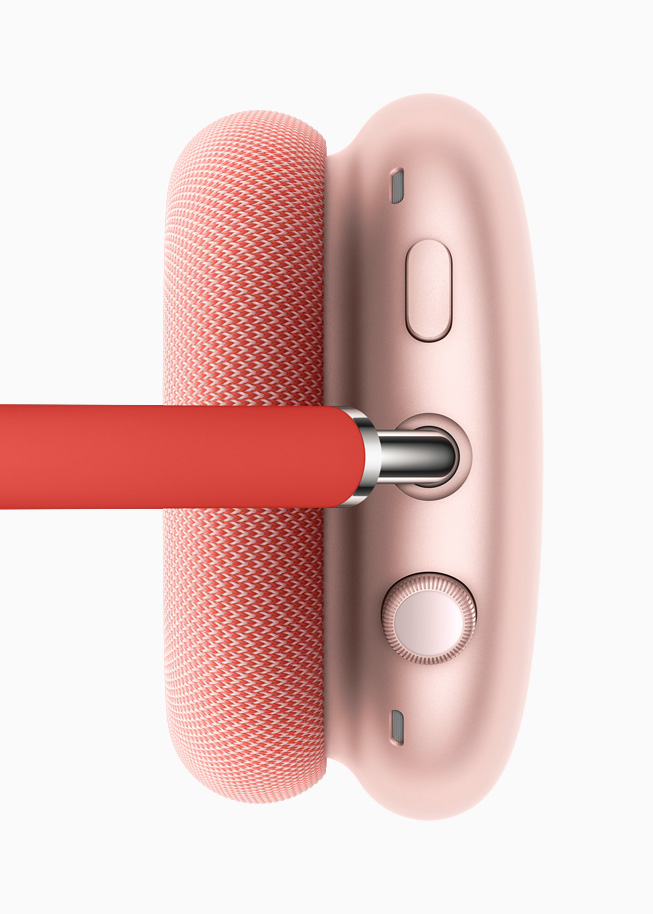
The Crown gives controls a clear location
The Digital Crown separates volume adjustment from the large surface of the earcup. That provides a definite control to find by touch, and it avoids asking the owner to remember where on a cup a gesture should begin. The practical test is whether its rotation and presses remain easy to operate without moving the headphone on your head. Check the separate listening-mode button as well, since a used pair may have wear that is not visible in a photograph.
Automatic detection can pause or resume listening according to how the headphones are worn. Such convenience is valuable when it follows your intentions and irritating when it does not. Try the movements you commonly make: briefly lifting a cup to speak, taking the headphones off to reach for something, and returning them to your head. These are simple checks, but they address the difference between an impressive demonstration and a product that behaves predictably throughout a working day. Sensor-assisted operation should reduce interruptions rather than create a new set to manage.
Processing offers choices rather than certainty
The original design combines active noise cancellation, Transparency, Adaptive EQ and spatial listening features. Those capabilities make it adaptable, but a list of processing modes cannot establish how comfortable the result will feel or how much environmental sound remains audible. Compare cancellation and Transparency at a normal listening level in an environment relevant to you. If the main use is a quiet home, its needs may differ substantially from those of a train commute.
Spatial presentation is another preference to assess with actual content. Dialogue in a compatible film and a familiar stereo album pose different questions, and there is no requirement to use the same mode for both. Our review does not rank the sound against competing headphones through measurements or listening tests. The useful editorial judgment is that the available options broaden the product's roles, while still depending on compatible software and individual preference. Keep the ability to switch an effect off in mind when evaluating a feature-led sales demonstration.
Apple integration is the principal advantage
Apple's original documentation describes setup across supported devices using the same account, automatic switching and audio sharing. For a household already using those devices, the reduction in repeated pairing can be valuable. Consider a specific evening: music from a Mac, a call on an iPhone and a film on a supported television setup. The benefit is whether those transitions are convenient in your actual arrangement, not whether the feature sounds impressive in isolation.
Outside that arrangement, ordinary Bluetooth use remains a different proposition. Check what your non-Apple source supports and which controls behave as expected. A work computer may also have software restrictions or a conferencing application that chooses a different microphone path. Test a call and a return to music rather than assuming pairing establishes every capability. The original Max is easier to justify when its integration saves recurring effort; it is harder to justify solely as a badge attached to otherwise straightforward wireless playback.
Lightning changes the cable calculation
The charging socket is Lightning, and the appropriate wired-audio arrangement must be checked against the original model's instructions. A charging cable is not automatically an audio cable. If wired listening is essential, identify the supported accessory and test the complete path from the source before buying. Do not transfer later USB-C model claims to a Lightning pair because the cups look similar. That is one of the most consequential differences hidden by a shortened product name.
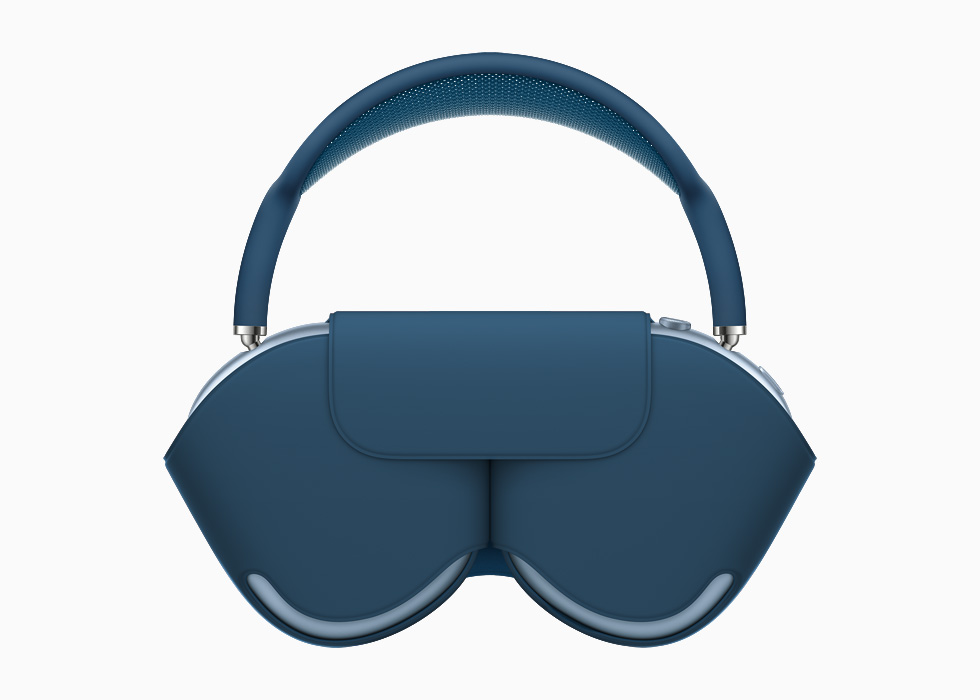
The Smart Case also has a defined battery-management role in Apple's documentation. Its physical coverage is visible in the accompanying manufacturer photograph, which makes it worth considering how you pack the headphones. If the rest of a bag contains hard or sharp objects, decide whether additional protection is needed. Include that extra bulk and cost in the comparison with other travel headphones. An accessory can be effective at its intended power-management task without automatically being the exact protection your particular bag and journey require.
Battery and account checks before buying
Apple's stated maximum is twenty hours under the relevant listening conditions. For an older pair, the remaining capacity and its behaviour between sessions are more important than that launch-era figure. Observe how the headphones charge, how much reserve remains after a normal listening day and whether storage produces unexpected drain. A seller showing a full battery immediately after charging has established very little about those questions.
The previous owner should remove the headphones from their Apple Account before transfer, following Apple's current instructions. Complete your own setup while the transaction can still be resolved easily. Also establish the service options for the exact unit in your country, particularly if it was originally sold elsewhere. For buyers in Canada and the US, exchange rates and shipping can make an imported offer appear attractive while obscuring the total cost of returns or replacement accessories. Compare complete ownership arrangements, not only the amount shown in the listing.
When the older Max still makes sense
The original AirPods Max can remain a coherent purchase for an Apple-centred listener who finds the fit comfortable and accepts Lightning as part of the kit. Its Crown controls and documented integration give it a distinct character beyond simply being an expensive over-ear headphone. The decision should turn on those daily benefits, the condition of the physical support system and the battery reserve you can establish during a meaningful trial.
It is less persuasive when the main requirement is a lightweight travel companion, an uncomplicated wired headset or features associated with a later generation. Those needs should be resolved directly rather than rationalised after purchase. Our score is a provisional assessment of the documented original model, not a measurement of sound or a promise about an individual used pair. A clean account transfer, predictable charging and several comfortable listening sessions provide a much stronger foundation for a purchase than the original launch price or the prestige of the name.
Sources & further reading.
These are the sources behind this research review. Manufacturer claims are not independent performance measurements. Community accounts, when cited, describe individual experiences.
- Apple original launch documentation ↗manufacturer
- Apple specifications and ownership guidance ↗manufacturer
- Apple specifications and ownership guidance ↗manufacturer
- Apple specifications and ownership guidance ↗manufacturer
Documentation reviewed: 9 October 2026. Product software and regional bundles can change. Corrections and editorial disclosures.