An editorial assessment of documented capabilities and ownership trade-offs. This is not a hands-on test result or a measurement of reliability.
Task capability 30%8.0
Two-stage modular snow concept addresses repeated winter clearing.
Navigation & control 20%7.3
Planned routes and automatic charging offer substantial automation potential.
Ownership & upkeep 20%5.7
Season-critical uptime, heavy modules and shared-core repairs add uncertainty.
Setup & usability 15%5.8
Snow placement, dock access and seasonal positioning require extensive validation.
Documentation & support clarity 15%4.8
Preorder status and conflicting throw units materially limit confidence.
Compare scores within the same product category. Small decimal differences should not override your needs or the evidence limits.
How the Standpoint Score works
We score five aspects of the documented product on a 0–10 scale, then calculate a weighted total:
- Task capability30% of the total
- Navigation & control20% of the total
- Ownership & upkeep20% of the total
- Setup & usability15% of the total
- Documentation & support clarity15% of the total
This product’s 6.6/10 is a provisional research assessment. It does not claim measured performance, tested reliability or a verified customer satisfaction rate. Compare it with products in the same category, and read each criterion’s reasoning above.
Read the full rubric and score bands ↗The ownership case.
Yarbo offers an unusually ambitious way to automate repeated snow clearing. Gen 2 remains a provisional purchase at the research date: the Canadian page shows preorder status and inconsistent throw-distance units, so it needs exact delivery and specification confirmation.
Reasons to consider it
- Modular core can serve multiple seasons
- Two-stage snow system
- Repeated clearing and automatic charging concept
Go in knowing
- Preorder status at research date
- Conflicting throw-distance units
- Requires safe snow-placement and backup plans
The specification sheet.
Published specifications from the linked sources. Configurations and availability can differ by country.
- Configuration
- Y40 Core with Snow Blower Module Gen 2
- Clearing system
- Two-stage
- Published clearing width
- 24 in
- Published intake depth
- Up to 12 in
- Status at research
- Preorder; module delivery estimated October 2026
- Throw-distance note
- Source mixes feet and yards; confirm current manual
Automation has a different meaning in a snowstorm
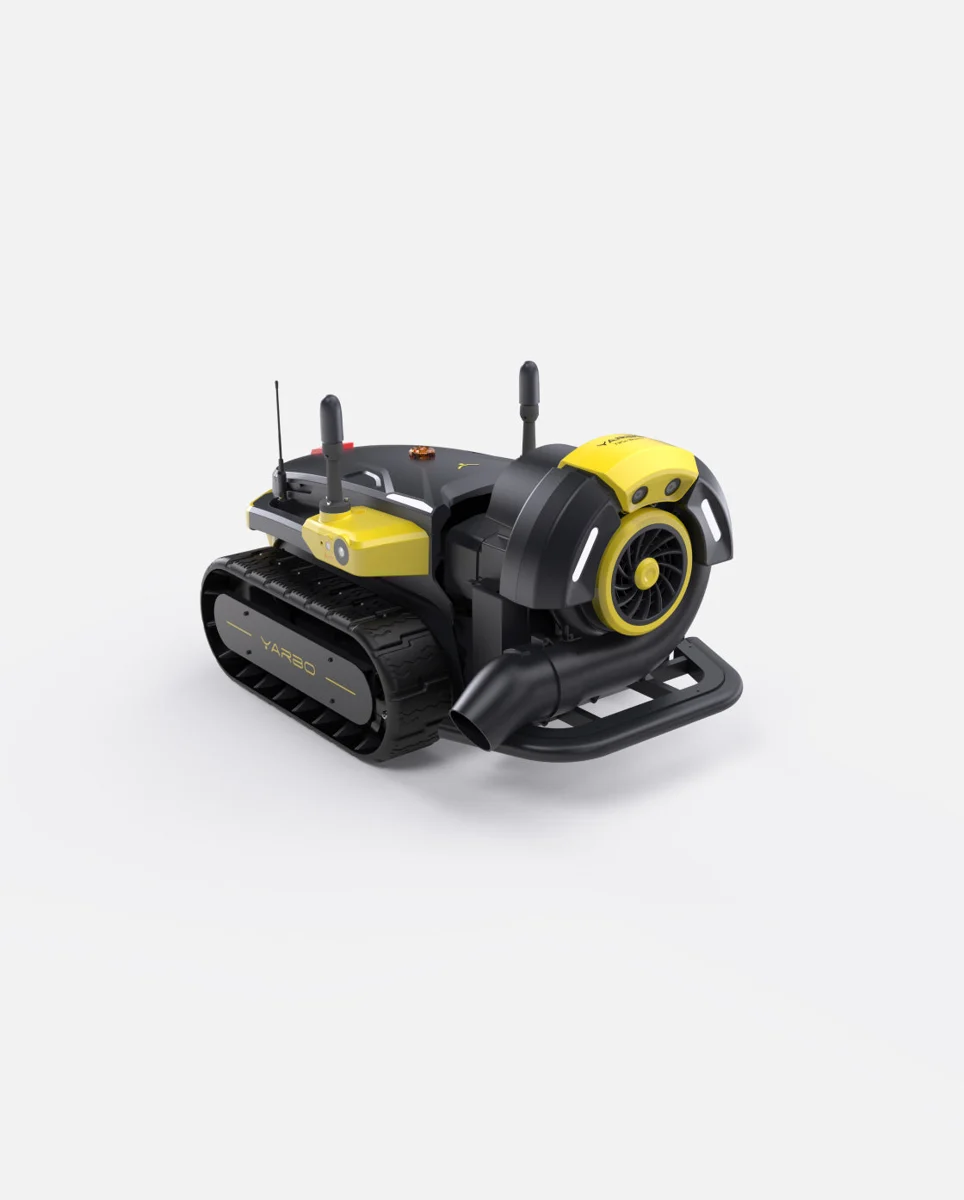
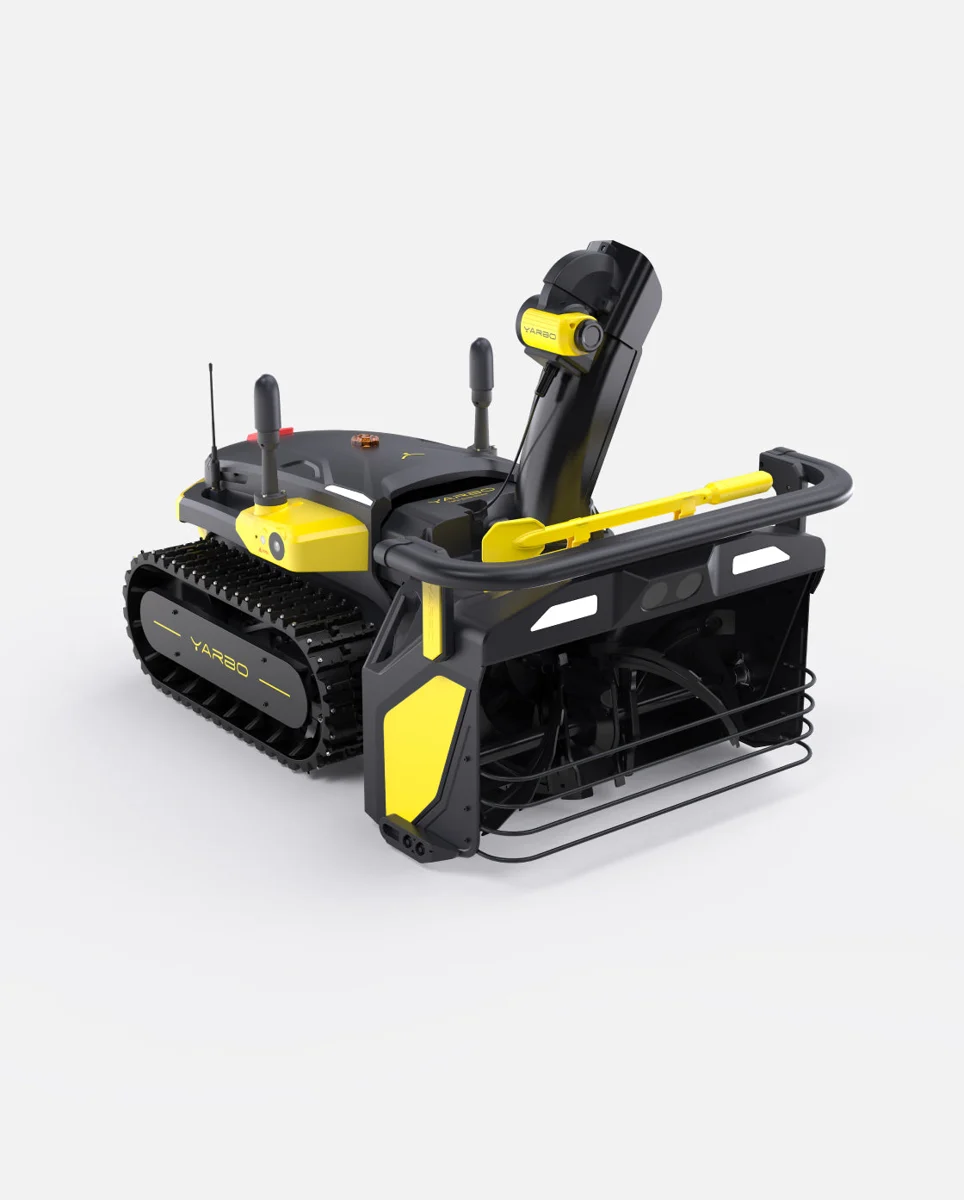
A robotic snow blower promises something more interesting than simply removing the operator from a conventional machine. It can potentially work in repeated passes while snow accumulates, reducing the amount that must be handled at once. Yarbo's Y40 package combines a tracked core with the Gen 2 two-stage snow module and automatic charging. That operating concept is relevant to a homeowner facing frequent storms, but it also raises a serious availability question: the machine needs to work when the driveway is needed, not merely when conditions are convenient.
The current Canadian page describes this configuration as a preorder, with the snow module estimated for October 2026. We have not received or operated the machine. Treat this article as a research review of the advertised system, and do not retire an existing snow-removal arrangement on the strength of an estimated shipping month.
Read the snow specifications without smoothing away errors
The manufacturer lists a 24-inch clearing width and the ability to handle up to 12 inches of snow. Those figures describe geometry and a stated capability, not a measured rate through every snow type. Fresh powder, wet accumulation, a frozen plow berm and refrozen tracks are materially different loads. A useful evaluation would separate them and record passes, interruptions and the condition of the cleared surface.
The product page also mixes throw-distance units: one heading says yards while other sections say feet and describe a maximum of 40 feet. We would use neither as a verified performance result. Obtain the current Gen 2 manual and written clarification before planning snow placement around a long driveway. The discrepancy matters because a throw estimate affects where the machine can safely put snow.
The driveway needs a destination for every pass
Autonomous clearing is not just a coverage problem. The system must move snow to a location that remains usable as the storm continues. A narrow driveway between buildings, an exposed area with crosswinds and a broad open apron require different discharge plans. Identify windows, parked vehicles, pedestrian routes and neighbouring property before mapping. The useful question is not how far snow can fly in a demonstration, but whether each route sends it somewhere acceptable.
We would begin with a conservative map and supervised runs during manageable snowfall. Verify the edges of the paved surface before they disappear beneath accumulation. If gravel or loose debris is present, follow the manufacturer's setup instructions closely and do not assume a raised intake eliminates every projectile risk. The robot's cameras and obstacle sensors cannot make the discharge area harmless.
A practical acceptance test before relying on it
A useful delivery acceptance process would begin before the first major storm. Confirm that the carton and serial labels identify the Gen 2 module, that all promised charging and positioning equipment is present, and that the current manual resolves the throw-distance wording. Have the owner practice stopping the system and entering its maintenance-safe state without approaching moving components. Then validate the map on the actual cleared driveway, including where snow is allowed to land.
The first winter evaluation should include several manageable events rather than waiting for an extreme storm. Record the snow condition as well as depth, because a centimetre of wet material is not equivalent to a centimetre of powder. Keep the existing clearing option available while these trials establish dependable docking and safe discharge. If a failure occurs, document the cause and the support response without extrapolating a whole-brand reliability verdict from one incident. This process gives the owner evidence to decide how much responsibility to hand over gradually, which is more useful than treating autonomy as an all-or-nothing purchase promise.
Tracks, charging and positioning must work together
Tracks are part of Yarbo's attraction for winter work, yet traction on snow is not the same as grip on ice. We would assess turning, reversing and returning to the dock under the conditions actually found on the property. A machine that clears well but cannot reliably reach its charging position may lose the advantage of repeated autonomous passes. Snow piled around the dock or a refrozen approach can change the installation overnight.
Positioning is another seasonal challenge. The yard looks different after snowfall, while cars and cleared banks change the environment. Confirm the chosen local-reference or network-correction arrangement, connectivity requirements and behaviour during interruptions. We would test a safe loss-of-access scenario and learn exactly how to stop and recover the machine before relying on remote operation during a storm.
The modular platform is both benefit and dependency
Buying a Y40 Core creates the possibility of changing seasonal tools, including a mower or leaf blower. That can spread the cost of a drive platform across more months. It also means the core, battery and charging system are shared dependencies. If the core needs repair, several planned tasks may stop together. The economic case should therefore include repair turnaround, transport and a fallback snow-removal method.
Module changes and storage need physical planning. Establish the space required for the core, the detached snow assembly, summer tools and the shipping packaging. Ask a dealer or manufacturer representative to demonstrate handling and attachment with the equipment actually supplied. Tool-free language does not establish that every owner can comfortably move each component alone. Accessibility and storage are part of the product's usefulness, not secondary details.
Winter upkeep and a realistic ownership calculation
Snow equipment needs inspection after contact with hidden debris. Follow the manual's shutdown and isolation procedure before approaching an auger, impeller or chute, and never attempt to clear a blockage by hand. Keep people and pets away from both the machine and its discharge path. A robot capable of starting a scheduled task also needs a household routine that prevents unexpected operation during inspection or vehicle movement.
Ask for the price and availability of wear parts, tracks, battery service and module repairs in Canada or the United States, as applicable. Include those costs, optional network services and the time spent preparing routes when comparing with a conventional blower or contracted clearing. A lower fuel bill is not the whole calculation. We would log every intervention during several storms, including cleaning, ice removal and manual finishing, before estimating labour savings.
The evidence that would change this verdict
The decisive field evidence would be successful clearing across several snow conditions with safe discharge placement, reliable docking and a manageable intervention count. We would document snowfall depth, weather, surface type, elapsed work time and any areas still requiring a person. A video of one dramatic pass would be insufficient, especially for a product intended to provide repeated unattended work.
Yarbo's concept is most persuasive for a property where the machine can work early and often, with ample snow-storage space and clear routes. It is less obviously suitable when ice, hard berms, crowded parking or uncertain service dominate the problem. Our current verdict is conditional interest in a distinctive system, with delivery, specification clarification and real winter operation still required before a strong recommendation.
Sources & further reading.
These are the sources behind this research review. Manufacturer claims are not independent performance measurements. Community accounts, when cited, describe individual experiences.
Documentation reviewed: 9 October 2026. Product software and regional bundles can change. Corrections and editorial disclosures.