An editorial assessment of documented capabilities and ownership trade-offs. This is not a hands-on test result or a measurement of reliability.
Features & capability 30%7.9
Action mode, upgraded Cinematic recording and autofocus front capture expand ordinary creative use.
Compatibility & connectivity 20%7.4
5G and MagSafe are useful, but regional SIM differences can complicate a used purchase.
Ownership & upkeep 20%7.0
Age and repair history still matter, with storage choices that start at a practical capacity.
Setup & everyday use 15%8.0
The conventional format supports familiar use once activation requirements are settled.
Documentation & support clarity 15%8.7
Apple clearly identifies video limits and the absence of a SIM tray on US models.
Compare scores within the same product category. Small decimal differences should not override your needs or the evidence limits.
How the Standpoint Score works
We score five aspects of the documented product on a 0–10 scale, then calculate a weighted total:
- Features & capability30% of the total
- Compatibility & connectivity20% of the total
- Ownership & upkeep20% of the total
- Setup & everyday use15% of the total
- Documentation & support clarity15% of the total
This product’s 7.8/10 is a provisional research assessment. It does not claim measured performance, tested reliability or a verified customer satisfaction rate. Compare it with products in the same category, and read each criterion’s reasoning above.
Read the full rubric and score bands ↗The ownership case.
A sensible conventional iPhone when priced according to condition and configuration. Its video additions and regional SIM differences deserve more attention than the modest change in its model number.
Reasons to consider it
- Useful video-mode additions
- Autofocus front camera
- Familiar size and 128 GB starting storage
Go in knowing
- US imports require an eSIM-compatible service plan
- No dedicated telephoto or ProMotion display
- Satellite-feature conditions need current regional checking
The specification sheet.
Published specifications from the linked sources. Configurations and availability can differ by country.
- Display
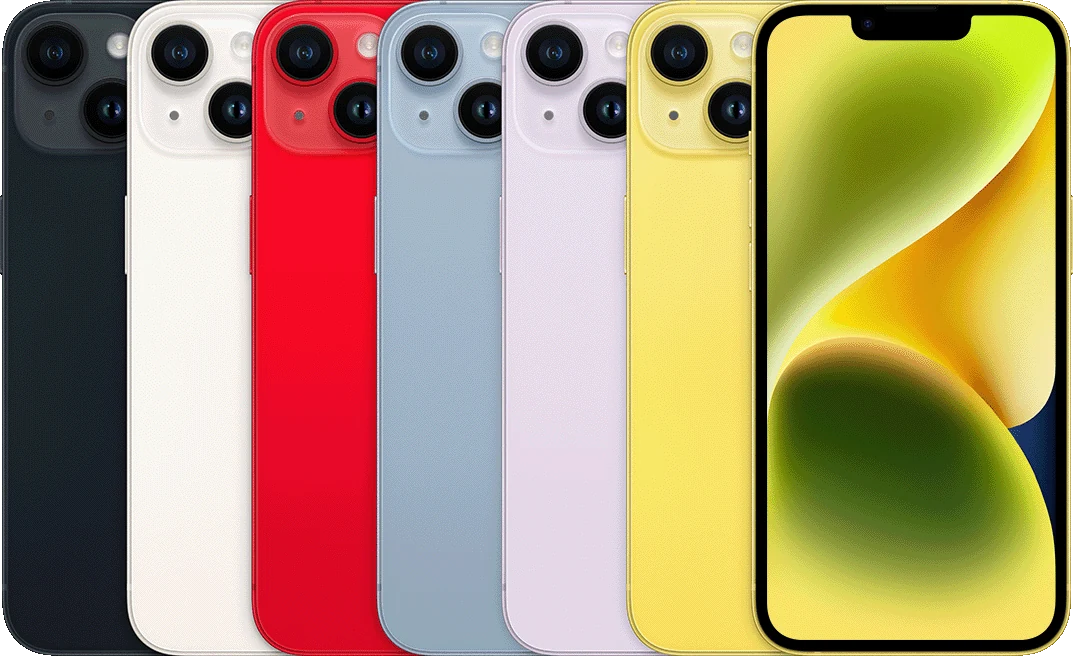
- 6.1-inch OLED; 2532 × 1170
- Processor
- A15 Bionic; five-core GPU
- Rear cameras
- 12 MP main and ultrawide
- Video modes
- Cinematic up to 4K HDR/30; Action up to 2.8K/60
- Storage
- 128, 256 or 512 GB
- US SIM arrangement
- eSIM-only on models purchased in the United States
The regional model belongs at the top of the listing
For a Canadian or American buyer considering a used iPhone 14, the first important detail may be where the phone was originally sold. Apple's documentation identifies the absence of a physical SIM tray on US models. That makes an imported bargain a more specific proposition than a generic unlocked iPhone. Before comparing colours or cosmetic grades, confirm that the intended carrier and account can activate the exact device through the required arrangement.
This is not an argument against eSIM. It is an argument for matching the hardware to the owner's service and travel habits. Someone who depends on inserting a physical local SIM should resolve that requirement before purchase. Our review evaluates the documented model and current ownership questions; it does not assume that every regional version is interchangeable or that a seller has checked the buyer's particular carrier needs.
A familiar screen is still a used component
The 6.1-inch OLED keeps the standard model in a conventional middle-size format. That can be helpful for someone replacing an older ordinary iPhone without wanting a radically different physical experience. Open familiar applications and set text to the preferred size. The useful test is whether reading, typing and navigation feel comfortable with the intended case, rather than whether the specification looks impressive beside a larger phone.
Inspect the panel for uneven tones, retained outlines and unresponsive areas. A replacement screen should be described clearly in the service history, especially if the listing promises original-equivalent functionality. Cosmetic condition at the edges is less important than a display that behaves reliably across normal brightness settings. A seller's grade is only a starting description. The buyer needs enough return time to discover whether the phone's main interface works comfortably in ordinary use.
The everyday camera arrangement remains straightforward
The main and ultrawide cameras cover ordinary subjects and broader scenes, while the front camera includes autofocus. That combination makes sense for someone alternating family photographs, video calls and short recordings. It does not add a dedicated telephoto lens, so a buyer whose main frustration is distant framing should compare a different camera arrangement rather than expecting the model number alone to solve the problem.
Test the front and rear cameras separately. A video call or selfie can reveal a different fault from one found in a rear-camera landscape. Check focus on a near and a more distant subject, then listen to the saved recording. Our assessment does not assign an image-quality victory from the specification sheet. The documented tools are useful, but the condition of the individual cameras and their suitability for your subjects still require practical confirmation.
Action mode asks what kind of movement you record
Action mode is listed up to 2.8K at 60 frames per second. Its relevance depends on the footage you make, not simply on being a newer feature. A buyer recording movement should compare a sample with the ordinary video mode and examine the resulting framing, detail and usability. The best setting is the one that delivers the intended clip without creating unexpected compromises in the conditions where it is used.
Try a modest real scenario during the return window, such as following a walking subject in available light. Review the saved file on a larger screen and listen to the audio. A mode designed around movement does not excuse careless handling or establish that every scene will look smooth. We have not measured stabilization effectiveness or low-light behavior, so the score credits the available option while leaving its real-world consistency open to testing.
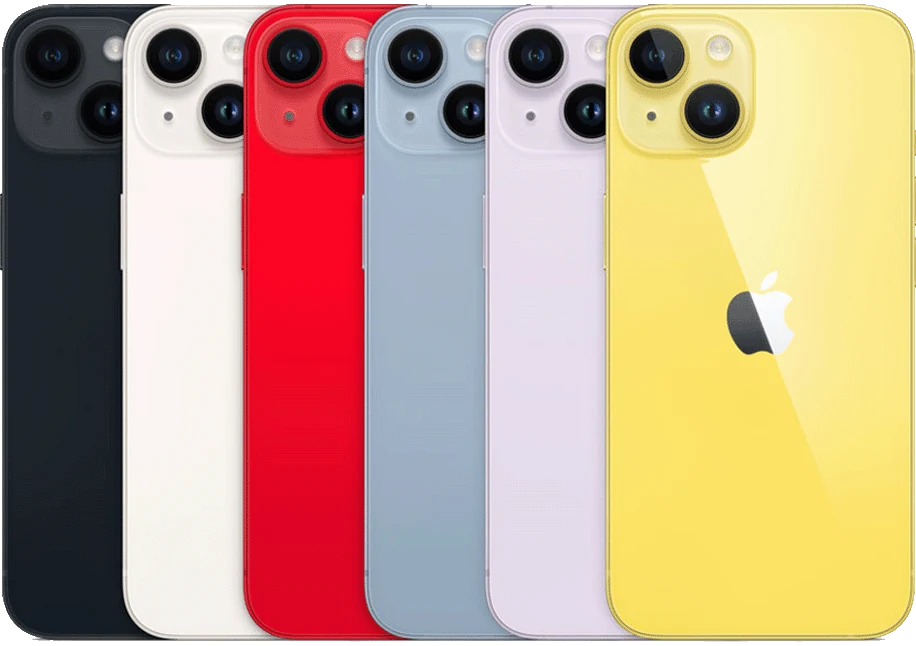
Cinematic recording gains room, but needs an editing plan
The iPhone 14's documented Cinematic mode reaches 4K HDR at 30 frames per second. That is a meaningful distinction for someone who wants the mode in a higher-resolution workflow. It is not a reason to use a depth effect on every recording. Consider the intended audience, the subject and whether the result remains convincing when viewed at its final size.
Complete a small editing and sharing test before using the phone for an important project. Record, transfer, trim and export a representative clip using the actual software and receiving device. This exposes workflow friction more usefully than inspecting a menu of resolutions. Storage should also be chosen with video in mind. A format can be technically supported and still be inconvenient if files are difficult to move, the editor is incompatible or the local library already leaves little working space.
Satellite features need current conditions, not assumptions
Apple lists satellite-related features and Crash Detection among the model's capabilities. A prospective owner should read the current regional availability and service conditions directly before assigning them value. Country, software, activation and the particular feature can all matter. A used listing should not turn an original launch offer or a broad marketing statement into a promise about what a new owner receives today.
For ordinary ownership, learn where the relevant settings and demonstrations are, while keeping normal communication and travel planning in place. This review does not test emergency performance or provide assurance about an outcome in a difficult situation. The practical buying point is narrower: these documented additions distinguish the generation, but they should be understood as services with conditions. They are not a substitute for verifying the phone's ordinary cellular operation, account status and current software configuration.
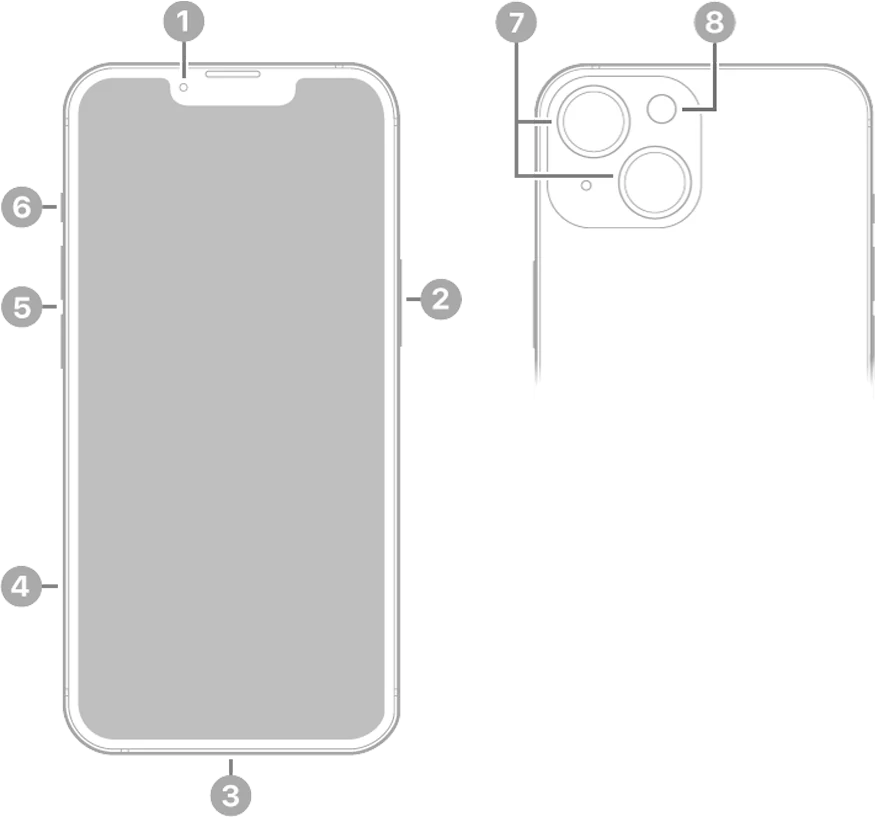
Battery and Lightning remain everyday realities
The iPhone 14 still uses Lightning for its wired connection. If the household already owns suitable equipment, that may make replacement simple. If other devices have moved to USB-C, account for an additional cable and any needed adapter. MagSafe can simplify a desk or bedside routine, but inspect wired charging as well. A functional wireless demonstration does not establish that the socket or data connection is healthy.
Request battery and repair details, then compare the cost of a service-ready example with one requiring immediate work. Check current software availability and essential app requirements before migrating important accounts. The A15 label does not mean every later software feature is included. Complete account removal and normal activation while the transaction remains reversible, and keep the return policy in writing. Those mundane steps can matter more than any of the model's newer recording modes.
Buy the additions you will actually use
The ordinary iPhone 14 is a plausible used choice for someone who values its specific video options and wants a familiar-sized iPhone. It should also be compared with the 13 when the everyday tasks are modest, and with newer USB-C models when cable consolidation matters. The right answer depends on the complete price, including battery condition, storage and seller protection rather than the original launch hierarchy.
Our provisional verdict is favorable to a healthy, correctly matched regional version, with no claim of measured endurance or camera superiority. Establish carrier activation first, then inspect the screen, cameras and charging arrangement. If the video additions will be used, they give this generation a concrete purpose. If they will not, let condition and total ownership cost decide whether this is genuinely the most sensible phone available for the budget.
Sources & further reading.
These are the sources behind this research review. Manufacturer claims are not independent performance measurements. Community accounts, when cited, describe individual experiences.
- iPhone 14 - Tech Specs - Apple Support ↗manufacturer
Documentation reviewed: 9 October 2026. Product software and regional bundles can change. Corrections and editorial disclosures.