An editorial assessment of documented capabilities and ownership trade-offs. This is not a hands-on test result or a measurement of reliability.
Task capability 30%7.8
Switching and energy visibility are useful within a deliberately narrow task
Control & connectivity 20%8.0
Matter and Thread are flexible but require suitable existing infrastructure
Ownership & upkeep 20%8.2
No manufacturer cloud account or subscription reduces dependency
Setup & usability 15%8.0
A physical button is accessible but platform setup must be checked
Documentation & support clarity 15%8.5
Current regional ratings and app-platform details are clearly documented
Compare scores within the same product category. Small decimal differences should not override your needs or the evidence limits.
How the Standpoint Score works
We score five aspects of the documented product on a 0–10 scale, then calculate a weighted total:
- Task capability30% of the total
- Control & connectivity20% of the total
- Ownership & upkeep20% of the total
- Setup & usability15% of the total
- Documentation & support clarity15% of the total
This product’s 8.1/10 is a provisional research assessment. It does not claim measured performance, tested reliability or a verified customer satisfaction rate. Compare it with products in the same category, and read each criterion’s reasoning above.
Read the full rubric and score bands ↗The ownership case.
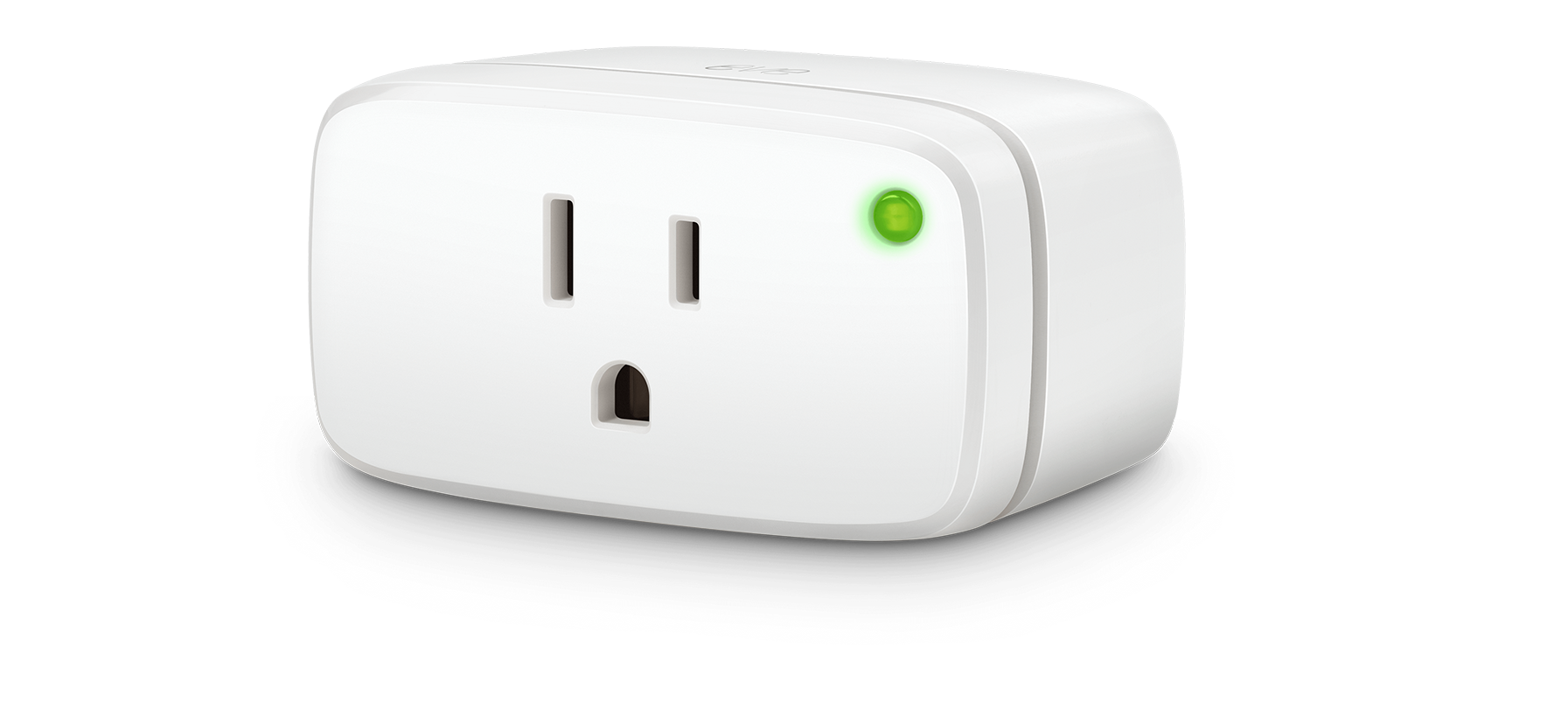
Eve Energy is a compelling research-based option for an existing Matter and Thread household that wants useful energy visibility without adding an Eve cloud account.
Reasons to consider it
- No Eve cloud registration or subscription required
- Energy information alongside on/off control
- Physical button and Thread routing role
Go in knowing
- A compatible Matter controller and Thread border router are required
- Advanced functions differ by platform
- Appliance instructions and load suitability govern safe use
The specification sheet.
Published specifications from the linked sources. Configurations and availability can differ by country.
- Version
- Matter model for US and Canada
- Electrical rating
- 120V 60Hz maximum 15A/1,800W
- Socket
- Type B with Type A/B appliances
- Connection
- Thread
- Hub requirement
- Matter controller and Thread border router
- Dimensions
- 70 x 39 x 60mm
A smart plug with a more useful question
Eve Energy becomes interesting when the question changes from whether an appliance is on to whether it needs to be on. The current Matter version combines switching with energy information and uses Thread for communication. This review concerns the US and Canadian plug format, because similarly named international versions have different sockets and electrical ratings. A lamp or a suitable low-risk appliance is a clearer starting point than trying to automate the largest load in the house. We have not measured the plug's metering accuracy, switching life or radio range. Our research assessment focuses on whether its documented control path and energy features can support sensible decisions, with particular attention to platform requirements that are easy to miss when shopping for what looks like a simple outlet adapter.
The network cost behind one plug
Eve specifies a compatible Matter controller and Thread border router for setup. Those functions may already exist in a household device, but a phone and an ordinary Wi-Fi router are not automatically sufficient. This is the first buying check: identify the exact hub and confirm that it supports the intended platform and Thread role. If the household needs new infrastructure solely to switch one table lamp, the apparent simplicity changes considerably. Conversely, an existing Thread home can add the plug without introducing another manufacturer cloud account. We would compare the complete system cost and management burden with a straightforward Wi-Fi alternative. The best networking standard on paper is less useful than a supported, understandable route from the household's actual devices to the appliance being controlled.
Energy readings need interpretation
The product's energy information can help identify patterns, but a graph does not by itself establish avoidable waste. Consider a desk setup that shows substantial use during work hours and very little overnight: disconnecting it every evening may produce less benefit than expected. Another appliance may cycle unpredictably, making a short observation misleading. We would record a representative period before changing its schedule and compare the result under similar conditions. Entering an electricity rate can provide an estimate, yet Canadian time-of-use plans, tiered rates, US demand charges or taxes may require a more careful calculation than one flat number. The plug should inform a decision, not create a false sense of billing precision. We would not use its readings as evidence of laboratory-grade measurement without independent validation.
The current app situation matters
Eve's current page describes its app on iPhone and iPad through Apple Home, and on Android through Google Home. It also identifies energy support in SmartThings and Home Assistant. That is more useful than repeating outdated claims that every advanced Eve function is confined to an iPhone, but it still does not mean every ecosystem presents identical controls. We would verify energy history, scheduling and the preferred automation trigger in the exact platform before purchasing several plugs. A household using multiple assistants should also decide which app is the authoritative place to change schedules. Conflicting rules can look like a defective plug when the actual problem is two systems issuing different commands. Compatibility should be judged by the required workflow, not by the number of logos on the box.
The appliance must cooperate
For North America, Eve lists 120V, 60Hz and a maximum 15A/1,800W rating, with Type B outlets and Type A or B appliance plugs. The appliance's own instructions and load characteristics remain essential. A smart plug does not make unattended operation appropriate for every heater, cooking device or motor, and an electronic power button may prevent an appliance from restarting when electricity returns. We would first test a benign load and observe what happens after both a manual switch and a household power interruption. Access to Eve Energy's physical button is useful for guests, but the appliance should remain understandable without an app. A suitable automation is one where removing and restoring power is an intended, safe operating method, not a workaround for the appliance's control design.
Thread routing and physical placement
Eve describes the mains-powered plug as a Thread routing device. In principle, that can make it useful beyond the connected lamp by helping nearby Thread devices communicate. The practical implication is that its location and continued power matter. Installing it behind a metal cabinet or on an outlet regularly switched off at the wall may undermine the very network role being purchased. We would separate two decisions: where switching is useful and where a stable routing node is useful. They may coincide, but they need not. The North American body is documented at roughly 70 by 39 by 60mm; actual outlet clearance should be checked with adjacent plugs and furniture. A compact specification cannot guarantee that a bulky neighboring adapter or tightly placed sofa will leave comfortable access.
Privacy without overselling it
Eve says it operates without an Eve cloud, registration or subscription for this product. That is a meaningful reduction in manufacturer-account dependence. It does not describe every service connected through the chosen home platform, whose remote access and voice features have their own data paths. We would still review household permissions and consider what appliance history reveals about presence. For example, a workspace's power pattern may be more informative than a simple lamp state. The plug itself requires little routine physical upkeep, but firmware, hub support and access to pairing information remain part of ownership. Store the setup material securely and keep track of which platform initially commissioned the device. That modest administrative discipline can make a replacement phone or changed hub much less disruptive later.
What an honest test would measure
A useful hands-on evaluation would compare readings against a suitable reference meter across low, medium and changing loads, while respecting the device's rating and appliance instructions. It would measure switching response from the physical button and chosen apps, observe recovery after power loss and check the behavior of stored schedules without internet access. Thread testing would take place in several realistic outlet locations rather than one unobstructed room. We would also verify whether historical data remains available after a phone change and whether the desired automation uses current power or only on/off state in each platform. Those distinctions determine whether Eve Energy is merely a remote switch or a practical energy tool. Until that work is performed, its specification cannot establish accuracy or dependable range in a particular home.
Where the value is clearest
Eve Energy is a compelling research-based option for an existing Matter and Thread household that wants useful energy visibility without adding an Eve cloud account. Its case is weaker when a new hub is needed for one simple switch, or when the buyer expects identical advanced functions in every app. Canadian and US shoppers should select the North American hardware explicitly and use local seller terms when comparing warranty and returns. We would start with one unit on a well-chosen appliance, confirm the desired data and scheduling behavior, then expand only after that routine proves valuable. The product's strongest idea is modest: make an ordinary electrical load easier to understand and control. It should earn its place through a specific household use, not an abstract promise of automatic savings.
Sources & further reading.
These are the sources behind this research review. Manufacturer claims are not independent performance measurements. Community accounts, when cited, describe individual experiences.
- Eve Energy (Matter, US/Canada) — official product information ↗manufacturer
- Eve Energy US and Canada quick-start guide ↗manual
- Eve safety guide ↗manual
Documentation reviewed: 9 October 2026. Product software and regional bundles can change. Corrections and editorial disclosures.