An editorial assessment of documented capabilities and ownership trade-offs. This is not a hands-on test result or a measurement of reliability.
Task capability 30%7.8
Large-pane wiping is a coherent use, with borders and transfers remaining.
Navigation & control 20%7.8
Route planning and directional control support supervised cleaning.
Ownership & upkeep 20%7.0
Pads, fluid and station battery add upkeep.
Setup & usability 15%7.6
Portable power simplifies some rooms but station placement still matters.
Documentation & support clarity 15%7.6
Availability status and model distinction require care before buying.
Compare scores within the same product category. Small decimal differences should not override your needs or the evidence limits.
How the Standpoint Score works
We score five aspects of the documented product on a 0–10 scale, then calculate a weighted total:
- Task capability30% of the total
- Navigation & control20% of the total
- Ownership & upkeep20% of the total
- Setup & usability15% of the total
- Documentation & support clarity15% of the total
This product’s 7.6/10 is a provisional research assessment. It does not claim measured performance, tested reliability or a verified customer satisfaction rate. Compare it with products in the same category, and read each criterion’s reasoning above.
Read the full rubric and score bands ↗The ownership case.
The W2 OMNI has a convincing role for large accessible panes and homes where a portable power station makes window cleaning easier.
Reasons to consider it
- Portable battery station
- Cable management
- Multiple cleaning modes
Go in knowing
- Original US listing is sold out
- Manual transfer between panes
- Verify differences from W2 Pro OMNI
The specification sheet.
Published specifications from the linked sources. Configurations and availability can differ by country.
- Type
- Window robot with portable station
- Spray
- Three-nozzle system
- Planning
- WIN-SLAM 4.0
- Control
- ECOVACS HOME app
The station is the main attraction
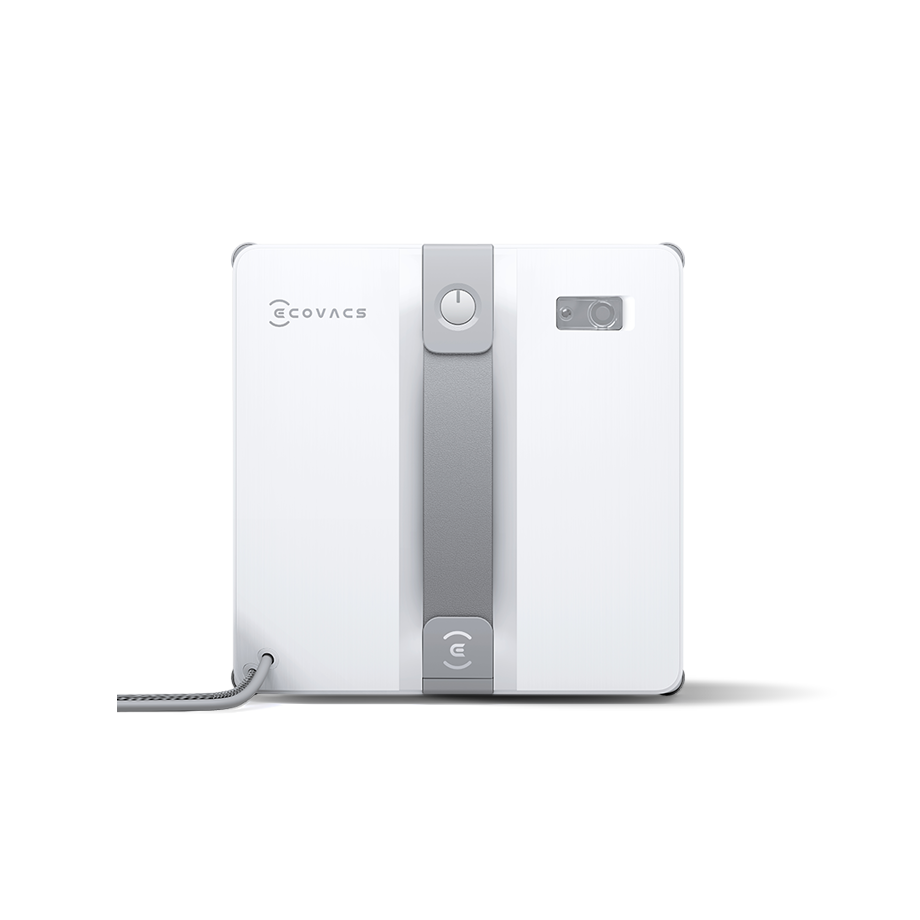
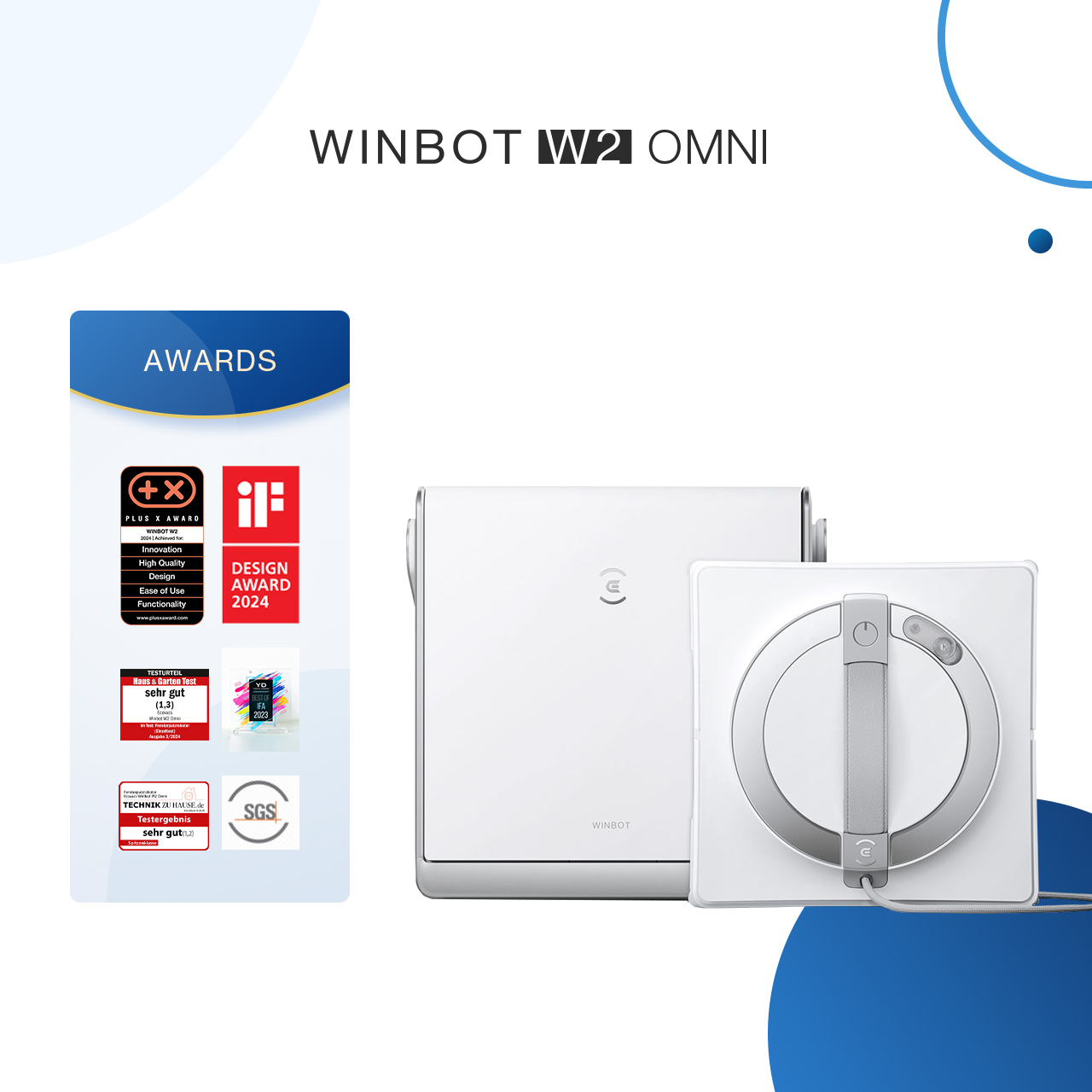
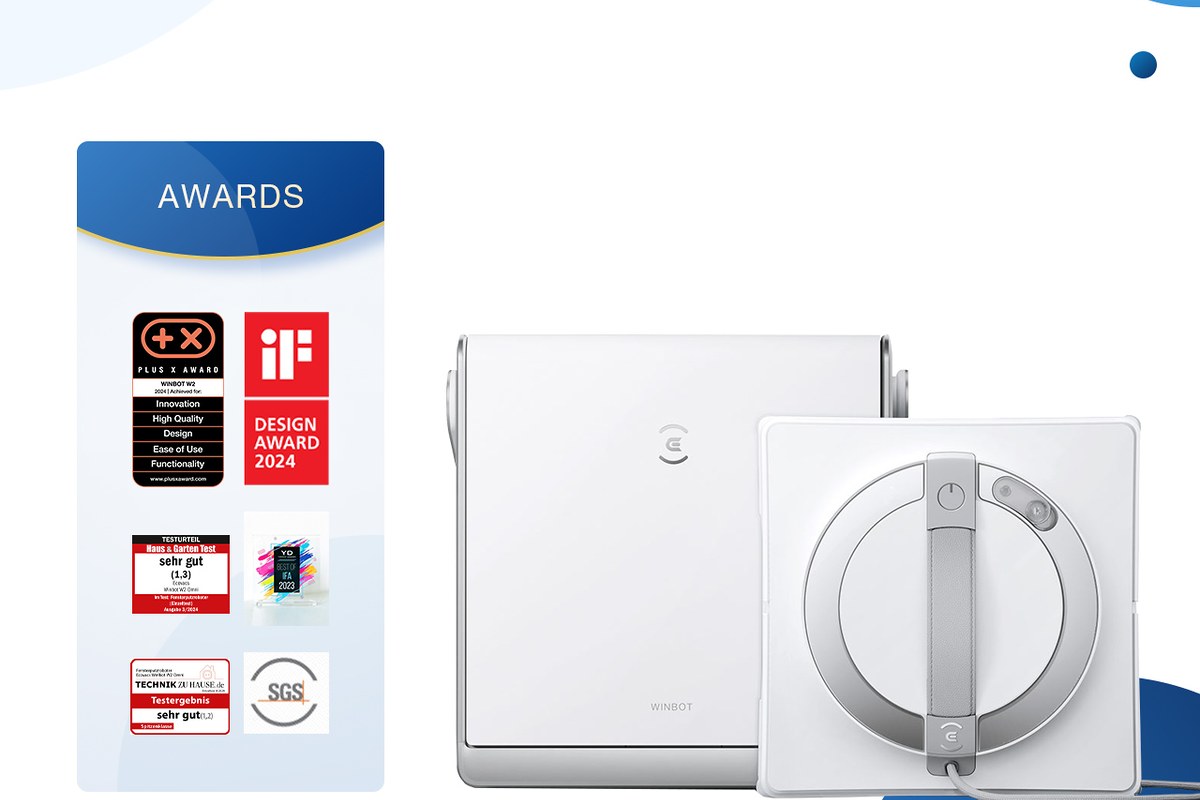
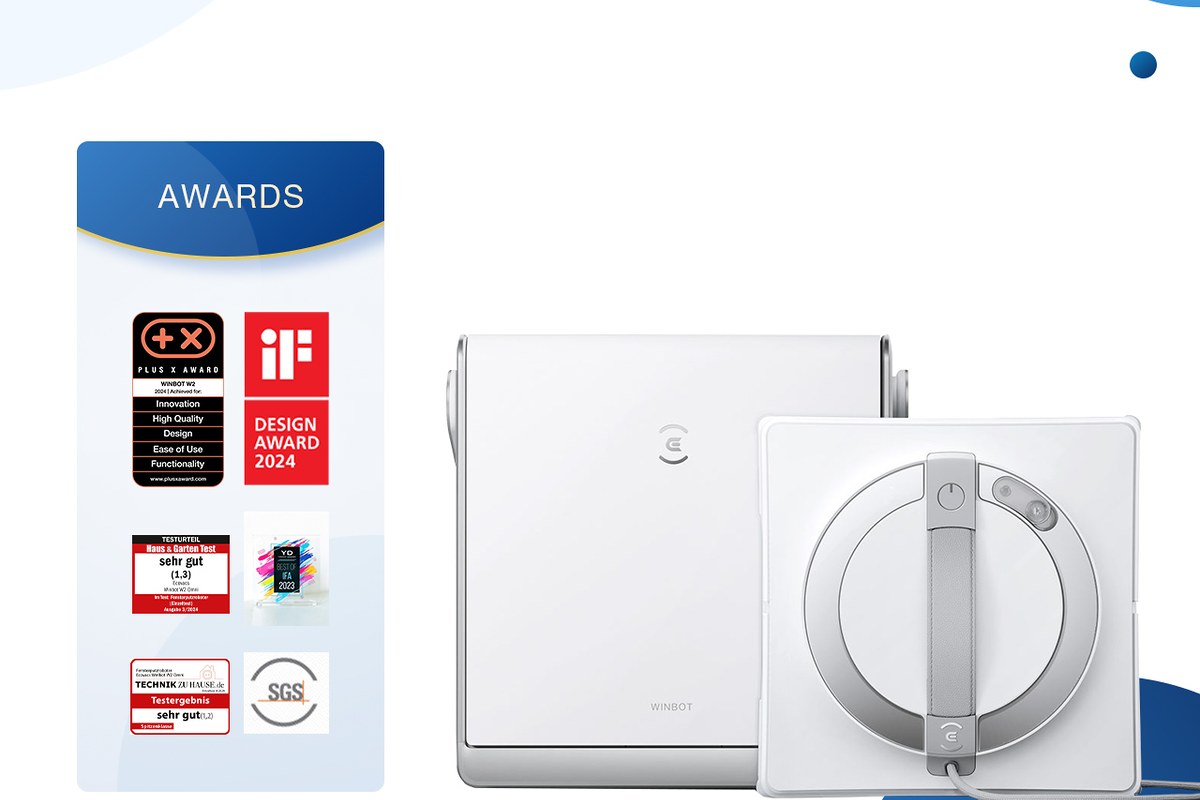
The WINBOT W2 OMNI is best understood as a window-cleaning system built around a portable station. The station supplies battery power, manages the cable and stores the robot and accessories. That can make a substantial difference in a house where suitable outlets are inconveniently located relative to large panes. The robot still has to be placed on each pane and moved between panes by a person. It does not cross frames, open windows or wash the exterior of a building independently. The referenced US page also indicates that this original W2 OMNI is sold out and points toward newer models. Its relevance may therefore be as remaining regional stock or a second-hand purchase, with support and exact-version checks especially important.
Battery power does not mean untethered operation
The W2 OMNI remains connected to its station. That tether is part of both power delivery and the system's physical arrangement, so buyers should not imagine a battery robot roaming glass with nothing attached. Map the route the cable will take around handles, furniture and the window opening. The station needs a stable position consistent with the manual's instructions. A large internal battery can make outlet access less urgent, but it does not make placement irrelevant. Check whether the specific version can clean while its station charges; features of the W2 Pro OMNI should not automatically be attributed to the original W2 OMNI. That distinction can matter when a long window-cleaning session exceeds the available battery time.
Large panes are the natural assignment
A robot earns its setup time most readily on a substantial uninterrupted area of glass. A house with many small divided panes creates repeated placement, tether checks and cloth changes, potentially reducing the advantage over a manual tool. Measure your smallest pane and check the manufacturer's minimum dimensions and clearance requirements. Handles, shallow frames and narrow gaps may limit access even when the glass itself appears large enough. A floor-to-ceiling window is also only useful territory if you can safely place and retrieve the machine. Do not turn a window robot into a reason to lean out farther or use an unsafe access method. The product should simplify an accessible cleaning task, not create a new access risk.
Spray and cloth do different jobs
ECOVACS describes a wide-angle three-nozzle spray system and a cleaning cloth intended to retain moisture and dirt. The spray loosens or wets material; the cloth has to lift and retain it. A robot moving across glass is not proof that dirt has been removed rather than redistributed. Judge the result from more than one angle and under light that reveals streaks. Exterior dust, fingerprints and dried bird deposits are different challenges. The appropriate preparation and cleaning solution should follow the manual, particularly where glass has special coatings or films. A very dirty first pass may require a cloth change before a finishing pass. Automating motion does not eliminate the need to present the glass with a sufficiently clean wiping surface.
Edges remain the most revealing test
The W2 OMNI offers an edge-cleaning mode and route planning intended to improve coverage. The practical test is the band beside the frame, especially at corners and around protruding hardware. A square body may approach a corner closely while still leaving an unwiped region determined by its pad shape and movement. Inspect rather than assuming edge detection means edge cleaning. Compare how much hand finishing remains after an ordinary cycle. A robot that leaves a narrow, easy-to-reach border may still remove most of the work on a large pane. The same border could represent a large proportion of a very small pane. That is why window layout matters more than a general claim that a robot suits all windows.
Safety systems require correct use
The manufacturer describes multiple hardware and software protections, including suction management, edge sensing and a stated low-battery attachment period. These should be treated as layers in a properly used system, not a guarantee that a robot cannot fall. Follow the supplied tether, anchoring, glass-condition and operating-environment instructions for the exact version. Do not operate over people, pets or valuable objects, and remain available to respond. The stated retention period applies to low battery; it does not justify continuing a session once a low-power warning appears. We have not tested fall protection and would not reproduce an intentional loss-of-suction experiment in a home. Safe placement and retrieval remain the owner's responsibilities throughout the session.
App control should reduce repositioning effort
The ECOVACS HOME app provides mode selection and directional control. Its value is greatest when it lets you finish a missed patch or bring the machine back to a reachable place without unnecessary handling. Confirm that your phone supports the current app and that the connection works through the window where you intend to operate. A product described as quiet still uses a suction fan close to the glass, so consider whether the sound is acceptable during work or calls. We have not measured noise in a room. Plan the cleaning session around the need to remain nearby, change cloths and move the robot between panes. It is a supervised appliance even when its travel pattern is automatic.
Cloths, solution and the station's storage role
The station can make a collection of robot, cable and accessories easier to keep together. Wet cloths should still be removed and cleaned as directed rather than sealed away until the next session. Budget for spare cloths, because using one heavily loaded pad across many panes can undermine the finish. Confirm that replacement pads and approved solution remain available for the original W2 OMNI, and check the station battery's service route. Buying a discounted older model makes sense only if those ownership details remain workable. A second-hand unit should demonstrate attachment, normal operation, station charging and cable management, not merely power on. We have not established battery longevity or a representative repair record for this model.
Our research judgement
The W2 OMNI has a convincing role for large accessible panes and homes where a portable power station makes window cleaning easier. It is less compelling for many tiny panes or a buyer expecting unsupervised exterior access. The original model's availability status and differences from the Pro deserve careful checking. Our missing evidence includes streaking, edge finish, cloth consumption, real session endurance and the time spent moving between windows. A useful trial would time an entire room from setup through laundering, compare the finish in oblique light and record every manual touch-up. Those observations would establish whether the station and robot save meaningful effort in your house, which is a more useful result than a dramatic demonstration on one large pane.
Sources & further reading.
These are the sources behind this research review. Manufacturer claims are not independent performance measurements. Community accounts, when cited, describe individual experiences.
Documentation reviewed: 9 October 2026. Product software and regional bundles can change. Corrections and editorial disclosures.